The key facts
- At least 64 dead and 58 hospitalized after the collision of a Renfe AVE and an Iryo train near Urda
- The cause was a safety system failure at around 8:30, after which dispatchers allowed the train to proceed without speed restrictions while a prohibiting signal was active
- This is the second major disaster on Spain's railways within a year: in January, 45–46 people died near Adamuz
What happened
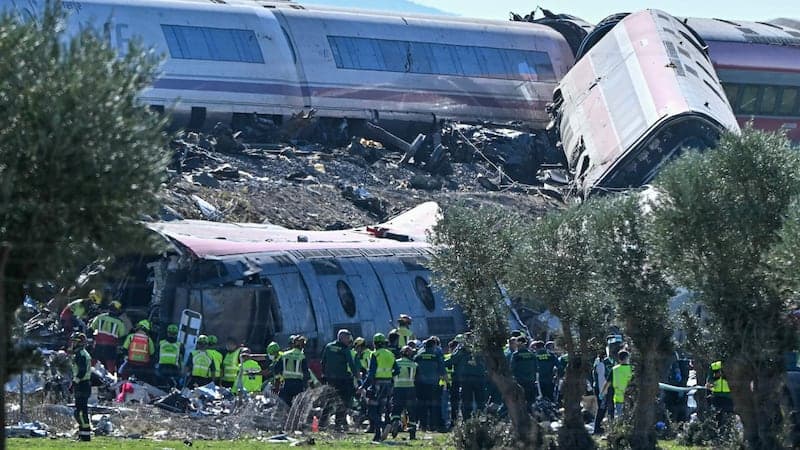
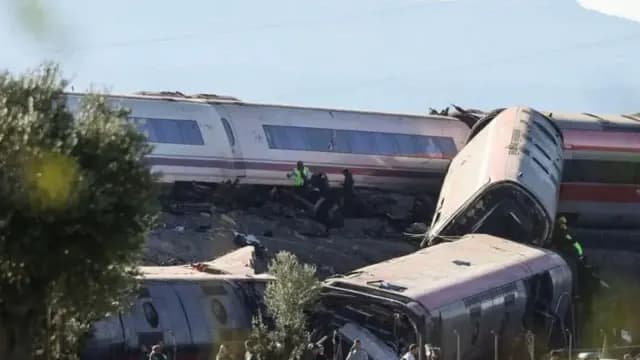
On the morning of 28 October 2026, on the Madrid–Seville high-speed line, near the town of Urda in the province of Toledo, approximately 140 km south of Madrid, a Renfe AVE train crashed into the rear of a stationary train operated by the private operator Iryo. Two carriages derailed, and part of the train overturned, sliding down an embankment. According to the government of the Castilla-La Mancha region, the Renfe train was carrying 397 passengers, and the Iryo train 147 people, including an infant.
Casualties
Published estimates of the death toll differ: Deutsche Welle, citing regional authorities, reported at least 68 dead and 58 hospitalized, while Anadolu and euronews gave a figure of at least 64 dead. The President of Castilla-La Mancha, Emiliano García-Page, warned that the death toll could rise. Rescue workers continued to dismantle the mangled carriages: according to euronews, about 100 service members of the Military Emergency Unit (UME) with service dogs were working at the scene, and the injured were taken to hospitals in Toledo; roughly 50 of the 58 hospitalized were in serious condition.
The transport minister's account
Spain's Transport Minister Óscar Puente laid out the following sequence of events: at around 8:30 a.m., a computer failure knocked out the automatic safety system on a section about 60–63 km long (outlets cite slightly different figures), stopping six trains. Control of traffic passed to the control centre of the infrastructure operator Adif, which at around 8:36 authorized the train behind the stationary Iryo train to continue 'in normal mode' — while the prohibiting signal remained active. Puente called this instruction 'inexplicable'. The collision occurred at 8:53. According to the minister, the drivers were not at fault; the speed at the moment of impact was still being established by the investigation, although on this section speeds of up to 200 km/h are permitted.
Reaction and context
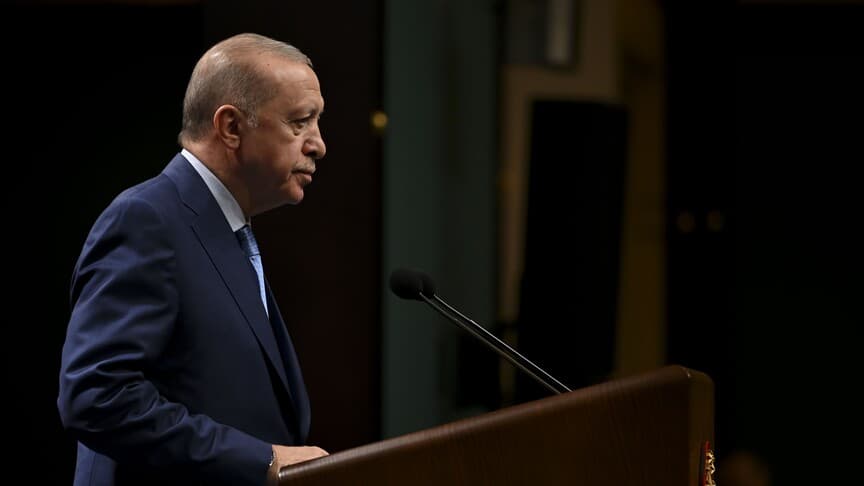
Prime Minister Pedro Sánchez said he was 'shocked' by the 'serious' accident and expressed support for the victims and their families; condolences were sent by King Felipe VI, as well as by Turkish President Recep Tayyip Erdoğan. The disaster was the second major accident on Spain's railways within a year: in January, near Adamuz in Andalusia, the derailment and collision of a high-speed train with an oncoming train killed 45 people according to euronews (DW reported 46 dead) and left more than 150 injured. Outlets note that this is the deadliest rail incident in Spain since the 2013 collision, in which 80 people died, and that the accident once again raises the question of the safety of the country's extensive high-speed network.