The key facts
- On 27 October, the draft of the new edition of the code was adopted in the first reading
- Four types of administrative claims are introduced: annulment, prohibition, imposition of an obligation, and recognition
- A class action will require at least 20 participants; the conditions of the prohibition will be clarified in the final version
Draft adopted in first reading
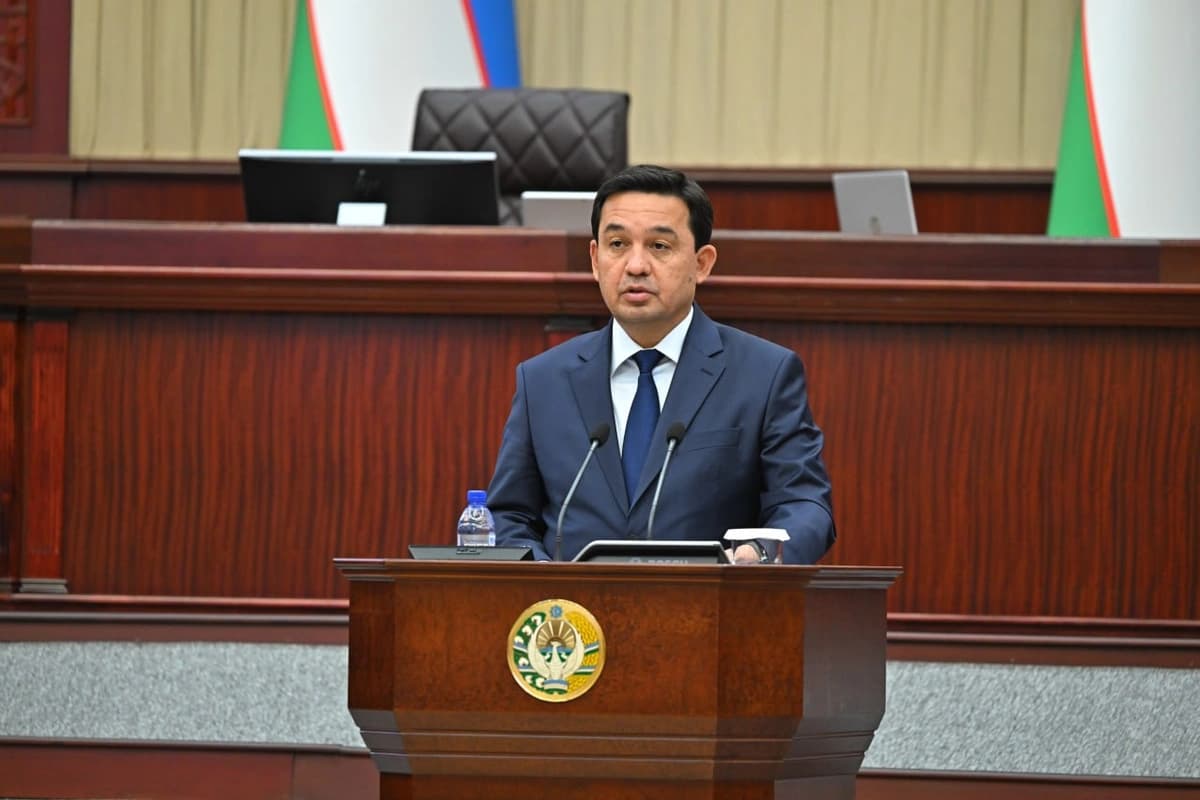
On 27 October, the Legislative Chamber of the Oliy Majlis adopted in the first reading a draft of the new edition of the Code of Administrative Court Procedure. The document was presented by Deputy Chairman of the Supreme Court Shukhrat Polvonov. He said that four types of administrative claims are proposed to be introduced: for annulment, prohibition, imposition of an obligation, and recognition. This follows from a publication by Gazeta.
The main innovation — the prohibition claim
The key change concerns the moment at which a citizen or entrepreneur may go to court. Under the current code an interested party may file an application if it believes that a decision or action of an administrative body has already violated its rights, created obstacles to their exercise, or unlawfully imposed obligations on it. Polvonov explained at the session: “Today, in order to go to an administrative court, a citizen or entrepreneur must wait until their right has been violated.” The new prohibition claim, he said, “transfers the protection of rights into a proactive mode.”
How it will work and what remains unclear
As an example, the Deputy Chairman of the Supreme Court cited an entrepreneur who plans to invest in a certain type of activity but fears that tax or construction authorities may later make a decision that hinders the project. Such an entrepreneur will be able to present documents and permits to the court in advance and ask for protection against possible unlawful interference — the court will be able to prohibit the administrative body from interfering in that activity. At the same time, the specific conditions for applying the prohibition, including the requirements for evidence of a threat to rights, are yet to be clarified in the final version of the bill. UzLiDeP deputy Saidullo Azimov asked at the session whether such a court decision would restrict the administrative body from performing duties established by law, and what the limits of such a prohibition would be.
Other proposed changes
The draft also provides for: the right of citizens and entrepreneurs to demand that normative legal acts of ministries, agencies and local authorities affecting their interests be declared fully or partially invalid; the obligation of state bodies to prove the legality and validity of decisions, including the proportionality of fines; simplification of filing applications — formal defects should not automatically lead to the return of an application, and an application mistakenly sent to the wrong court is proposed to be transferred according to jurisdiction; and the institution of class actions, which must be joined by at least 20 people. During the discussion, deputies questioned the advisability of precisely such a minimum number of participants.
Context and statistics
Administrative courts have been operating in Uzbekistan since 2017. According to figures cited by Polvonov at the session, in 2017–2026 they heard about 150,000 cases; according to the Supreme Court's estimate, violated rights were restored in 55% of cases, and about 27,000 private rulings were issued. The Deputy Chairman said the draft was developed based on the German model of administrative court procedure; the Supreme Court, the Ministry of Justice, the Prosecutor General's Office, deputies, and foreign specialists from Germany, Japan and Azerbaijan took part in its preparation. It is noted that current legislation already allows certain preliminary protection measures, such as suspending the enforcement of a contested act — the novelty lies in creating an independent claim to prevent a future violation.
Connection with the September decision and status of the document
On 22 September, President Shavkat Mirziyoyev approved proposals on reforming administrative court procedure, which included contesting normative acts of khokimiyats and local councils, four types of claims, protection of rights before they are violated, revising the six-month time limit for going to court, and strengthening judicial control over the legality and proportionality of state bodies' decisions. The draft adopted on 27 October corresponds to these directions. Before entering into force, it must pass the subsequent stages of the legislative process.