The key facts
- State registration of medical workers will begin on 1 July 2027 and become mandatory from 2030
- Allowances: 7 million soums for doctors and pharmacists, 3.5 million for nurses and male nurses
- From 2027, doctors' and nurses' salaries will be tied to KPIs, with patient satisfaction as the main criterion
State registration of medical workers: from voluntary to mandatory
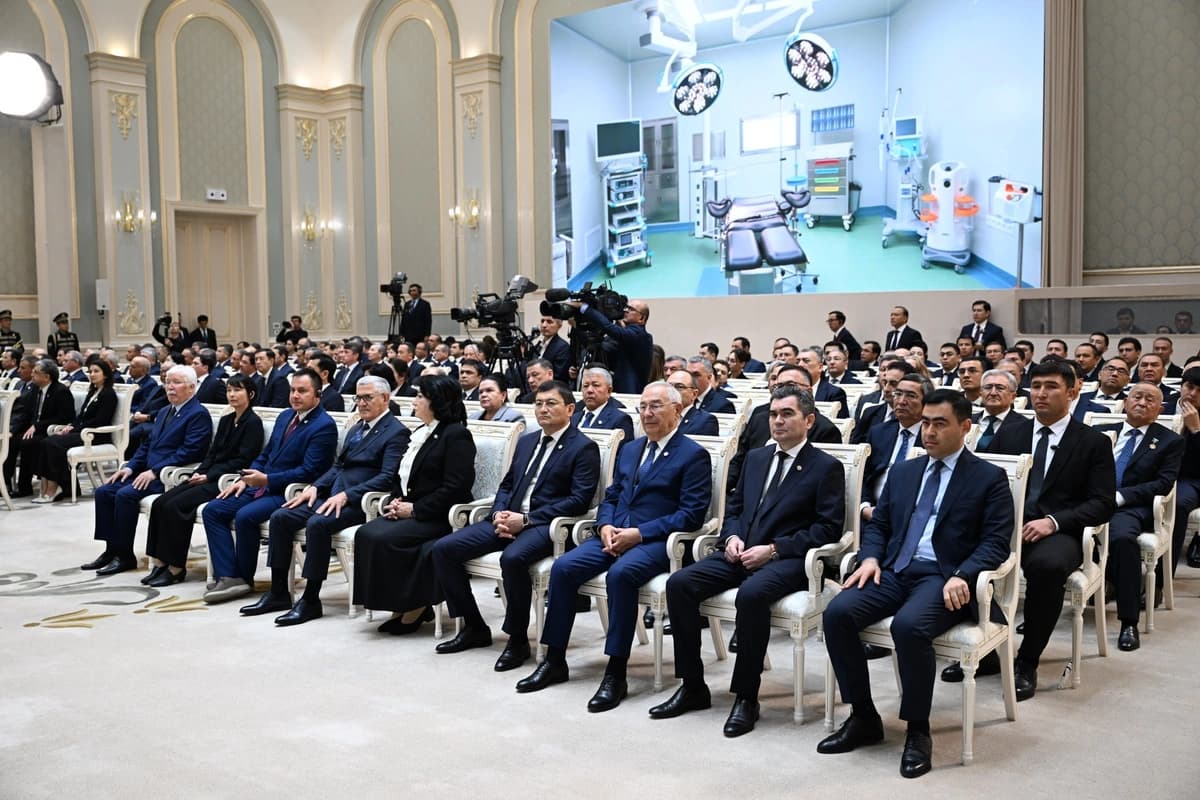
In Uzbekistan, state registration of medical and pharmaceutical workers will begin on 1 July 2027. President Shavkat Mirziyoyev announced this on 27 October at a meeting with healthcare and pharmaceutical sector workers, reports Gazeta. “In a field related to the health of the population, there must be clear order and strict oversight, and this activity must be carried out exclusively by professionals,” the head of state emphasized.
How the system will work
Registration procedure approved by government resolution No. 577 of 19 October 2026. From 1 July 2027 to 1 January 2030, registration will be voluntary — based on the results of a special exam or automatically upon the award of a qualification category. From 2030, only registered specialists will be able to work in their profession. Registration is valid for five years, after which it must be renewed; the authorized body is the Center for Assessing the Qualifications of Medical and Pharmaceutical Workers. Medical workers with an academic degree and at least 20 years of experience will be able to register without an exam, provided the established conditions are met. Applications can be submitted through public services centers, the Unified Portal of Interactive Public Services, or a special medical platform.
Allowances for registration
Workers who complete registration are provided with salary allowances: doctors and pharmacists — 7 million soums, nurses and male nurses — 3.5 million soums.
Salaries to be tied to KPIs and patient ratings
The president also ordered that, starting in 2027, mechanisms be introduced for evaluation of hospitals and polyclinics by the patients themselves — at the national, regional and district levels. The salary of every doctor and nurse is planned to be linked to key performance indicators (KPIs), with the main criterion being public satisfaction with the quality of services. How exactly patient ratings will be collected, how KPIs will be calculated, and what share of the salary will depend on these indicators has not yet been specified.
Management of centers and professional development
From 2027, the directors of 26 specialized medical centers will be moved to one-year contracts with specific commitments to introduce new treatment methods, improve the qualifications of the primary care level, and apply scientific developments. Specialists from foreign university clinics will be involved in evaluating the centers' performance; at the end of the year, directors will report to the public, and contract renewal will depend on the results. The participation of private organizations in the professional development system will be expanded, with medical workers choosing their place of training themselves. The state will cover the training costs of primary care and district facility staff: according to the estimate cited at the meeting, this will save 130,000 medical workers in the districts a total of 100 billion soums annually.
Artificial intelligence and competitions
From 2027, the healthcare sector plans to launch ten artificial intelligence systems, including in cardiology, hepatology, ophthalmology and hematology. “New solutions will be introduced for remote patient monitoring, disease detection from speech, and drug safety control,” the president noted. In addition, each region will hold “Best IT Operator” and “Best Digital Medicine Doctor” competitions with a prize of 100 million soums for the winners.