The key facts
- Ursula von der Leyen proposed in September that Canada become the EU's first 'associated member' without having consulted the member states on the idea
- Germany, Italy, France and Greece blocked the 'silence procedure' for adopting the joint declaration ahead of the summit in Montreal
- On the substance of cooperation — defence, raw materials, energy, trade — there is consensus; the dispute is over the label itself
An idea without consultation
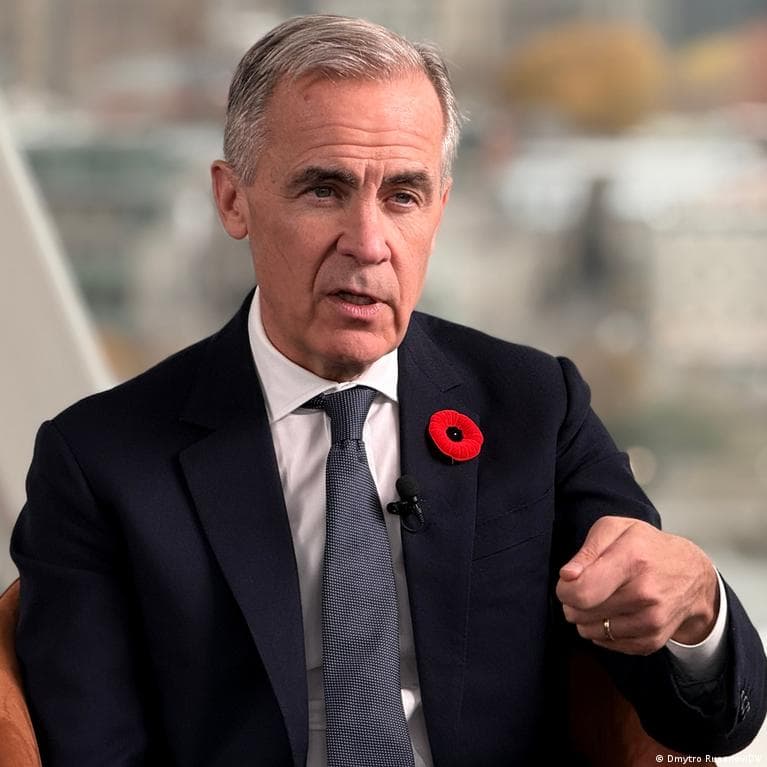
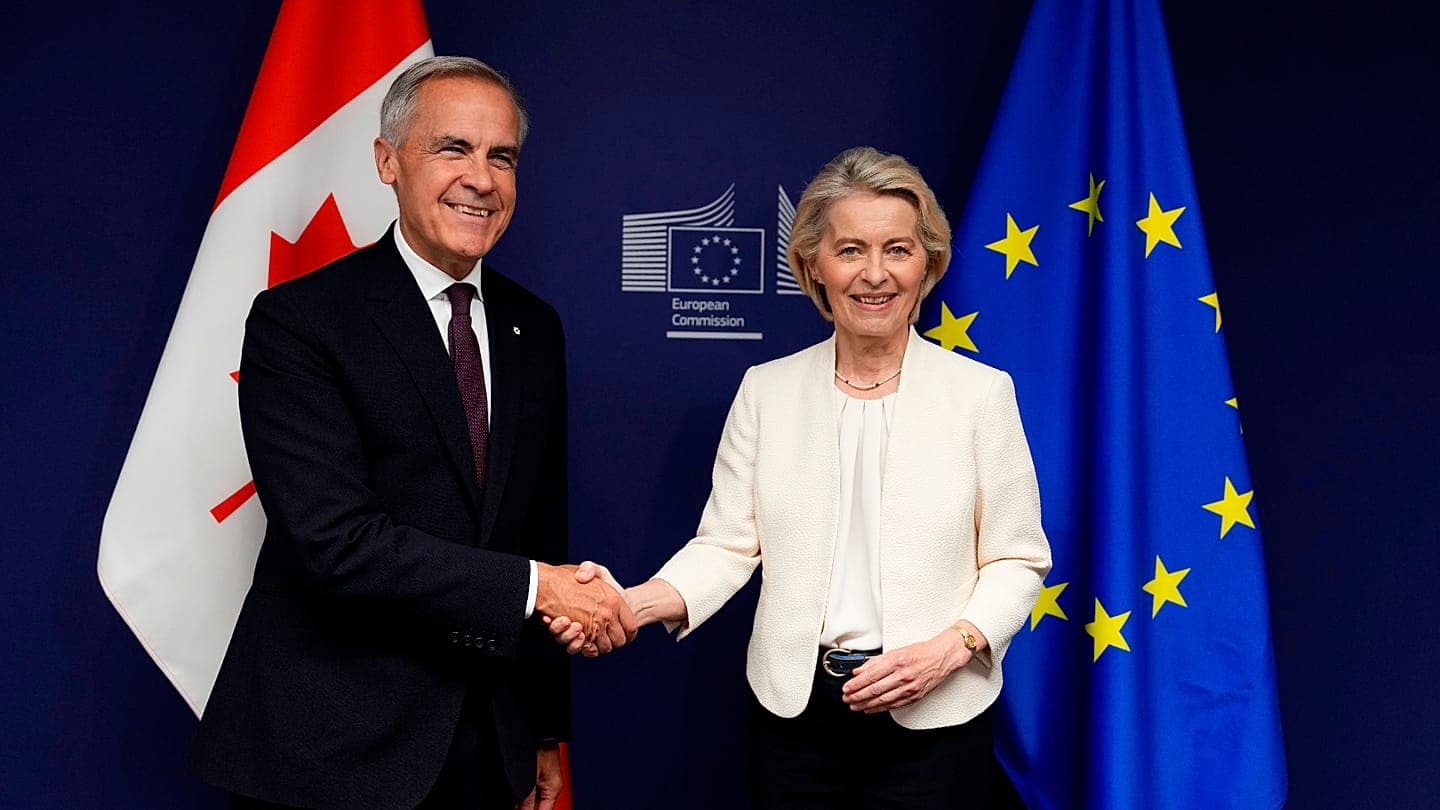
In September, delivering a State of the Union speech in the European Parliament, European Commission President Ursula von der Leyen proposed that Canada become the EU's first 'associated member' — Prime Minister Mark Carney was the guest of honour at that address. According to Euronews, the idea had previously been discussed with the Canadians, but it was neither worked through with the governments of the EU member states nor within the Commission itself, which caught even Paris and Berlin off guard. Carney himself was reserved about the wording, preferring to speak of an 'alliance of the future': 'What matters is the substance,' he replied when asked whether the term suited him.
Capitals block the declaration
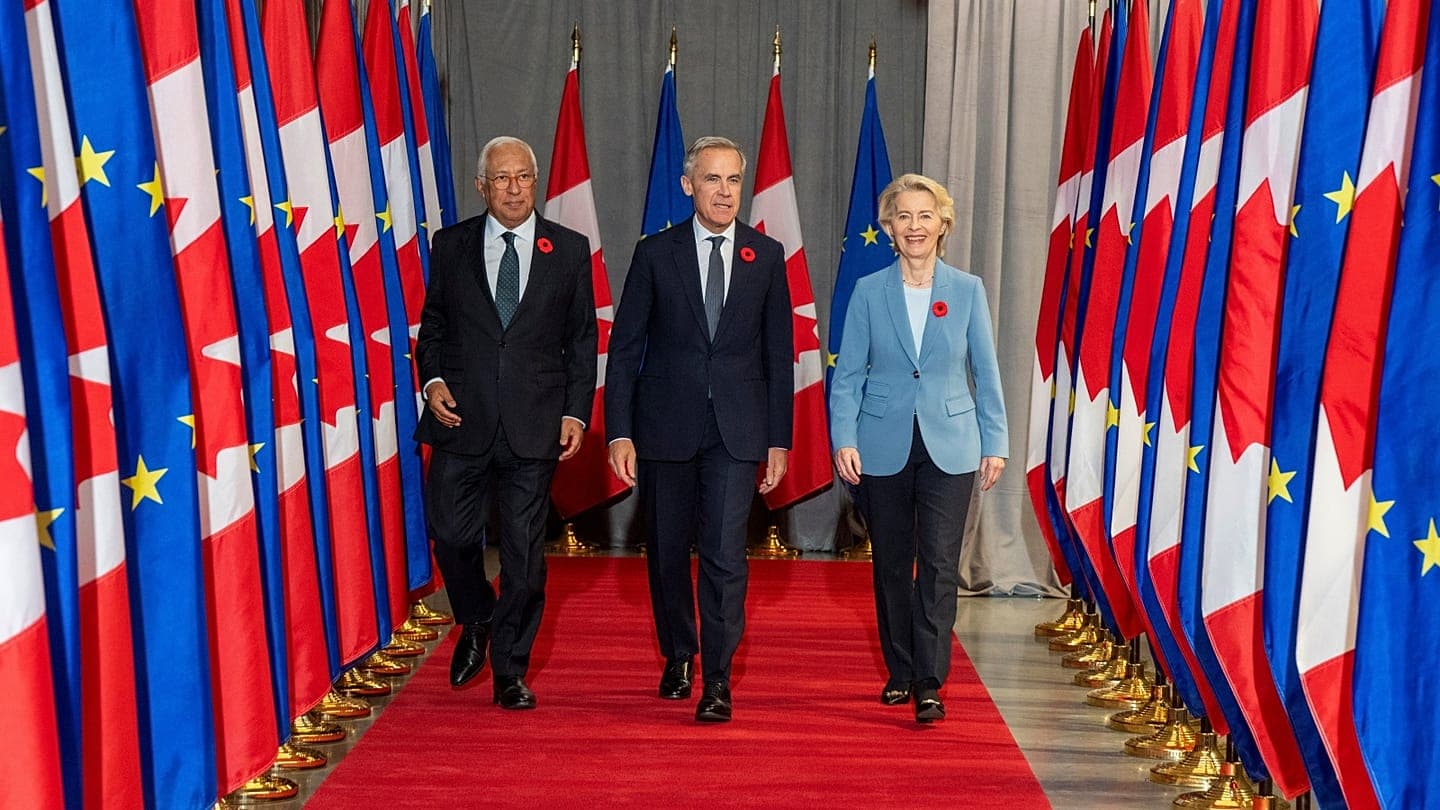
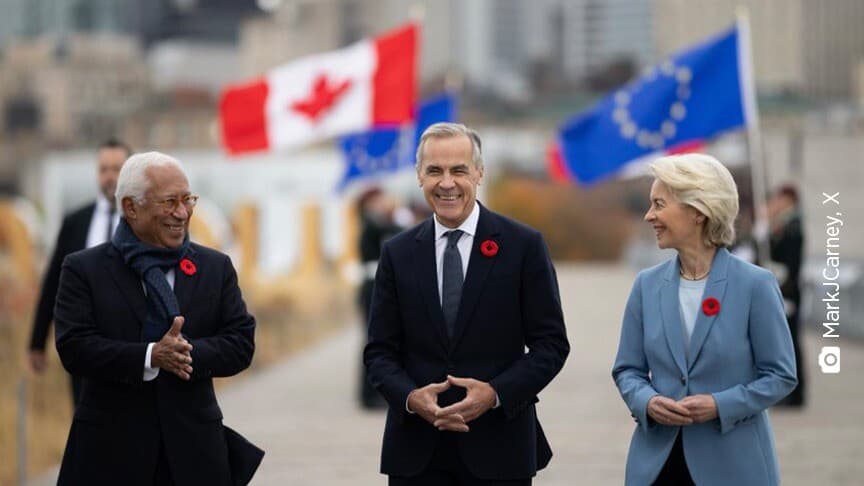
Ahead of the EU–Canada summit, which many observers expect to set out the bloc's closest partnership with a non-member, several European capitals, led by Berlin, came out against a term that has not yet been clearly defined. Five EU diplomats told Euronews that the main objection is the 'unknown terminology', which could create legal uncertainty and expectations among other third countries. Last week, the revised draft of the joint declaration mentioned the concept explicitly: the declaration promised regular exchanges with the Canadian authorities on major political and regulatory initiatives and the definition of the full scope of the partnership at the 2027 summit. The direct inclusion of the term in the first official EU political document met with stiff resistance from Germany, Italy and Greece and scepticism from France. In the new draft circulated on Monday evening, at the suggestion of the Italian government, a caveat was added stating that the concept had been 'put forward by the European Commission'. The document was to be adopted on Tuesday under the so-called silence procedure, but Germany, Italy, France and Greece objected before the deadline. Italy's objection did not concern associated membership — its wording was accepted — but rather a paragraph on competitiveness and technological sovereignty for a balanced decarbonisation transition. The office of European Council President António Costa is expected to circulate a new version, to be followed by ambassador-level negotiations on Wednesday, before the summit opens in Montreal on Thursday.
What lies behind the dispute over a word
There is almost no disagreement on substance: there is broad consensus on deepening cooperation with Canada in defence, critical raw materials, energy, trade and border security. The dispute is precisely about the label. For Berlin, it is essential that the member states first define the substance of the cooperation package and only then agree on the wording of the declaration, not the other way around. Other countries point to the legal consequences: 'It means nothing, it is not in the treaties,' one diplomat told Euronews, adding that nevertheless 'we want to find a way to make the concept work'. Diplomats compare the situation with the 2023 migration deal with Tunisia, when von der Leyen likewise announced an agreement and was criticised for lacking a formal mandate: everyone supported the goals, but not the method. Notably, it was German Chancellor Friedrich Merz who first proposed 'associated membership' — but for Ukraine, as a way of tying it to the EU with security guarantees on its path to accession. Applying the same term to Canada carries a different meaning: it is a template for the closest possible partnership with a non-European country that will never be able to join the bloc. 'Many other countries want to get closer to the EU, but we do not know what to offer them. Whatever deal we strike with Canada, it could become an important stimulus for others,' an EU official told Euronews.