The key facts
- Canada and the EU launched the 'Alliance for the Future' at the 21st summit in Montreal
- The agreements concern critical minerals, AI, digital trade, energy and Erasmus+
- The final statement does not mention 'associated membership,' which von der Leyen had previously proposed
The new alliance and its content
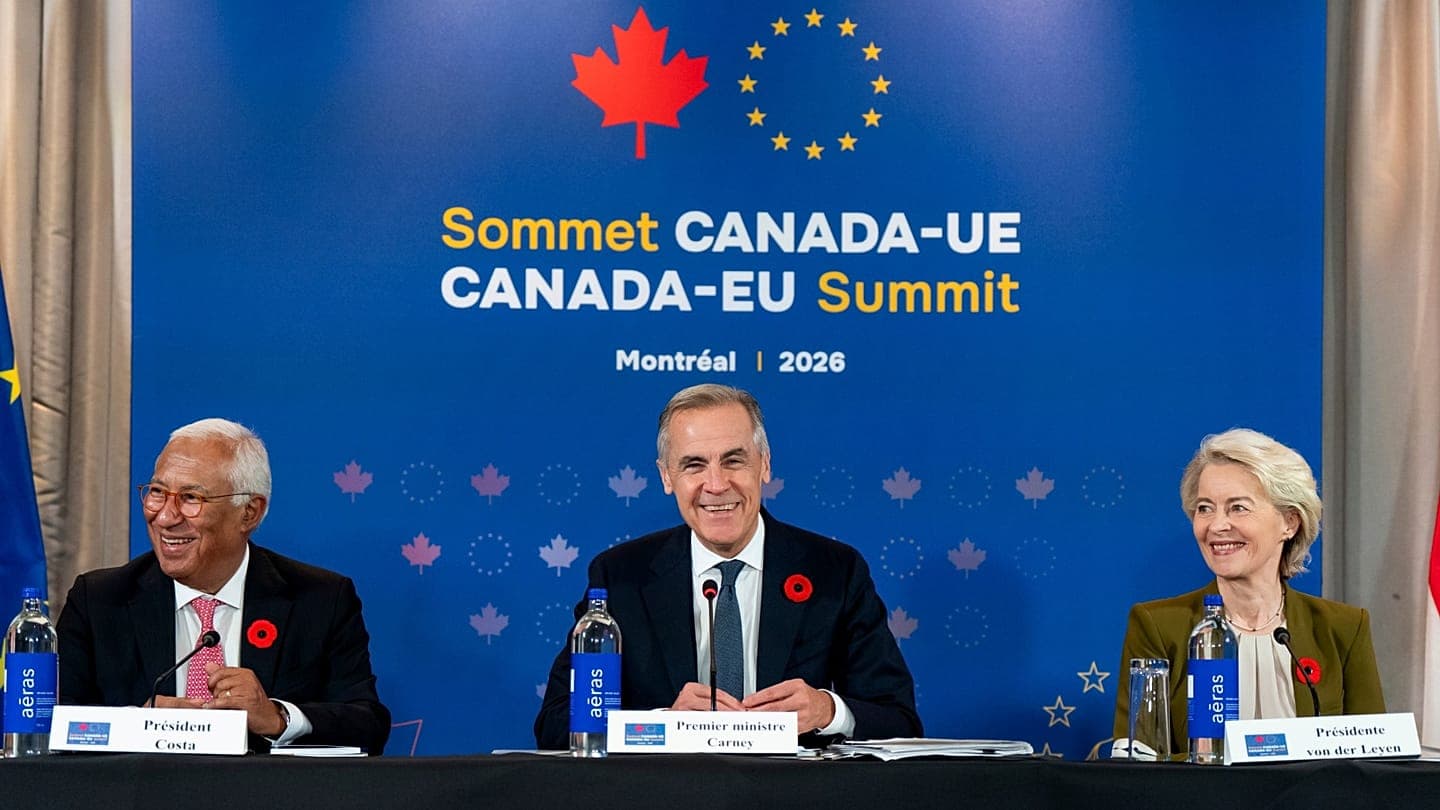
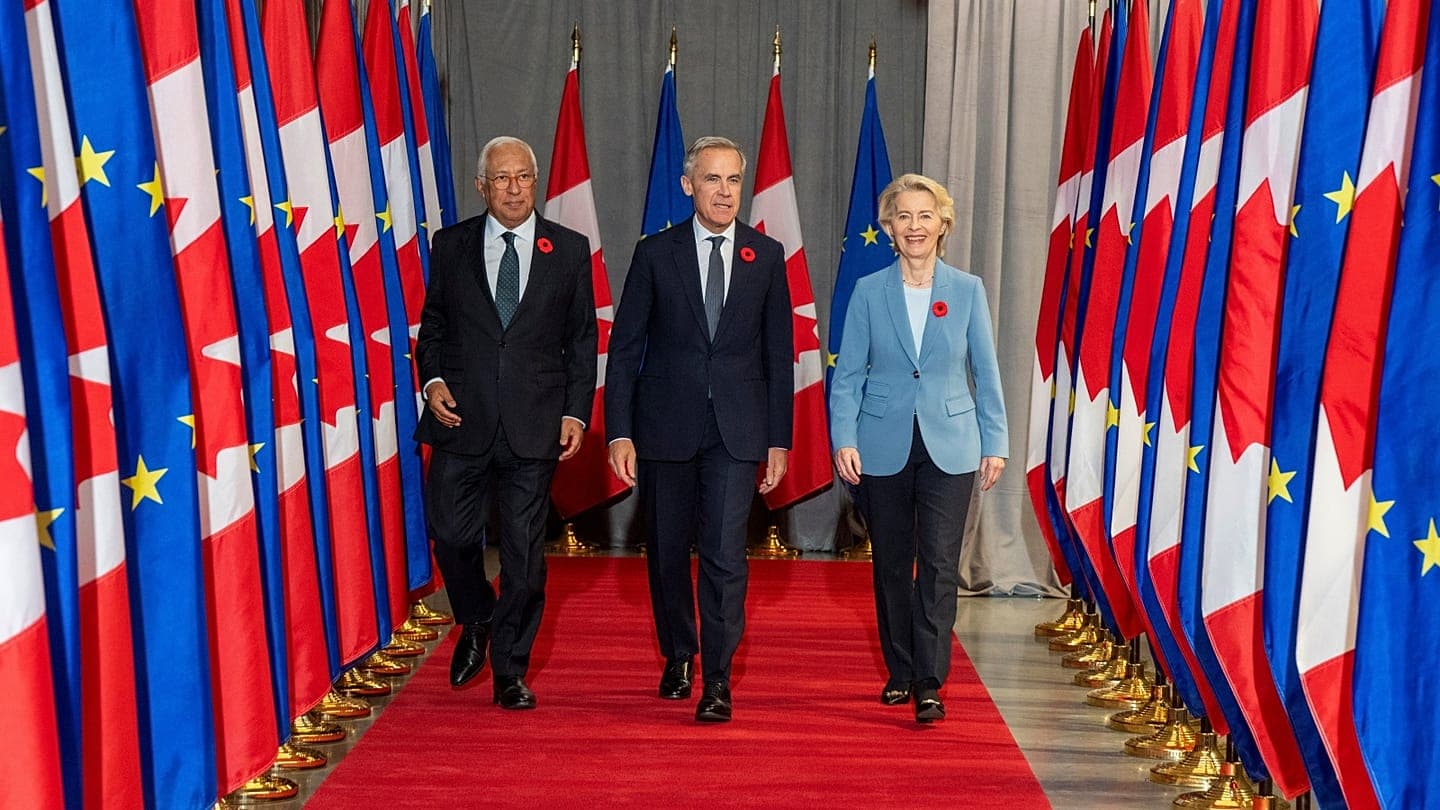
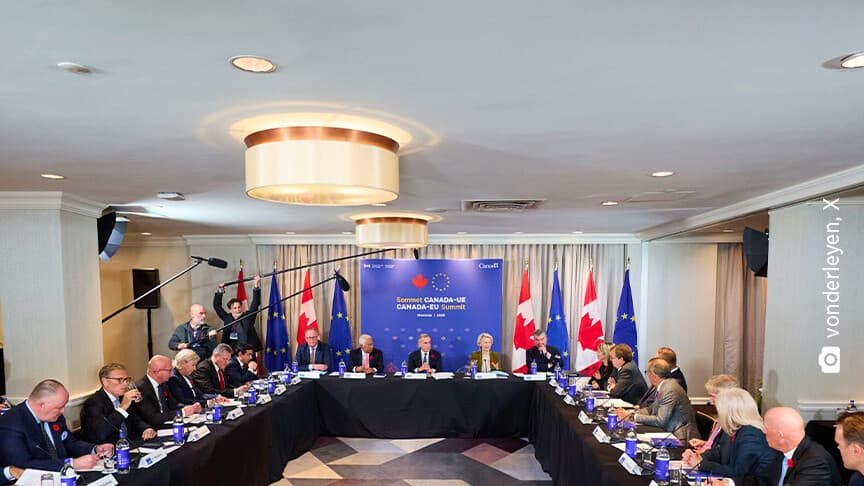
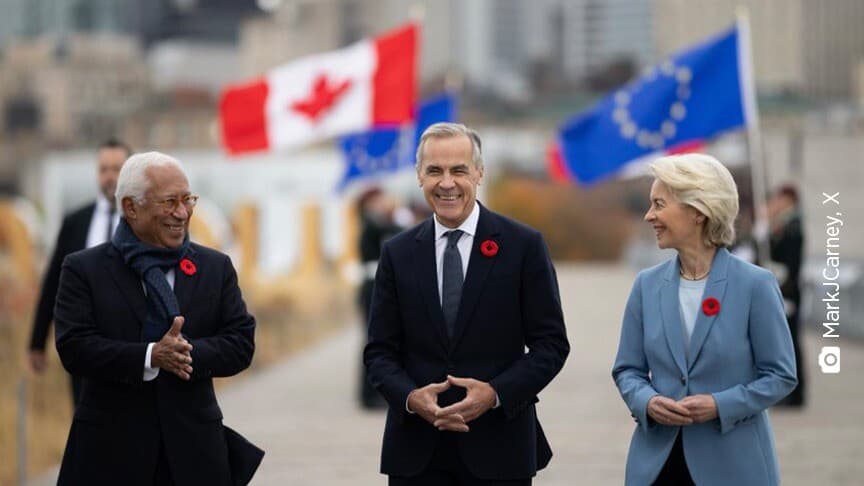
On October 30, at the 21st Canada–EU Summit in Montreal, Canada and the European Union announced the launch of the Canada-EU Alliance for the Future — an initiative intended to create a space of shared economic prosperity and economic security between the partners. As Anadolu reports, Canadian Prime Minister Mark Carney met with European Council President António Costa and European Commission President Ursula von der Leyen. In their joint statement, the sides emphasized the principle of reciprocity in industrial sectors where they agreed to deepen strategic cooperation, identify common economic security risks, and build more integrated and resilient supply chains.
Minerals, energy, trade and AI
A key focus of the alliance will be access to critical raw materials: the sides intend to accelerate investments across the entire value chain — from extraction and processing to manufacturing and recycling — and to explore mechanisms for securing supplies, including possible strategic stockpiles of resources for the civilian and defense industries. The European Investment Bank and Canada have concluded negotiations on an agreement facilitating European investment in Canadian critical resources. Energy cooperation will expand, including through support for liquefied natural gas exchanges, taking into account the parties' climate commitments. The sides also announced the conclusion of substantive negotiations on a digital trade agreement designed to improve legal certainty and facilitate cross-border data flows; they plan to deepen cooperation in digital infrastructure and AI — including trusted and sovereign cloud infrastructures, computing capacity, data and AI models. In addition, the sides intend to remove bilateral trade barriers, establish a bilateral business council, and begin negotiations on Canada's deeper participation in the Erasmus+ program.
The fate of the associated membership idea
The summit took place against the backdrop of a discussion about the future of Canada–EU institutional relations. Von der Leyen had earlier proposed the idea of Canada's associated membership in her State of the Union address in Strasbourg — closer ties without full EU membership. According to reports, this idea met resistance from a number of member states ahead of the summit, and, as Anadolu notes, Germany led efforts to remove the relevant wording. The final joint statement does not mention associated membership: instead, the leaders describe the ambition as an 'even closer association' between Canada and the EU, with more frequent high-level political contacts and closer coordination on international challenges.