The key facts
- Carney set the goal of concluding negotiations by June 2027 and making Canada the first associated member of the EU
- Germany opposed the term 'associated membership'; the final declaration speaks of an 'ever closer association'
- The sides agreed on Canada's full connection to the Horizon and Erasmus programmes and on support for a €90 billion loan to Ukraine
Montreal summit: the goal is June 2027
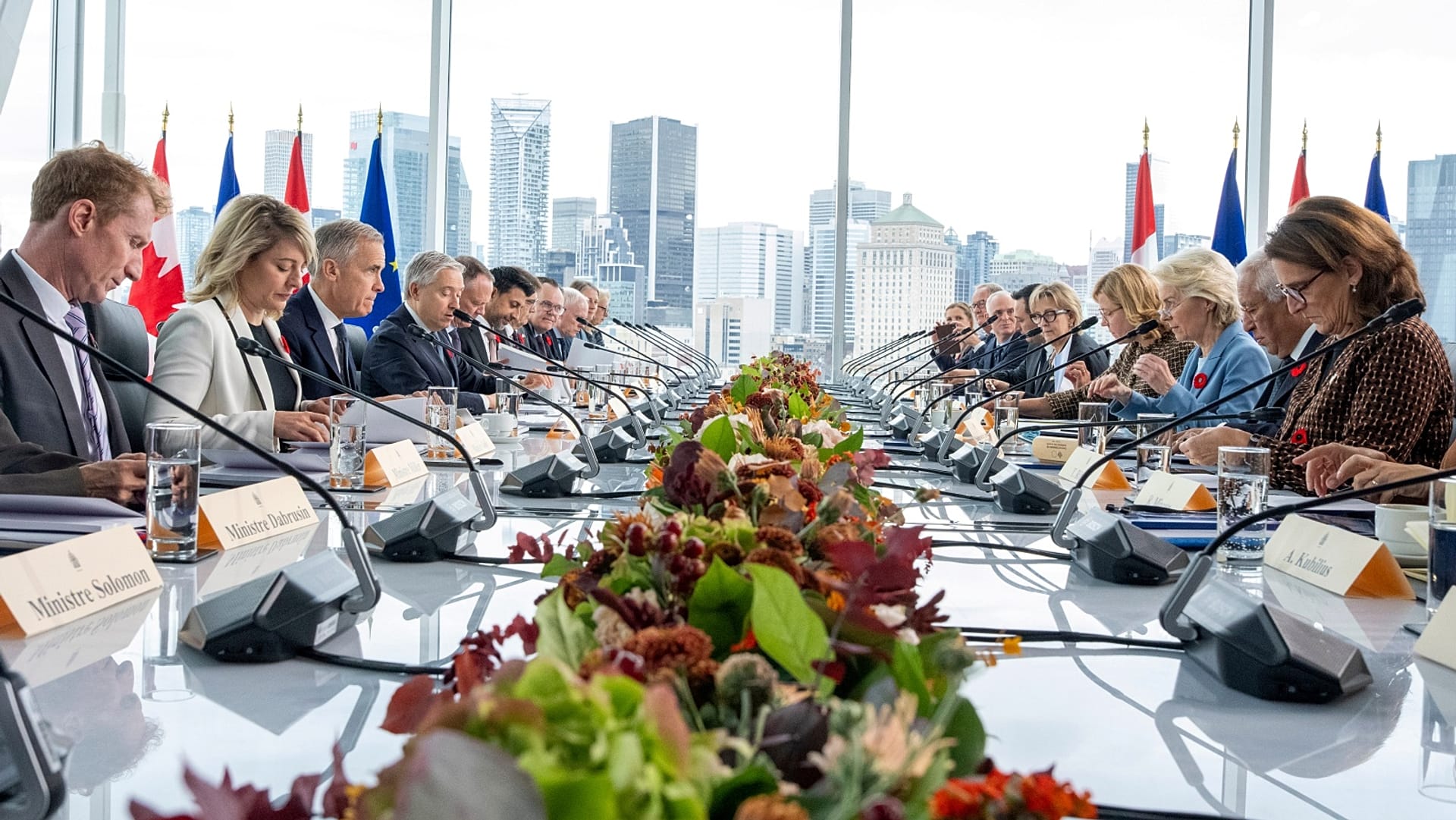
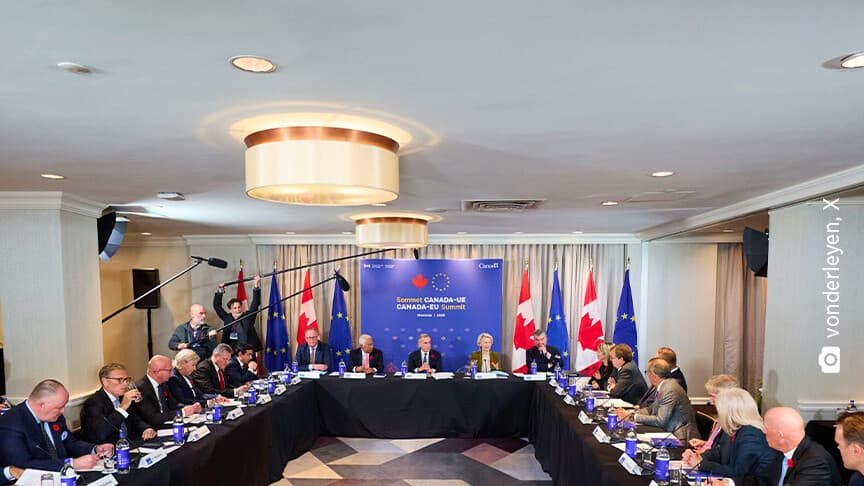
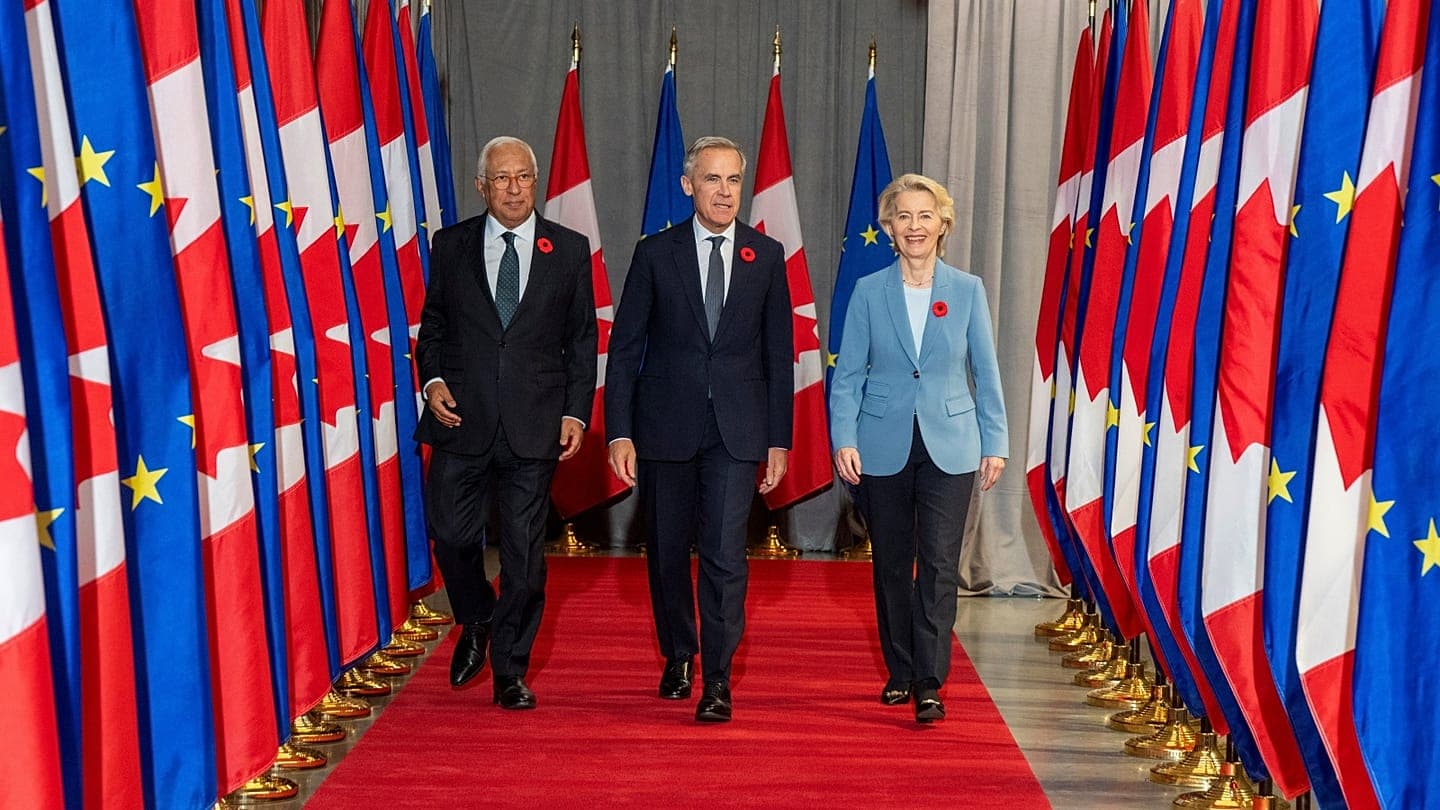
Canada and the European Union intend to complete negotiations on Canada's possible 'associated membership' by June 2027. Canadian Prime Minister Mark Carney announced this following the bilateral summit in Montreal, Euronews reports. The proposed status, which has no basis in EU treaties, is meant to bring the two sides closer in three areas — policy, programmes and governance — but its practical implications still have to be agreed.
Disagreements over the wording
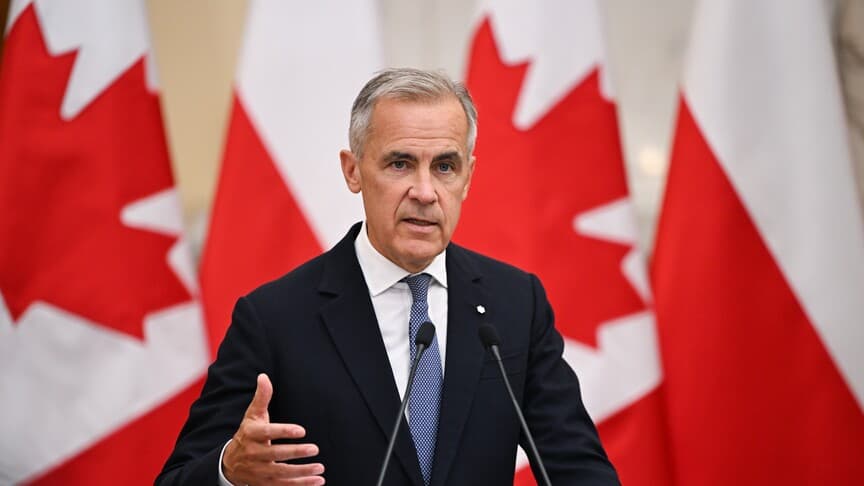
Even before the summit, Germany objected to the term 'associated member' during the drafting of the joint declaration: the final text speaks of an 'ever closer association'. Nevertheless, Carney confirmed the course: 'We are working towards the deepest possible partnership without accession, given our geography — so that Canada becomes the first associated member of the European Union,' he said at the closing press conference, adding that in the coming months the sides will define 'the full substance, scope and reach' of the new form of membership.
Who promoted the idea and how
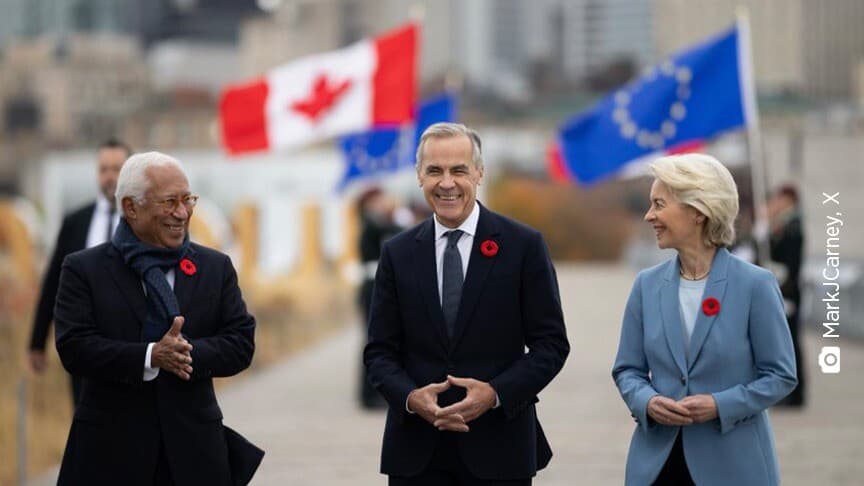
The author of the proposal was European Commission President Ursula von der Leyen, who in September, to the surprise of EU capitals, proposed making Canada the first associated member of the bloc without having discussed the idea with the member states in advance. Carney himself was initially reserved about the initiative over concerns for Canadian sovereignty, but on Friday he endorsed it: 'Today we are moving towards associated membership for Canada,' he said. According to the outlet, Commission officials suspect that Berlin's resistance is linked to the fact that Chancellor Friedrich Merz was the first to propose the definition 'associated member' with regard to Ukraine — Kyiv rejected the idea at the time, saying it wanted full membership. Asked about Germany's position, von der Leyen dodged the question, saying there is 'broad support' among member states for closer ties with Canada. She stressed that full membership is impossible: the EU treaties reserve it only for European states. European Council President António Costa, who represents the collective position of the EU countries, also avoided the term 'associated member', speaking of an association that would be 'the closest, deepest and most unique in existence'.
What has already been agreed and what comes next
Beyond the political framework, the summit produced concrete results. Von der Leyen named the immediate benefits: Canada's full connection to the Horizon research programme and the Erasmus exchange programme, as well as participation in the €90 billion support loan for Ukraine. The sides also expanded cooperation in digital trade, energy and critical raw materials, supercomputers, artificial intelligence and satellite technologies. 'The concept of an associated member is uncharted territory, but we have the ambition, the trust and the creativity to shape it together,' the European Commission president said. Next, a 'college–cabinet' level meeting will be held in the spring to work out the proposal, and in June Carney expects to attend the EU leaders' summit, where he hopes to complete the negotiations. How the document will be ratified in Europe remains unclear; Carney previously promised to put the proposal to a vote in the Canadian parliament.