The key facts
- Vucic concedes defeat: in his words, the Student List will get 135–140 seats, his coalition about 105 of 250
- According to Ipsos and CeSID, the student list has 52% of the vote versus 39.3% for United Serbia; euronews cites 52% versus 32.3%
- Turnout by 7 p.m. reached 67.6%; CeSID received more than 300 reports of possible irregularities
Vucic concedes defeat
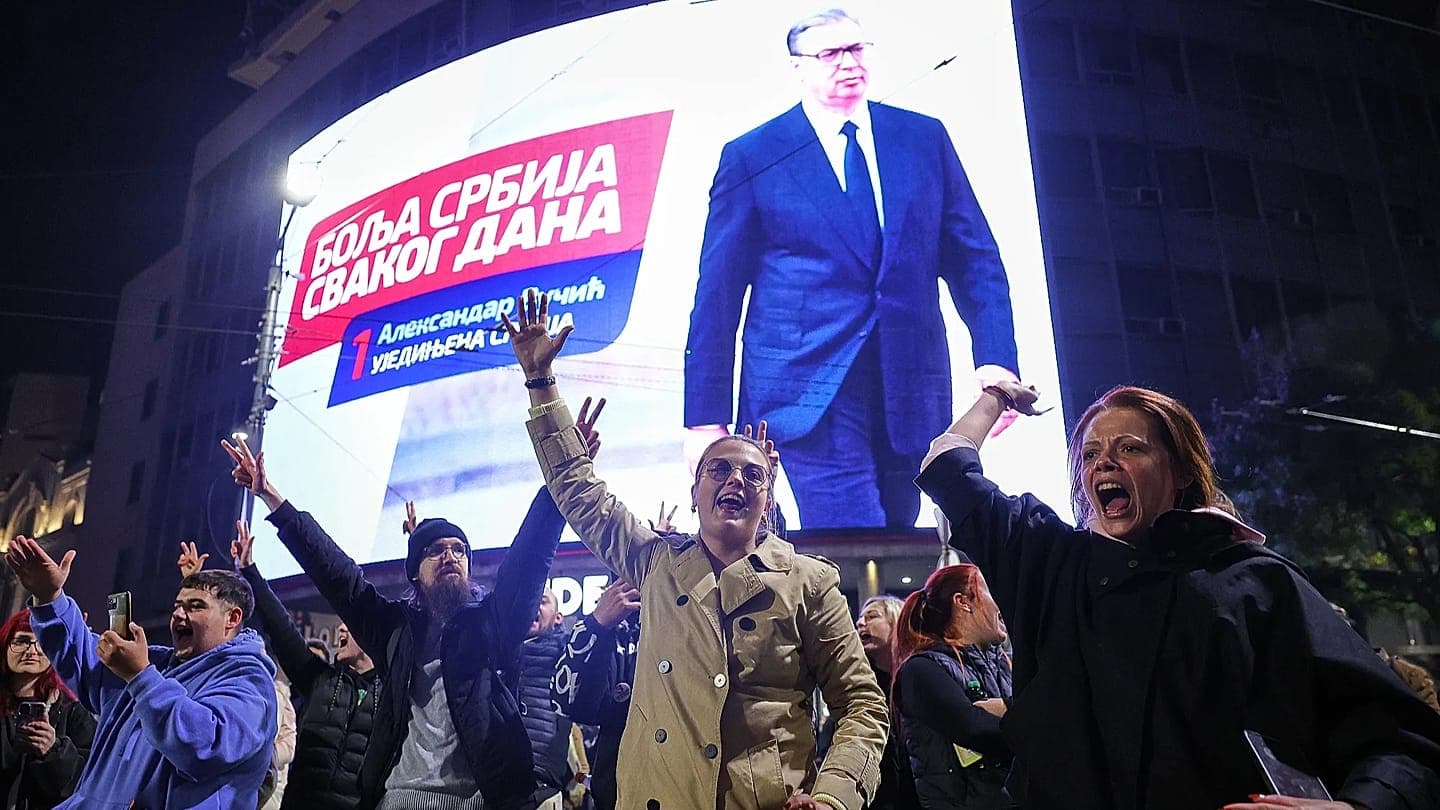
Former President of Serbia Aleksandar Vucic on Sunday, October 25, conceded the defeat of his United Serbia coalition in the early parliamentary elections. Speaking at the headquarters of the Serbian Progressive Party (SNS) in Belgrade, he said: “We still do not have final results, but based on a sample analysis it is clear that we have lost these elections”. In his assessment, the list backed by the student movement will win between 135 and 140 seats in the 250-seat Assembly, while his coalition will get about 105. Vucic also blamed the defeat on interference, as he claims, by several European countries and the “American deep state.”
Preliminary results differ in the details
According to preliminary data from the Ipsos agency and the Center for Free Elections and Democracy (CeSID), the Student List is winning 52% of the vote against 39.3% for United Serbia; the monitoring organization CRTA gives 51.47% versus 40.42%. The outlet euronews, however, cites a different figure for Vucic’s coalition — 32.3% (about 1.72 million votes versus 2.2 million for the student list). The discrepancy between outlets persists, and the final results must be confirmed by the Republican Electoral Commission. Ivica Dacic’s Stability Factor coalition, according to Ipsos and CeSID, receives 2.3%. For comparison: in the December 2023 elections, the coalition led by the SNS won 46.75% and 129 seats.
Record turnout and reports of irregularities
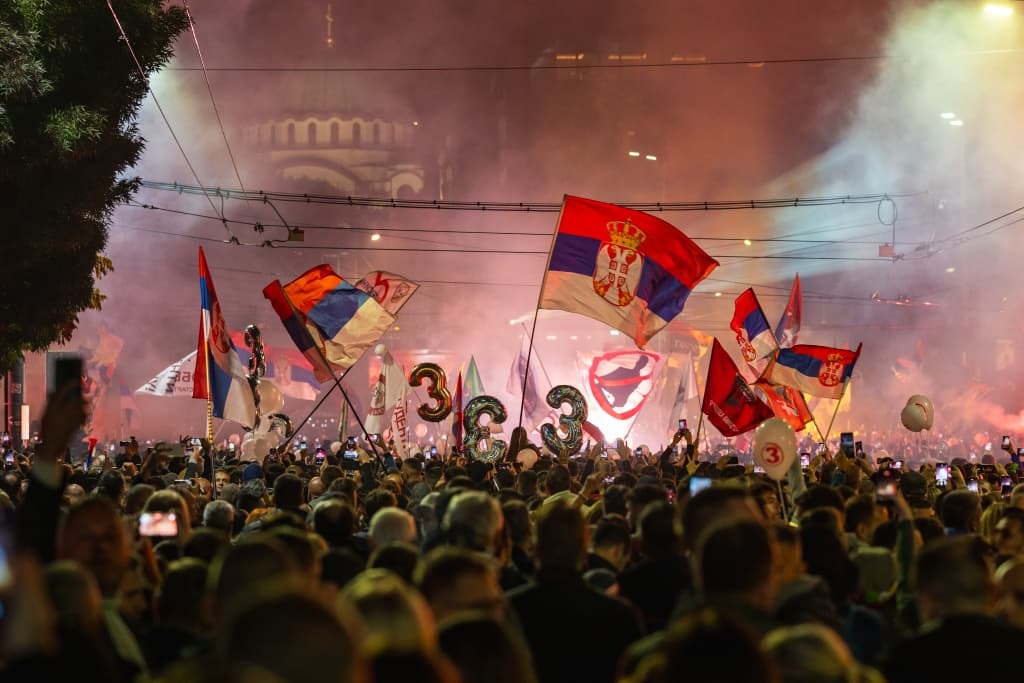
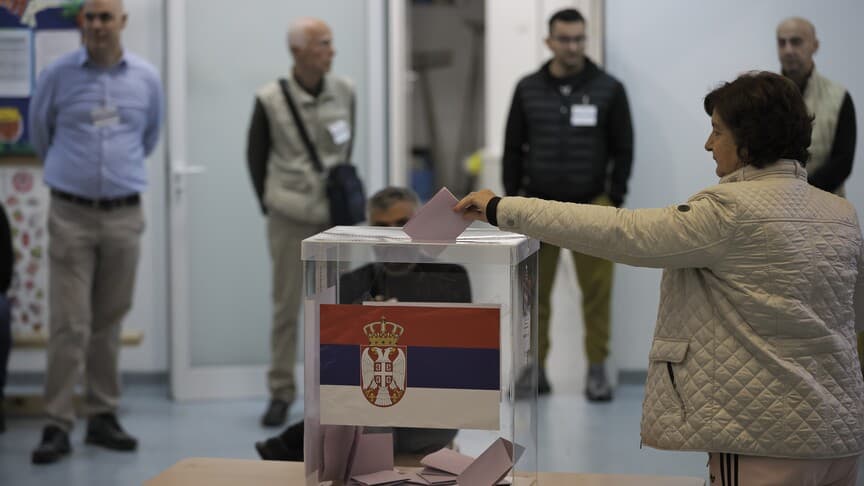
The October 25 elections — the 15th parliamentary elections since 1990 and the 10th early ones — were marked by high turnout: by 7 p.m. it had reached 67.6% according to estimates by Ipsos and CeSID, higher than the final 58.7% in December 2023. CeSID reported more than 300 complaints about possible irregularities by 8 p.m., including voting without documents, photographing ballots, group voting, technical problems, as well as suspicions of voter intimidation and vote-buying; verification is ongoing. In Belgrade, after the results were announced, street celebrations took place among supporters of the student movement.
Context: from the Novi Sad tragedy to a political force
The elections were the outcome of nearly two years of anti-government protests triggered by the collapse of a canopy at the Novi Sad railway station in November 2024, which killed 16 people. Students, who demanded accountability and a fight against corruption, became the main political force opposing the SNS, which had dominated Serbian politics since 2012. President of Montenegro Jakov Milatovic congratulated the student list and expressed hope for a new stage in relations between the two countries. Vucic himself, according to Gazeta.Ru citing RIA Novosti, said on October 25 that he expects cooperation with Russia to strengthen after the elections; Elena Guskova, an expert at the Institute of Slavic Studies of the Russian Academy of Sciences, previously noted that relations between Russia and Serbia are unlikely to deteriorate sharply if the opposition wins.
What it means
If the preliminary data are confirmed, the victory of the student list will for the first time since 2012 deprive the SNS of its dominant position in the Serbian parliament and means a change of the ruling party in the country. For citizens, this is a practical transition to forming a new government with a clear majority of 135–140 seats, and for the region, a signal of a possible restructuring of Belgrade’s external ties, although the commission’s final results and the composition of coalitions are not yet known.