The key facts
- The 'Student List' won the parliamentary elections with an absolute majority, ending 14 years of rule by Aleksandar Vučić's SNS
- The Student List won the parliamentary elections with an absolute majority, ending 14 years of rule by Aleksandar Vučić's SNS
- In July, eight EU countries blocked the opening of cluster 3 of Serbia's accession negotiations, citing democratic backsliding
- The movement's programme concerns only domestic governance, and on sanctions against Russia the movement previously stated it would maintain its previous position
- The movement's program covers only domestic governance; on sanctions against Russia, the movement had previously stated it would maintain its existing position
Change of power after two years of protests
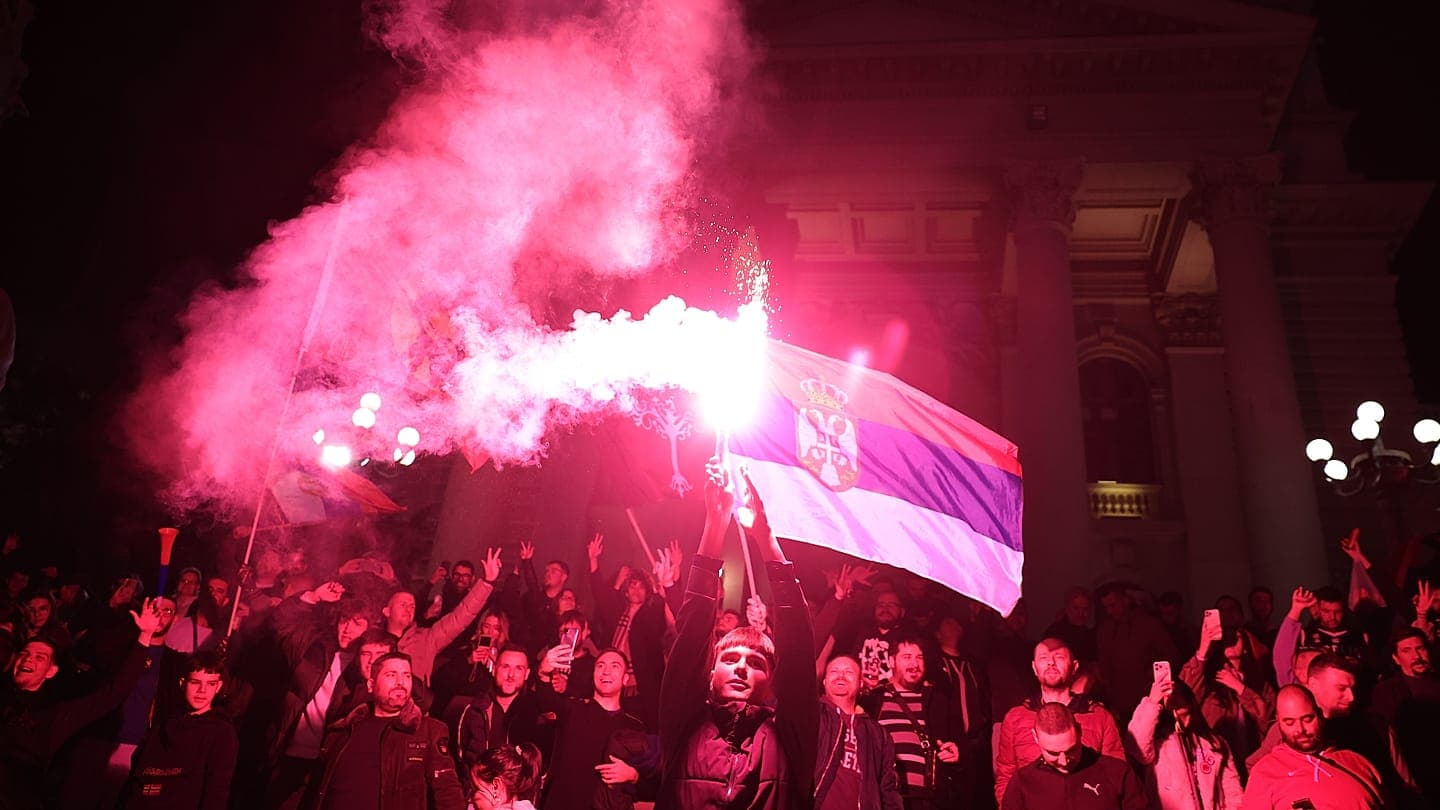
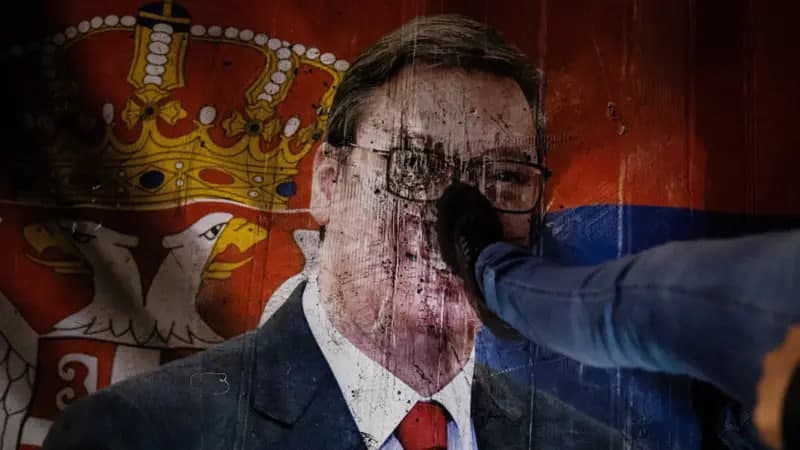
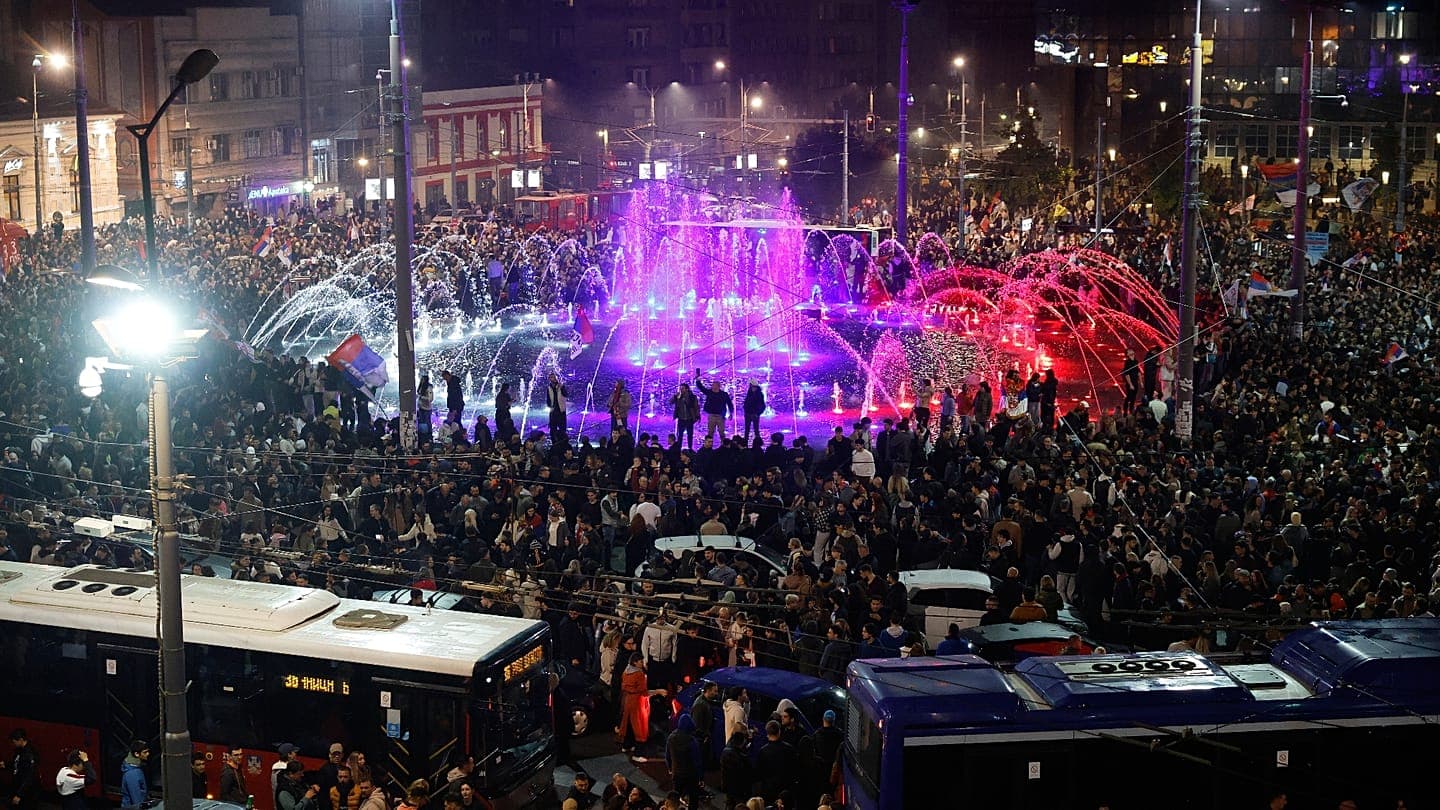
Serbia's parliamentary elections on Sunday, October 26, delivered a decisive victory to the 'Student List' — the electoral wing of a student movement that grew out of protests following the deadly disaster at the renovated railway station in November 2024, which raised questions about government accountability and corruption. The movement won an absolute majority in parliament, ending 14 years of rule by Aleksandar Vučić's Serbian Progressive Party (SNS), Euronews reports. Vučić conceded defeat, and the peaceful transfer of power after a competitive contest is seen as evidence that the country's democratic process works.
Where the new majority came from
Parliament will include representatives from outside the traditional political class: students, professors, doctors, and figures from the arts and business. The movement's campaign was built on door-to-door outreach and focused on corruption and accountability; the outlet notes parallels with Péter Magyar's victory in Hungary — he was the first foreign leader to call the Student List with congratulations. At the same time, the movement remains heterogeneous and sometimes encompasses opposing views: beyond opposition to Vučić, it is unclear what exactly it stands for. As Jelena Vasiljević, a senior research fellow at the University of Belgrade, noted, removing Vučić was a precondition for Serbia's European future, and now, in her words, an open democratic conversation about the path to EU accession is possible.
Brussels' reaction and obstacles on the path to the EU
Senior EU officials welcomed the result: enlargement commissioner Marta Kos said that 'the door to the EU is open, and we are ready to move forward together'. Optimism is tempered by recent history: in July, the European Commission sought to open cluster 3 of Serbia's accession negotiations, which had been stalled for years, but eight member states blocked the step, citing democratic backsliding and weak alignment with the bloc's foreign policy. An unnamed EU diplomat, commenting to Euronews, noted that the new majority's foreign policy position is unclear and that many EU countries will be watching closely to see whether the situation changes.
Programme and foreign policy: what is known and what is not
The Student List's programme, published last month, deals exclusively with domestic governance: public procurement, education, media freedom, judicial independence, and healthcare. Bojan Vranić, a professor of political science at the University of Belgrade, warned EU officials against excessive enthusiasm: the movement has so far been 'very conservative' on the EU and intends first to improve the system within the country. On sanctions against Russia imposed after the full-scale invasion of Ukraine in 2022, the movement wrote back in September that Serbia would maintain its principled position of not introducing restrictive measures. Belgrade also relies on Moscow's diplomatic support on the issue of non-recognition of Kosovo's independence, which the movement openly rejected in a memorandum in May. The list itself is split between committed pro-European figures and supporters of the traditional Serbian nationalist course; as Dimitar Bechev, a senior research fellow at Carnegie Europe, believes, nationalist voices will want to keep Russia 'on their side' over Kosovo, energy ties will persist, and ties with China may be somewhat downgraded.
What comes next
Next week the EU will publish its annual enlargement package with a report on the state of candidate countries — this will be the first signal of whether the bloc's approach to Serbia is changing, although Serbia's new government is unlikely to be formed before the reporting period ends. More telling may be the EU Council's conclusions on the package, which will show the position of member states. A key test may be the new government's attitude toward Montenegro, the leader in EU accession: according to the outlet, Vučić and the SNS tried to undermine its accession, stoking divisions through identity politics. Montenegro's Prime Minister Milojko Spajić wrote that he believes in a new chapter in relations between the two countries 'based on respect and open dialogue.' Optimism in Brussels is also tempered by history: in 2003, Serbian Prime Minister Zoran Đinđić was assassinated by former security service operatives over his pro-Western course. In practical terms, the change of power gives Serbia a chance to restart the accession talks blocked in July, but any real shift depends on which wing of the movement prevails in foreign policy — a question that remains open.