The key facts
- Gadi Eisenkot, who comes from a Moroccan Jewish family and grew up in Eilat, leads the Yashar party and is challenging Benjamin Netanyahu in Tuesday's election.
- Gadi Eisenkot, who comes from a Moroccan Jewish family and grew up in Eilat, leads the 'Yashar' party and is challenging Benjamin Netanyahu in Tuesday's election.
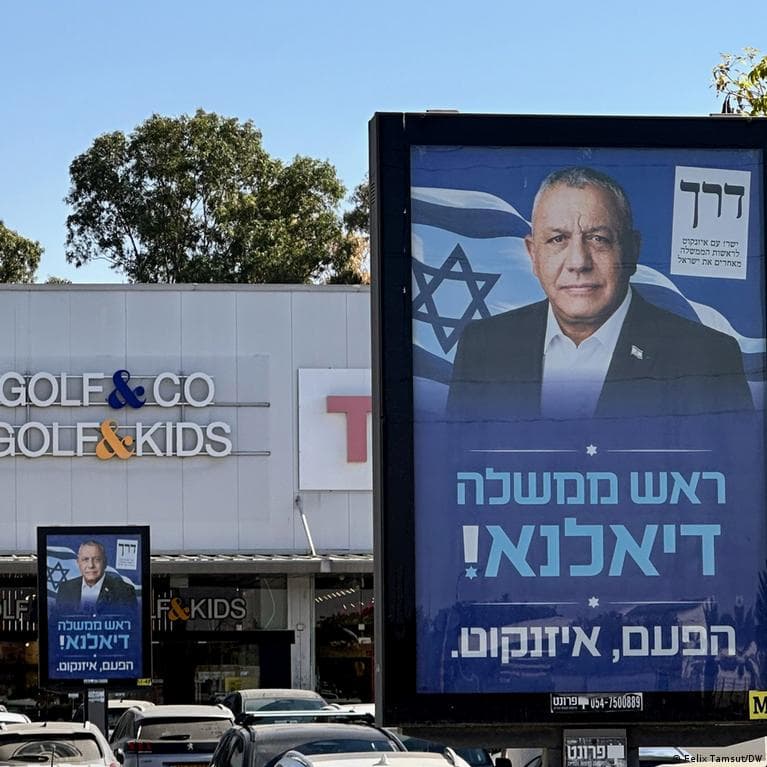
- The campaign is built on the slogan 'Rosh Memshala Dialna' ('our prime minister' in Hebrew and Moroccan Arabic) and targets the Mizrahi population of the periphery.
- Journalist Yinon Magal called Eisenkot a 'monkey,' claiming he was controlled by elite Ashkenazim; Netanyahu condemned the remark.
- Journalist Yinon Magal called Eisenkot an 'ape,' claiming he is controlled by Ashkenazi elites; Netanyahu condemned the remark.
Campaigning on the periphery
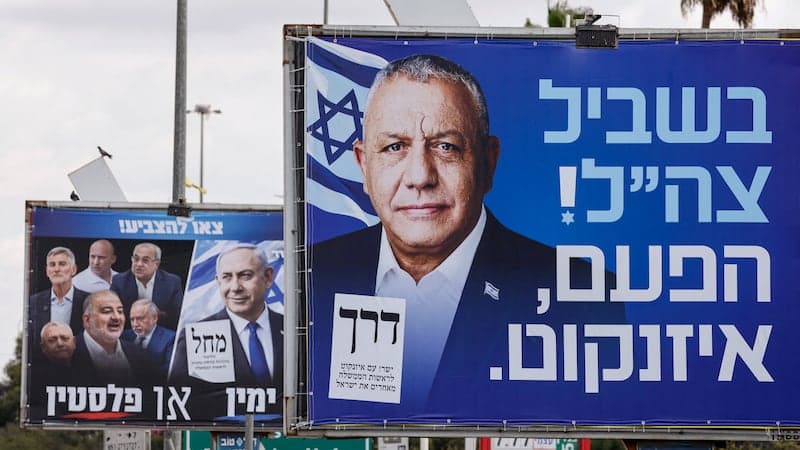
On the eve of Tuesday's election in Sderot, Israel — located about 75 km south of Tel Aviv and just one kilometer from the Gaza border — a single poster for Gadi Eisenkot's liberal Yashar party outshines the billboards of the right-wing Likud and the far-right Otzma Yehudit. His slogan, 'Rosh Memshala Dialna,' combines the Hebrew word for 'prime minister' with Moroccan Arabic for 'our very own,' Deutsche Welle reports. The emphasis on Moroccan roots is no accident: Sderot is a city with a large Moroccan Jewish community, which in recent decades has become a symbol of Moroccan-Jewish culture in Israel.
A traditional Likud stronghold
Historically, Sderot has been considered a bastion of the Israeli right and a stronghold of Benjamin Netanyahu's Likud: in 2022 the party received more than 40% of the vote there, against 23% nationwide. According to Deutsche Welle, about half of Israel's Jewish population are Mizrahim — Jews originating mainly from the Middle East and North Africa — roughly 4 million people. From the state's earliest days, Mizrahim faced discrimination and neglect, and this inequality still affects the country's economy, society and political discourse. The issue intensified in the 2026 campaign: Yashar accused Likud of sidelining Mizrahi politicians, and the slogan 'Netanyahu: let Mizrahim give interviews' mocked this silencing.
A racism scandal
The tension spilled beyond campaign rhetoric. Live on air, right-wing journalist Yinon Magal — one of Netanyahu's loudest supporters — claimed that Eisenkot was controlled by elite Ashkenazim and called him a 'monkey'. Netanyahu, himself of European descent, condemned the remark. Daniel Ben-Simon, a journalist of Moroccan origin and former member of parliament, told DW that Eisenkot's appeal to his roots may have been a forced reaction to Magal's words, but carries historical significance: in his view, Israeli society long tried to erase the Arab identities of North African Jews, and Eisenkot was the first to allow a dual Israeli-Moroccan identity to be expressed.
The historical context of the divide
The divide between Ashkenazim and Mizrahim goes back to Israel's first decades. The ruling socialist Mapai party, whose leadership was mostly Ashkenazi, pursued discriminatory policies: Mizrahim were expected to 'Europeanize' rather than preserve their own culture and Arabic language. While European immigrants received better housing and jobs, many Jews from Arabic-speaking countries were sent to Maabarot — temporary transit camps in remote areas with poor infrastructure. These later became 'development towns,' underfunded compared with the country's center, which bred poverty; Sderot is one of the best known of these towns. Likud, founded as a right-wing alliance in 1973, effectively exploited this discontent under Menachem Begin: Mizrahi support helped him win the 'Mahapakh' — the 'upheaval,' his first victory over the socialist camp. Since then, Mizrahim have often been associated with Likud, although the party has never had a Mizrahi leader.
A changing Sderot
Over two decades, its proximity to Gaza has made Sderot a frequent target of rocket attacks by Hamas. During the Hamas-led terror attack of October 7, 2023, the city was hit especially hard: more than 50 people were killed. In the three years since the attack, the population has grown by about 5,000 to 40,000, largely thanks to young families drawn both by idealism and by state benefits. At the same time, the national-religious community, inclined to vote for Bezalel Smotrich's far-right Religious Zionism party — a member of Netanyahu's coalition — is becoming increasingly visible. According to DW's assessment, votes for Smotrich effectively go to Netanyahu's bloc, but Likud itself may lose votes in Sderot.
What is at stake
The event matters because Eisenkot's campaign is, for the first time, making Mizrahi identity a central argument in the struggle against Likud, which for decades relied on this electorate without having a Mizrahi leader. The outcome of Tuesday's election will affect above all the residents of peripheral 'development towns' like Sderot, whose voting has traditionally been shaped by historical inequality. In practical terms, as Ben-Simon notes, an Eisenkot victory could strengthen such towns' ties to their Moroccan roots and influence the self-identity of Moroccan Jews in Israel; however, this is the journalist's own forecast, not an established fact.