The key facts
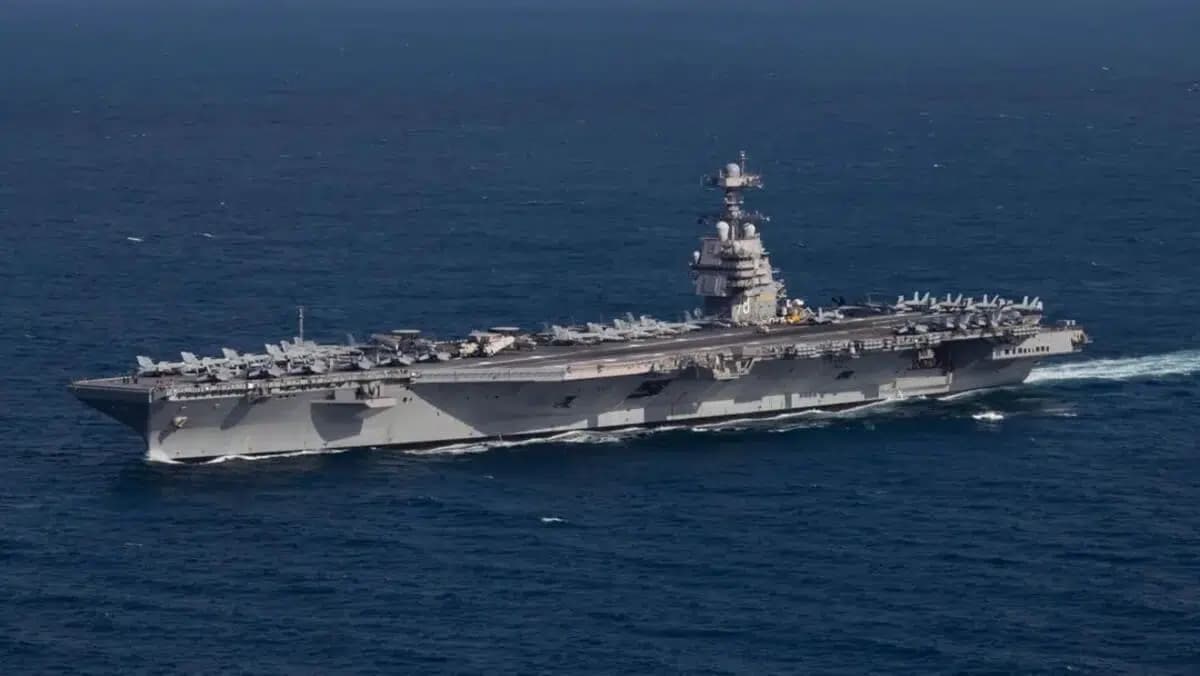
- The US Navy has 11 nuclear-powered aircraft carriers: ten Nimitz-class ships (CVN-68 — CVN-77) and the Gerald R. Ford (CVN-78), commissioned in July 2017
- Fleet size and the number of combat-ready carriers are two different indicators: some ships are undergoing maintenance or multi-year repairs
- The Nimitz class uses steam catapults, the Ford uses electromagnetic ones, with new aircraft launch systems and ordnance elevators
Eleven on paper — not eleven at sea
The US Navy has 11 aircraft carriers on its rolls, yet, as Kun.uz explains, not all of them can put to sea at the same time. Some ships are undergoing maintenance or lengthy repairs, while on others crews are being trained or preparations for the next deployment are underway. Therefore, the number of ships in the fleet and the number of carriers actually ready to carry out missions are two different indicators.
Fleet composition
The backbone of the US carrier fleet consists of ten Nimitz-class ships: Nimitz (CVN-68), Dwight D. Eisenhower (CVN-69), Carl Vinson (CVN-70), Theodore Roosevelt (CVN-71), Abraham Lincoln (CVN-72), George Washington (CVN-73), John C. Stennis (CVN-74), Harry S. Truman (CVN-75), Ronald Reagan (CVN-76) and George H.W. Bush (CVN-77). The CVN designation is applied to the nuclear-powered aircraft carriers of the US Navy.
Gerald R. Ford — a new generation
The eleventh ship is the Gerald R. Ford, hull number CVN-78. It was commissioned in July 2017 and ushered in a new generation of American aircraft carriers. While Nimitz-class ships use steam catapults to launch aircraft, on the Ford they have been replaced with electromagnetic catapults; the ship is also fitted with new aircraft recovery systems and new elevators for moving ordnance.
Role and limitations
Aircraft carriers serve as floating airfields, enabling air operations on the open sea. Their aircraft are used for strike missions, air defense, reconnaissance and electronic warfare. The nuclear power plant allows the ships to remain underway for long periods, yet it does not make them independent of resupply: aviation fuel, food, ammunition and other supplies must be replenished regularly.
Readiness cycle
Aircraft carriers go through successive phases of combat deployment, maintenance and training. An overhaul can keep a ship out of operational tasks for several years, while it formally remains part of the fleet. This, according to the publication, explains the gap between the number of ships on paper and the number available for deployment at any one time. The editorial team notes: the information provided describes the structure and operating cycles of the fleet, but does not contain data on the current condition of each specific ship today.