The key facts
- Trump imposed 50% tariffs on part of the $880 billion annual US-Canada trade
- More than 1.5 million trucks carrying $42.2 billion in trade cross the Blue Water Bridge annually
- The share of American cars in Canadian sales fell from 35.4% to 28.4% in the first half of the year (JD Power Canada)
Tariffs Hit Border Towns
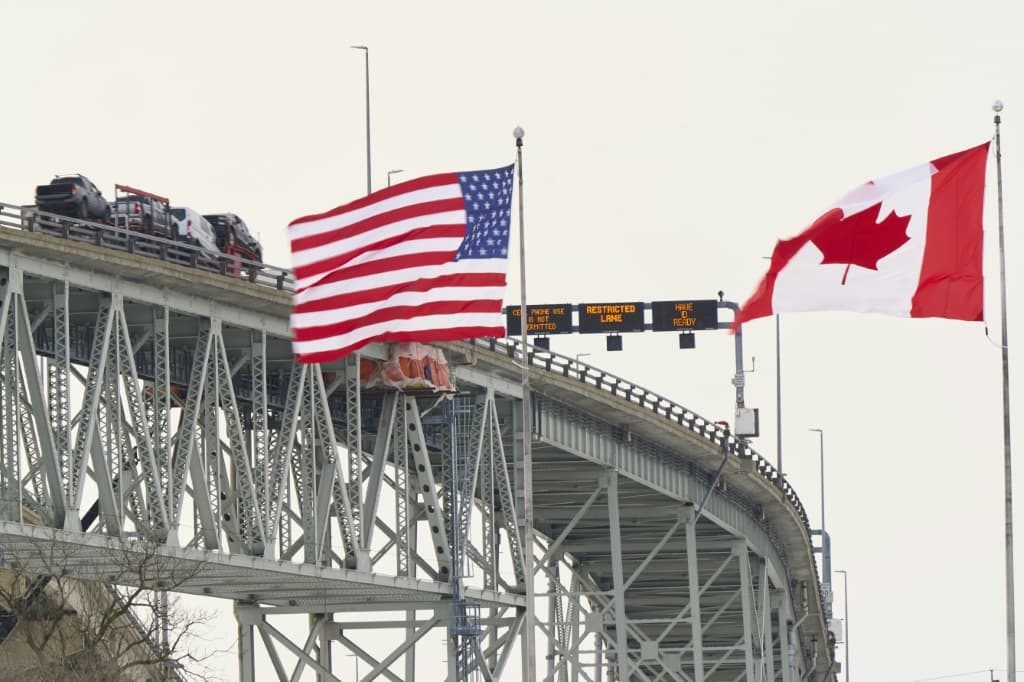
Ahead of the November midterm elections, President Donald Trump imposed 50% tariffs on part of the $880 billion annual US-Canada trade. This affected Michigan's border towns the most, such as Port Huron near the Blue Water Bridge over the St. Clair River. According to Canadian officials, more than 1.5 million trucks cross the bridge annually, carrying $42.2 billion in road trade; volumes are expected to decline due to the trade war.
Residents' Reactions Differ
Mickey Roe, an 83-year-old retired police officer whose father was Canadian, expressed regret over the conflict: 'It shouldn't be this way, because we used to be friends, real good friends, and it should stay that way.' He also suggested that Trump is deriving financial benefit from the tariffs. Another driver, who declined to give his name and supports Trump, said the opposite: 'They've been taking advantage of us for a long time,' and faulted the Canadian side for improperly displaying the American flag at the border crossing.
Political Battle in Michigan
St. Clair County, where Port Huron is located, voted for Trump in 2024 by a margin of more than 34 points. However, discontent with the president's measures has made the region attractive to Democrats ahead of the November 3 elections, which many view as a referendum on the president. Democratic Senate candidate Abdul El-Sayed drew more than 1,000 people to an event in Port Huron, a city with a population of just under 30,000. He said the cost of living is rising because of 'the crazy tariff war that we don't need to be waging with our neighbors in Canada at all,' joking that 'if you want to tariff Ohio — by all means, but not Canada.' Attendee Patty Lossing, 65, noted that 'wages and the economy are what's hurting Michigan,' adding that Americans see the consequences every day in stores and pharmacies.
Blow to the Auto Industry
The tariffs affect Michigan's key automotive industry. Glenn Stevens, chief automotive officer at the Detroit Regional Chamber, noted that the two countries' supply chains are 'tightly intertwined and interdependent,' and that tariffs raise costs and put strain on companies and partner relationships. According to JD Power Canada, the share of American cars in new vehicle sales in Canada fell to 28.4% in the first half of the year from 35.4% a year earlier; the company linked this to the tariffs.
Republicans' Positions and Canada's Reaction
Trump, who claims Canada discriminates against American trade, has publicly criticized Prime Minister Mark Carney over retaliatory tariffs, calling him 'nasty' and 'ungrateful.' The US Embassy in Canada said on Wednesday that these measures are an attempt to influence the midterm elections. Republican Senate candidate Mike Rogers, endorsed by Trump, distanced himself from the trade measures: 'We need to end the tariff war with Canada. It certainly isn't helping us and our auto industry.' At the same time, he told FOX News in an interview that some Michigan manufacturers have added shifts due to growing demand for products made in the USA. Republican representative Lisa McClain hinted on local radio that Trump may visit the Port Huron area to support Rogers, though this has not been confirmed.