The key facts
- Experts consider the abolition of cashback premature without analyzing its effect on bringing turnover out of the shadow economy
- The proposal to label vegetable oil drew criticism due to the absence of cost calculations for businesses
- On the carbon tax, a variant of replacing part of excise duties is being discussed instead of introducing an additional tax
Discussion of tax initiatives
In Uzbekistan, experts Otabek Bakirov and Murod Mukhammajonov discussed a package of tax proposals, including the abolition of cashback, extending product labeling to vegetable oil, revising social tax benefits and introducing a carbon tax. The main demand of both experts was transparency of calculations and an assessment of consequences for businesses and the population before decisions are made.
Abolition of cashback: more questions than answers
An initiative to abolish cashback worth about 1.8 trillion soums per year is being discussed. Otabek Bakirov noted that the initiative lists arguments 'for' but presents no counterarguments or analytics: what share of hidden trade was formalized after the introduction of cashback and whether this process will continue after its abolition. According to him, general statements about building schools and kindergartens are not enough — it is necessary to document where the saved funds will go: to the 'Initiative Budget' or to reducing other taxes on consumers. He also noted that some families perceive cashback as part of their income. Murod Mukhammajonov recalled that even when the system was being introduced he asked about the calculations: buyers are paid 1% even on receipts of enterprises that already formalize transactions, and one must count not only turnover but also actual tax revenues to the budget — possibly, the 1.8 trillion soums of expenses are recouped by a larger volume of collections. Bakirov asked how the share of cashback has changed at the 'Urikzor' and 'Abu Sahiy' markets and at construction markets. As an alternative to abolition, he proposed directing funds collected in a district to the local 'Initiative Budget', and does not consider a lottery instead of cashback a solution.
Vegetable oil labeling and the burden on business
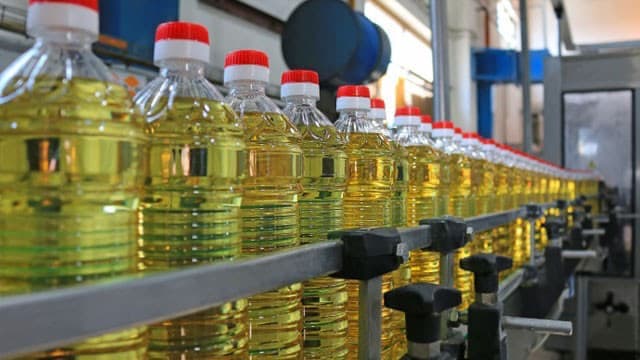
Bakirov negatively assessed the proposal to label vegetable oil, pointing to the absence in the draft of calculations of market volume, the share of hidden turnover and the expected effect. He emphasized that oil is a everyday-consumption good, and it is necessary to assess the impact of price increases on low-income families. The expert proposed conducting an independent examination of goods already being labeled (price dynamics, reduction of shadow turnover) by specialists not connected with the operator, and until then introducing a moratorium on adding new goods to the list of mandatory labeling. Mukhammajonov raised the question of the operability of the existing system: errors in reading codes can stop production lines, and there are problems in logistics and with the reuse of codes. He gave a hypothetical example: with a goods price of 7 thousand soums and a profit of 700 soums, additional costs of 70 soums are 1% of the price but 10% of the producer's profit, which limits investment. For small enterprises the burden is higher, since the cost of equipment is spread over a smaller volume of output. He proposed testing the entire cycle at one plant with recording of costs and technical problems. Bakirov added that since businesses are obliged to use the services of the operator CRPT Turon, its financial reports should be public, and parliament has the right to request an assessment of the benefit and burden for the economy.
Social tax benefits: who receives the benefit
Bakirov stated that when discussing measures to balance the pension system, tax benefits for large business should also be considered: the combination of an increased burden on citizens and the preservation of zero or 1-percent rates for certain companies creates double standards. According to his observation, benefits sometimes worked in favor of company owners rather than employee incomes, although he has no complete data; he proposed that the Ministry of Economy and Finance and the Tax Committee openly publish the results, and that benefits be made time-limited with a final assessment based on wages and official employment. Mukhammajonov objected that the absence of published data does not mean their absence: discussions in the Council considered information on the growth of official registration of employees in retail and catering, although wage growth was not observed everywhere. From his own practice he cited an example when a reduction in the social tax rate made it possible to officially register 300 employees instead of the 70 indicated in documents. He emphasized the stimulating function of taxes and the admissibility of benefits for remote regions and difficult industries, but opposed individual benefits for individual companies. Bakirov proposed showing the dynamics of officially employed people and taxpayers in benefit regions such as Sokh and Muynak, and spoke against closed decisions on individual companies, considering targeted benefits with clear conditions preferable to subsidies.
The carbon tax and its impact on the population
Mukhammajonov warned that a carbon tax introduced as an additional one on top of existing taxes would affect prices: the burden on fuel producers and entrepreneurs using it will ultimately pass to consumers. He proposed considering replacing part of the current excise duty with a carbon tax in order to reorganize the existing burden rather than add a new one, otherwise companies may be left without funds to upgrade filtration equipment. Bakirov stated that he is not against introducing such a tax, but its goal should not be additional budget revenue but stimulating polluting enterprises to change technologies; at the same time, existing taxes need to be revised proportionally. He also raised the question of the possibility of a fair assessment of emissions: whether there are enough measuring instruments for coal-fired power plants and oil and gas processing, and proposed that the authors of the initiative show calculations using the example of a specific enterprise. In addition, he recalled greenhouse farms: instead of stopping their operations, strict standards could be established while preserving production, and it should be ensured that the new tax, through rising vegetable prices, does not fall on the population.