The key facts
- The Cybercab expansion will begin in Dallas in November and cover other cities by the end of 2026; sales to parking operators will start by the end of the year
- Elon Musk said the financial payoff from robotaxis will not become visible in reporting until at least the second quarter of 2027
- NHTSA is investigating the Cybercab's compliance with safety standards: the car has no brake pedal and no side mirrors
Expansion beyond Austin
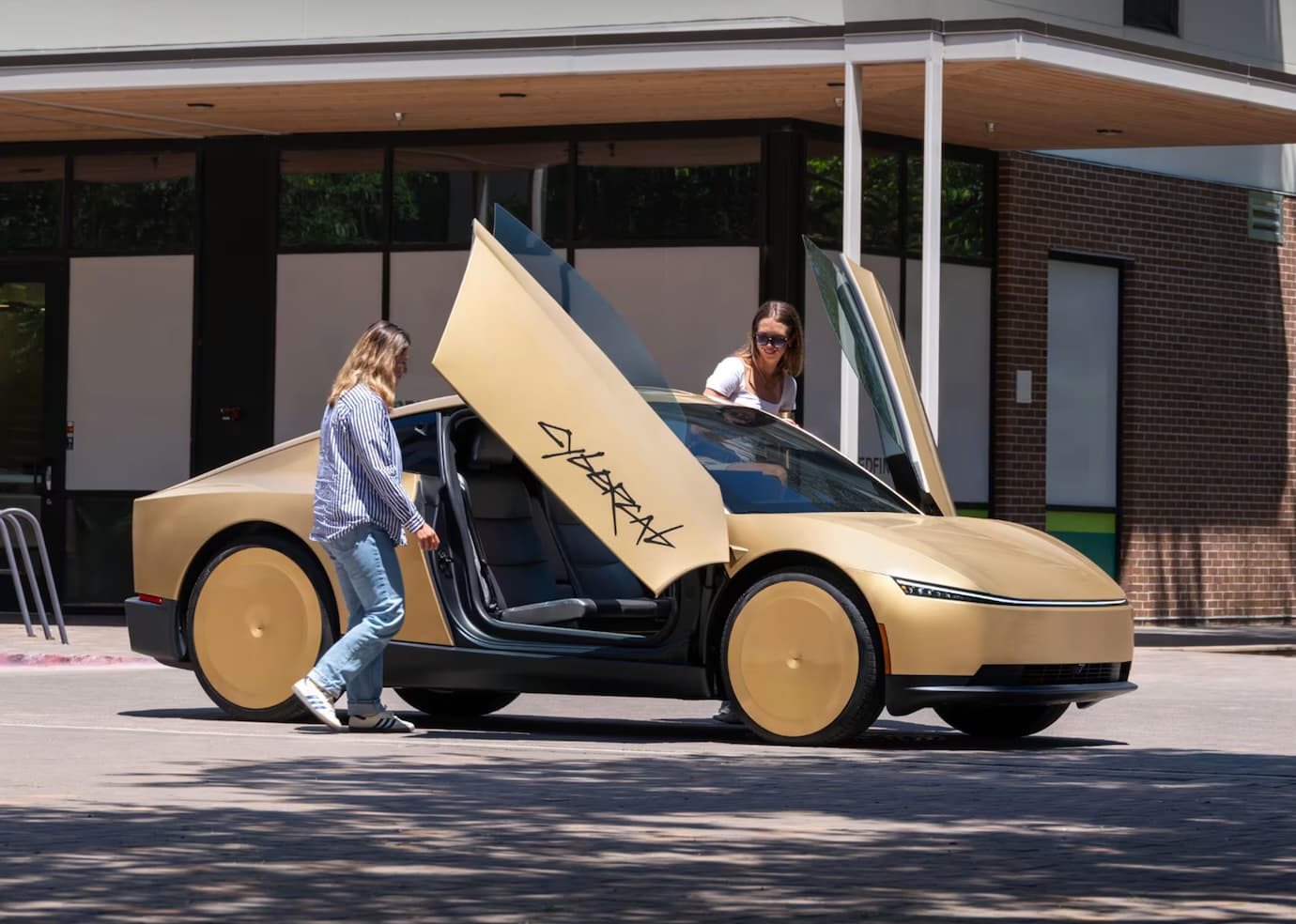
Tesla said on its third-quarter earnings call that it is preparing to take the golden Cybercab to new markets beyond Austin, Texas. According to TechCrunch, the expansion will begin in Dallas next month and spread to other cities by the end of the year. The company already operates small Model Y-based robotaxi fleets in Dallas, Houston, as well as in Miami, Orlando and Tampa in Florida. In addition, Tesla said it will begin selling the Cybercab to fleet operators by the end of the year.
Ambitions and competition with Waymo
CFO Vaibhav Taneja said the company wants to 'literally capture every part of ground transportation': 'We start with moving people from point A to point B, but we want to own any kind of transportation on Earth.' Tesla previously showed a multi-passenger Robovan concept, but it is unclear whether Taneja's words mean work on other types of transport. The Cybercab expansion could lead to a direct clash with Waymo, the leader of the US robotaxi market with more than 4,000 vehicles in more than a dozen cities. Tesla claims its Cybercab is cheaper and easier to manufacture, which would allow it to compete on price, but for that it needs to achieve real scale outside Austin.
Financial opacity
Tesla did not disclose how much the robotaxi business generates. Elon Musk said the new taxi service will not be noticeable in the company's overall financial figures until the second quarter of 2027, 'and will probably become a big deal by the third or fourth quarter of next year.' Tesla also changed its shareholder letter: instead of the 'cumulative paid robotaxi miles' chart, which showed a 36 percent decline from the first quarter, it now shows 'cumulative unsupervised robotaxi miles' — regardless of whether paying passengers were present. When asked about paid miles, Taneja only replied that 'utilization is growing,' without specifics.
Manufacturing and regulatory barriers
Taneja praised the engineers, saying that, according to the manufacturing team, the Cybercab is very easy and quick to assemble: 'They believe it is one of the easiest products to scale. So scaling will not be a big problem.' He named obtaining 'all the regulatory approvals' as the difficulty, in order to 'deploy Cybercabs as fast as we produce them.' This echoes Musk's repeated statements that the main barrier is regulatory approval, not technology. In September, a few hours after the official Cybercab launch in Austin, NHTSA opened an investigation into the vehicle's compliance with federal safety standards. Tesla claims the Cybercab meets the standards, but the car lacks the brake pedal and side mirrors they require. NHTSA has proposed waiving part of these requirements, but the rule change will likely not take effect for at least several months.
Technological limitations
Not all Tesla executives agreed with the assessment of the barriers. Vice president of autonomy Ashok Elluswamy said the remaining bottlenecks are 'not purely regulatory': 'It is determined by technology.' He noted that the service operated from 6 a.m. to 9 p.m., then until 11 p.m., and will soon operate until 2 a.m. — the expansion is driven by the capabilities of the AI software. Perhaps that is why Tesla's service still does not drive on highways and in certain conditions, although it has repeatedly been spotted in Austin in heavy rain — which Waymo robotaxis mostly avoid. Elluswamy said Tesla plans to master more complex driving scenarios by the end of the year before scaling further: 'We just want to make sure there is not a single safety incident. That is our operating principle. And even with the slightest possible risk, we do not take that risk.'