The key facts
- The study The Overlooked Conservation Values of Saline Lakes was published in Nature Communications in September, with 26 scientists as co-authors.
- 85 salt lakes were analyzed: 27 soda lakes, 40 inland sulfate-chloride lakes, and 18 coastal lakes of marine origin.
- 200 species from the IUCN Red List are associated with the lakes; 53% of them are birds.
Scale of the study
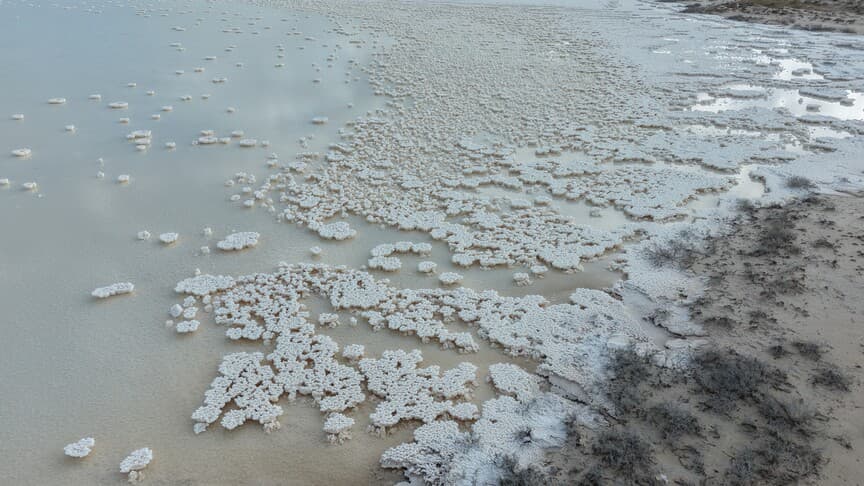
The international study The Overlooked Conservation Values of Saline Lakes, published in September in the journal Nature Communications and prepared by 26 scientists from different countries, found that climate change and excessive water use threaten salt lakes, which are associated with 200 species classified in the IUCN Red List as threatened or near-threatened. The scientists studied endangered species and ecosystem services in 85 salt lakes worldwide, focusing on lakes with a long-term average salinity of more than 1 gram per liter.
The importance of salt lakes
According to the study, such lakes account for more than 45% of the global volume of lake water and 23% of the total area of the world's lakes. The researchers assessed 27 soda lakes, 40 inland sulfate-chloride lakes, and 18 coastal lakes of marine origin; the salinity level of the studied water bodies ranged from 1 to 375 grams per liter. Of the 200 species associated with these lakes, 53% are birds; the list also includes fish, mammals, reptiles, amphibians, and invertebrates.
Scientists' commentary
In an interview with the Anadolu agency, Nurgül Balcı, head of the geomicrobiology and biogeochemistry laboratory at Istanbul Technical University and a participant in the study, noted that one of the most important findings of the work is the significantly greater than previously assumed biodiversity and ecological value of salt and alkaline lakes. According to her, these lakes are not simply bodies of water with a limited number of organisms resistant to high salinity: they support extensive food webs — from microorganisms and invertebrates to fish and birds — and serve as feeding, resting, and breeding sites, especially for migratory birds.
Reasons for vulnerability
Balcı emphasized that salt lakes are among the world's aquatic ecosystems most vulnerable to climate change. One of the main reasons is their location in closed drainage basins. “The water level in these lakes depends on an extremely fragile balance between the water entering the basin and evaporation. Decreased precipitation, rising temperatures and increased evaporation, as well as excessive use of surface and groundwater for agriculture, industry, or settlements, can quickly disrupt this balance,” she said.