The key facts
- Since 2022, the Arabiancairns project has mapped tens of thousands of tombs in the UAE, Oman and Saudi Arabia; funding has been extended until 2027
- In the Bisyah area (Oman), about 5,500 tombs have been confirmed across 4,700 sq. km; in Dahiyah (Saudi Arabia), repeated burials at intervals of roughly a thousand years are recorded
- Imported pottery testifies to trade with Mesopotamia, Iran and Baluchistan; probable exports included copper, dried fish, dates and shell objects
Scale of the project
The Arabiancairns initiative, launched in 2022 and funded by the French National Research Agency (ANR), has mapped tens of thousands of funerary tombs on hills, terraces and plains across the UAE, Oman and Saudi Arabia. The project covers protohistoric Arabia — roughly from 5500 BC to AD 300, including the Bronze Age (c. 3200–1300 BC) and the Iron Age (until c. 300 BC). Originally planned for four years, the project has received a funding extension until 2027, and new fieldwork is already scheduled. Upon completion, the database of funerary monuments with precise coordinates will be opened for public access.
Bisyah: 5,500 tombs
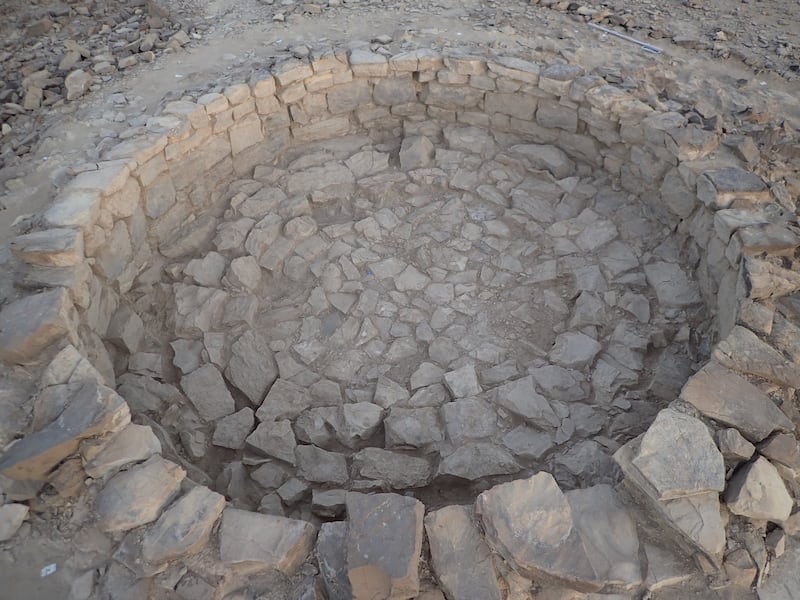
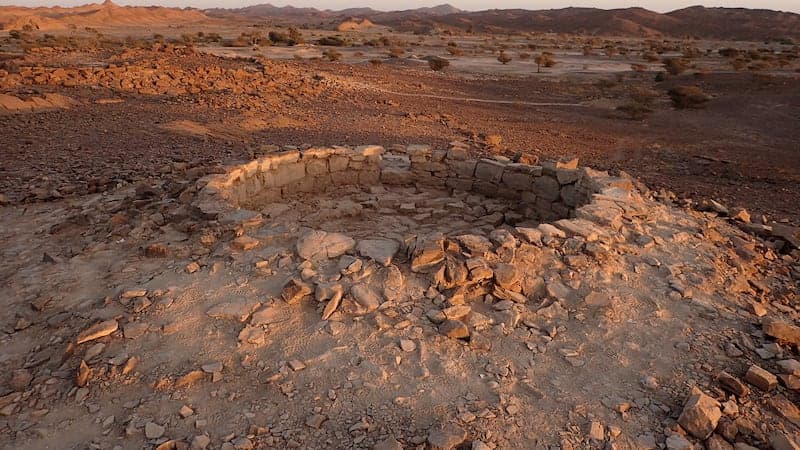
A key research area is the surroundings of Bisyah in central Oman, where about 5,500 tombs have been mapped and confirmed by pedestrian surveys and satellite data over an area of about 4,700 sq. km. “These monuments were built at different times, many contained several burials, and some were reused long after their original construction,” said Dr Olivia Munoz of the Trajectories Laboratory of the French National Centre for Scientific Research (CNRS) and Paris 1 Panthéon-Sorbonne University. Similar patterns are observed in Dahiyah in eastern Saudi Arabia: episodes of burial in the same tomb are separated by roughly a millennium. The researchers analyse the distribution of tombs relative to the landscape, the architecture of the monuments and its changes, while chemical analysis helps determine the age of the objects, people's diet and the nature of their movements.
Who was buried
According to Dr Munoz, a significant part of the population, not only the elite, appears to have been buried in Bisyah, since no alternative form of burial of the same period is known. The excavated tombs contain the remains of people of different ages, including children; some contain a single person, while others were used for collective burials. The presence of children alongside adults suggests family ties, although this in itself does not prove kinship. The absence of substantially larger dwellings that could have belonged to the elite argues for weak social stratification, but Munoz allows that status differences may have left no archaeological traces. The abundance of tombs, in her view, indicates not the size of the population at any given moment, but that people lived in the region or visited it regularly over a long period. The French archaeological mission in central Oman, working in Bisyah, is led by Mathilde Jean (Paris Nanterre University) and Martin Sauvage (the Arscans laboratory of CNRS).
Cultural connections
The finds in Bisyah show similarities with discoveries at other sites, including in the UAE: beads from Bisyah find parallels at Hili, Jebel Hafit and Umm an-Nar. The tomb architecture belongs to traditions widespread on the Oman Peninsula and more broadly across Arabia. According to Munoz, this points to a shared culture — common knowledge, practices and tastes, as well as the exchange of goods — but does not prove direct links between Bisyah and other sites or a single political identity. In one of the tombs, a shark tooth and hundreds of beads made of marine shells were found, indicating contacts with the coast.
Trade routes
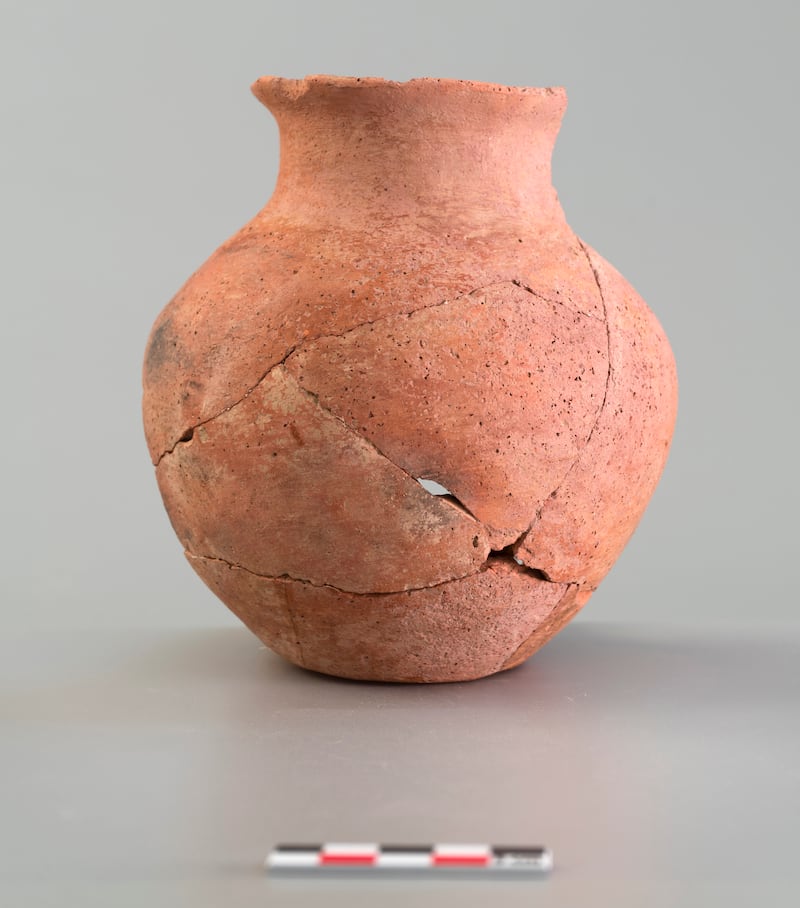
Imported pottery testifies to trade ties stretching as far as Mesopotamia, Iran and Baluchistan (a historical region in the territory of present-day Iran, Afghanistan and Pakistan). Copper was a probable export — in the Bronze Age the Oman Peninsula was an important producer of it; dried or salted fish, hides, dates and other palm products, ornaments made of worked shells and stone could also have been exported. Imports probably included textiles, grain and oils from Mesopotamia, as well as timber, textiles and ornaments from the Indus region. Munoz notes that a vessel could have travelled because of its contents rather than the object itself, and that imported vessels in Bisyah do not necessarily mean that local inhabitants travelled there — goods could have been passed on through coastal settlements and markets. Dromedaries were not yet domesticated at that time, so cargoes could have been carried by people, donkeys or cattle. Without written sources, the symbolic beliefs and political organisation of that time remain difficult to reconstruct.