The key facts
- About 60% of seagrass beds along the Baltic coast have disappeared, but according to ecologist Thorsten Reusch the decline has stopped
- Seagrass meadows store carbon 30–50 times faster than forests and serve as a refuge for fish, crabs and mollusks
- The first plantation in Germany's Baltic waters, planted in 2021, has shown high shoot density
Handiwork underwater
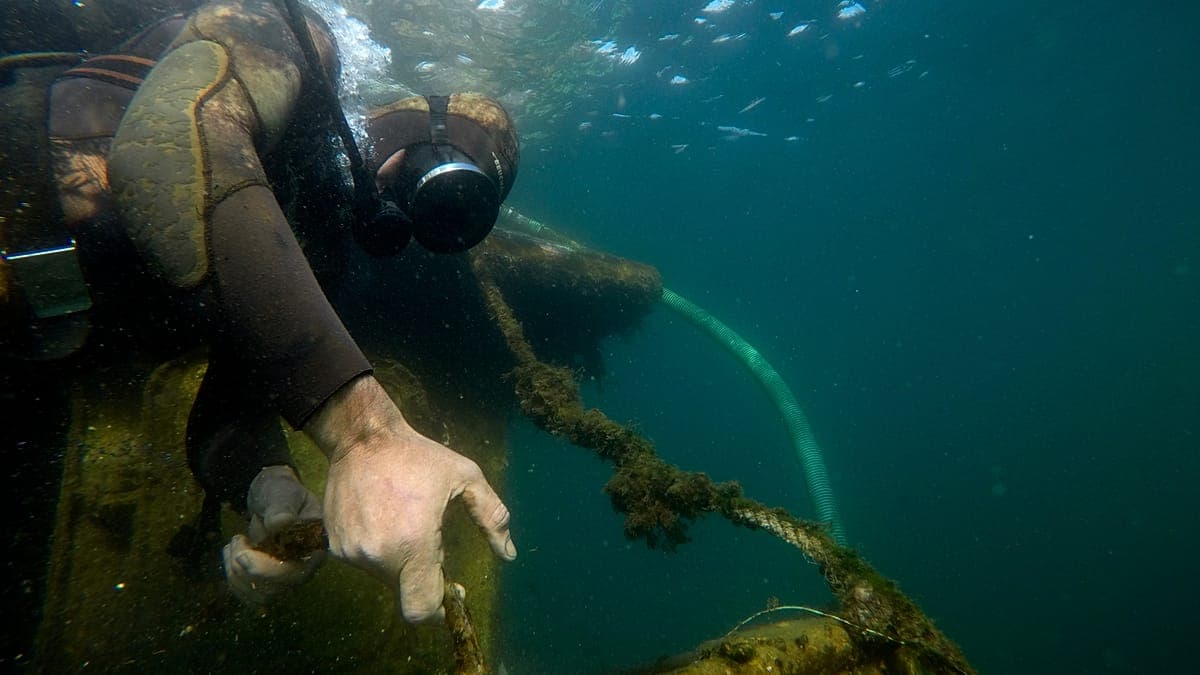
Off the small resort town of Damp in northern Germany, divers from the non-profit organization Seagrass Conservation carefully extract seagrass shoots from a donor meadow, keeping the roots intact, and transplant them to a pre-selected site. The young plants need sandy soil, protection from waves and currents, as well as enough light and oxygen. Only a few shoots are taken from each spot so as not to harm the donor meadow. The organization's head, Miriam Shpika, who has been doing underwater research for more than 30 years, says that over these years she has 'seen changes' — and she is not the only one who has observed the destruction of the seagrass beds.
The scale of the problem
According to scientists' estimates, about 60% of the seagrass meadows along the Baltic Sea coast have disappeared. 'That is bad news,' says marine ecologist Thorsten Reusch of the GEOMAR Helmholtz Centre for Ocean Research in Kiel. 'The good news is that the decline has stopped.' Restoration is not only the work of enthusiasts: Reinhold Helbig, co-founder of the startup ZosteraTec, helps restore marine habitats damaged, among other things, by the construction of offshore wind farms. His team collects fresh shoots washed ashore by storms, grows and propagates them in aquaculture, and then uses a specially developed machine to bind them with biodegradable thread into ribbons that can be laid on the seabed with less underwater work.
Why it matters
Underwater meadows feed and shelter fish, crabs, mollusks and other species, improve water quality, dampen waves and protect coasts from erosion. Especially valuable is the fact that they store carbon in the seabed roughly 30 to 50 times faster than forests. According to Reusch, in the Indo-Pacific region, where seagrass is especially abundant, it can play a significant role in countries' carbon balances. Worldwide, there are about 70 species of seagrass along the coasts of more than 150 countries — from the water's surface down to a depth of 60 meters. In the Baltic, these meadows are among the sea's most valuable habitats: they shelter wildlife, stabilize the seabed and act as natural filters, trapping particles and nutrients.
Seeds instead of shoots
GEOMAR researchers are also testing another method — sowing seeds. Marine ecologist Esther Thomsen explains that only about 10% of the plants in the meadows produce seeds, but restoration from seeds has a major advantage: greater genetic diversity, and in the future seeds could be sown over much larger areas. In Reusch's view, the most promising way to grow meadows resilient to climate change is a combined approach: first plant individual shoots as a foundation, then sow seeds between them to increase diversity.
Results only visible after years
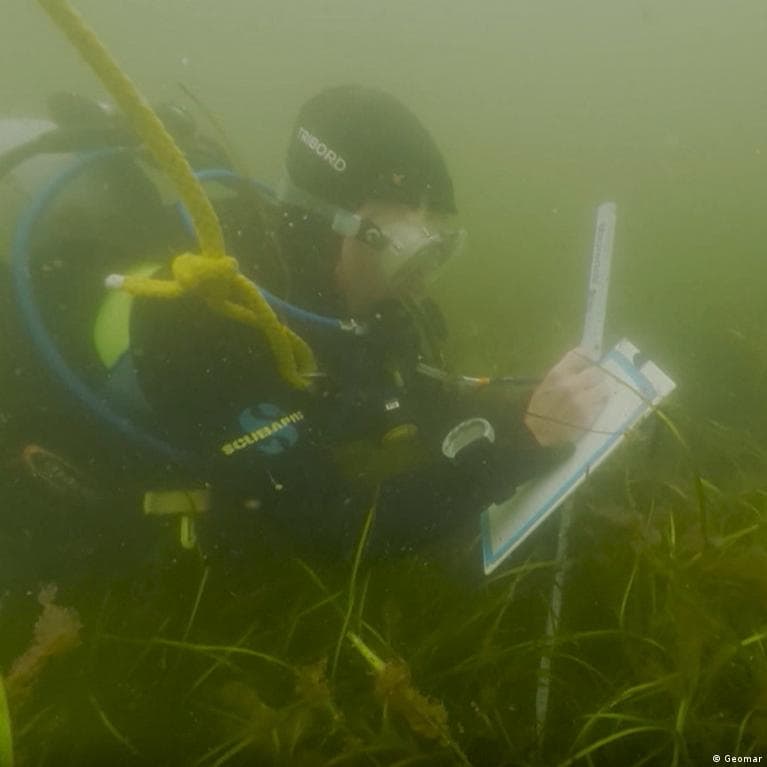
The success of a planting only becomes evident after months or years. Thomsen and her colleagues are surveying the first seagrass meadow planted in Germany's Baltic waters in 2021: divers count the shoots, assess the density of the coverage and compare the result with the donor meadow — only such a comparison shows whether the plantation has survived or has begun to function as a natural meadow. So far the findings are encouraging: 'We have just checked the seagrass meadow, and it is really dense. We counted a lot of shoots per square. It looks very good,' Thomsen noted. DW's report is based on a video story by Global Us.