The key facts
- A cup of tea from a plastic bag contains between 555 and 2,498 microplastic particles (polyamide fibers)
- Bisphenol A and plasticizers were found in all four samples; bisphenol A intake could reach 21.7% of the EFSA tolerable daily level
- Loose-leaf tea contained only 0.3–2.4 particles per two-gram portion
What was found in a cup of tea
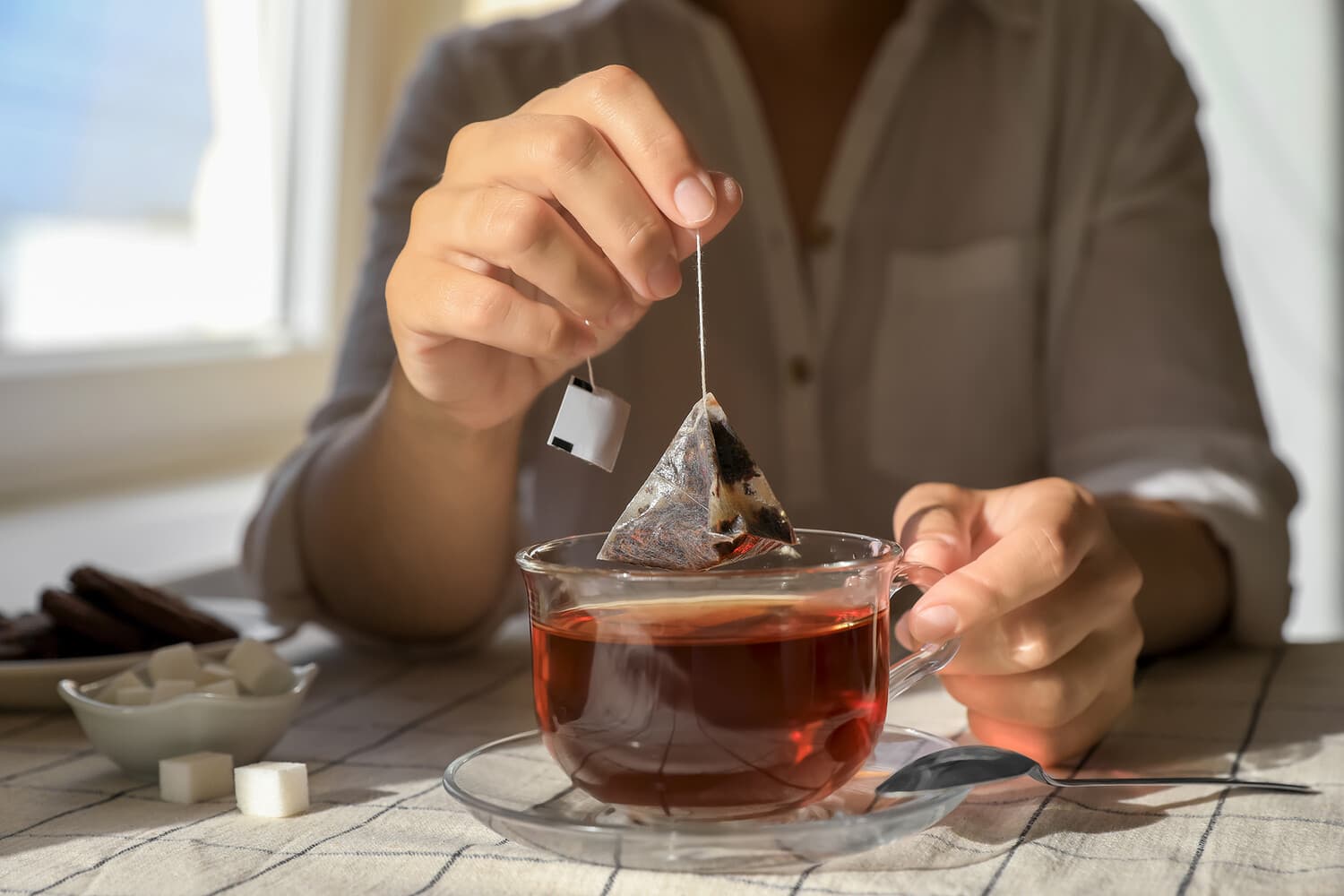
Scientists from Turkey tested tea in bags of four brands purchased in Turkey and compared it with 14 samples of loose-leaf tea. The bags were steeped for three minutes at a temperature of about 95 °C, after which the beverage was analyzed. In a single cup of tea brewed from a plastic bag, they found between 555 and 2,498 microplastic particles depending on the brand — all of them were polyamide fibers, the material the bags are made of. Only particles larger than 100 micrometers were counted, so the actual number of smaller particles could be higher. The results were published in the journal npj Science of Food, as reported by Gazeta.Ru.
Chemical impurities and comparison with loose-leaf tea
All four samples of bagged tea contained bisphenol A and plasticizers — substances used in plastics manufacturing; some of them, the authors noted, can affect the hormonal system. According to their calculations, bisphenol A intake from tea could reach 21.7% of the tolerable daily level set by the European Food Safety Authority. Microplastics were also found in loose-leaf tea, but in incomparably smaller amounts: from 0.3 to 2.4 particles per two-gram portion of dry leaves — that is, orders of magnitude less than in the beverage from a plastic bag.
What this means and what remains unknown
The authors emphasize that the study does not prove that drinking such tea leads to disease; it only points to the possible transfer of plastic particles and chemical impurities into the beverage during brewing. The practical difference for the consumer, according to the researchers' conclusion, lies in the brewing method: they recommend preferring loose-leaf tea and using metal or ceramic utensils. The study covered only four brands of bagged tea from Turkey, so no conclusions can be drawn from these data about other brands or countries. Gazeta.Ru also recalls an earlier study in which scientists found that microplastics trigger the formation of harmful molecules in the blood.