The key facts
- Nearly 200 countries opened the UN biodiversity summit COP17 in Yerevan, which will run until October 30
- According to the UN, 22 of 23 targets of the global nature agreement are not being met, including protecting 30% of land and oceans
- About $2.6 trillion in public funds annually goes to activities harmful to biodiversity; the financing gap remains the main obstacle
Summit Opens Against a Backdrop of Missed Targets
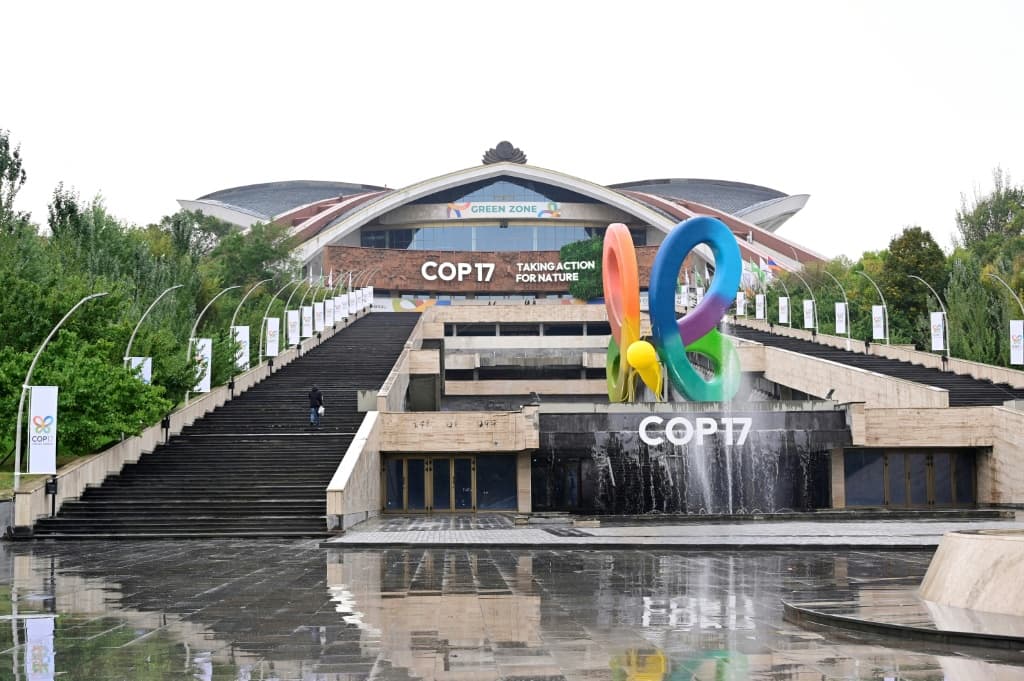
On Monday, October 19, UN biodiversity talks COP17 opened in Yerevan with the participation of nearly 200 countries. The summit will run until October 30 and will be one of the largest international events ever held in Armenia: up to 15,000 participants are expected. Governments face the need to rescue the global nature agreement concluded four years ago and dubbed the 'Paris Agreement for Nature,' whose goals — to halt and reverse the destruction of nature by 2030 — are behind schedule. According to a UN report published before the summit, 22 of the agreement's 23 targets are not being met, including the key commitment to protect 30% of the planet's land and oceans. The most difficult tasks, such as cutting subsidies to fossil fuels and other powerful industries, remain the least advanced.
Calls for a 'Reset' and Action
Head of the UN biodiversity secretariat Astrid Schomaker said global progress 'is not happening at the pace and scale needed' and that a reset is necessary. 'What happens here in Yerevan matters. Billions of people whose lives are being upended by biodiversity loss depend on progress here over the next two weeks,' she said. Armenia's Environment Minister Amirkhan... — the minister presiding over the talks, Hakob Simidyan was not named; the presiding minister, Aram Matevosyan... — Armenia's Environment Minister Aram Matevosyan, who chairs the talks, called the summit 'a unique chance to correct course' and stressed that success 'will not be measured simply by the number of participants, high-level statements or decisions adopted,' but by whether countries turn promises into action. UN Secretary-General António Guterres, speaking at the high-level session on Friday, spoke of the ongoing 'war against nature' threatening the planet's habitability: 'We need more action, more speed and more will... It is time to ask ourselves — are we doing enough?' Only a few world leaders, mostly from neighboring Central Asian countries, attended the high-level session.
Money Is the Main Sticking Point
One of the main tensions at the summit will be financing: according to the report, efforts to close the huge funding gap are 'far' from the required level. An estimated $2.6 trillion a year in public spending still goes to activities that harm biodiversity — coal and gas extraction, industrial agriculture. Under the agreement, countries pledged to cut harmful incentives by $500 billion a year by 2030, but there has been almost no progress. Chinese Ecology Minister Huang Runqiu urged delegates to reduce incentives harmful to biodiversity. Guterres criticized governments for 'spending money on the wrong things': 'Subsidizing fossil fuels is subsidizing suicide,' he said of coal, oil and gas, which are 'boiling our planet and are a scourge of biodiversity.' Schomaker noted that the biggest gaps lie in areas requiring deep economic and societal transformation, including subsidy reform.
Context and Observers' Positions
The summit is taking place at a difficult time: public finances are under strain, and political attention is focused on conflicts, geopolitical tensions and a global energy crisis. Rich countries, which are obliged to provide biodiversity financing, are expected to push for contributions from large developing economies such as China, but, according to AFP estimates, attention is more likely to shift to the role of private capital. A key priority will be encouraging corporations to donate part of their profits to the nearly empty UN fund to support nature protection in developing countries. Céline Beaulieu of WWF said in Yerevan: 'We must change the direction of existing money. You cannot finance nature with one hand and subsidize its destruction with the other.' Anne Lambrechts of Greenpeace warned that COP17 decisions 'will only matter if governments implement them at home': 'They cannot keep promising to protect nature while supporting its destruction through harmful subsidies and inconsistent policies. Any new delay is a threat to our survival on the planet.'