The key facts
- INSS: the current US naval presence exceeds the level of the peak of the war with Iran in February–March
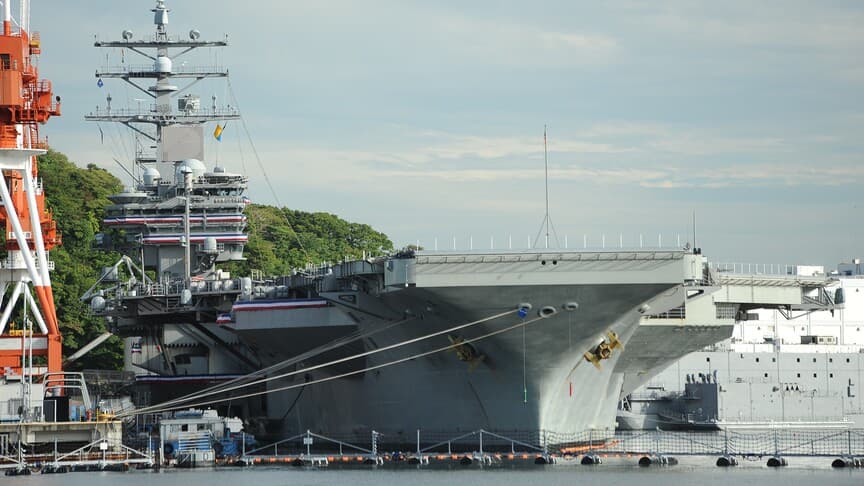
- The aircraft carriers George Washington, George H.W. Bush and Theodore Roosevelt are deployed in the region
- US ground-based air power remains below the March level due to the vulnerability of forward bases
Naval force larger than at the war's peak
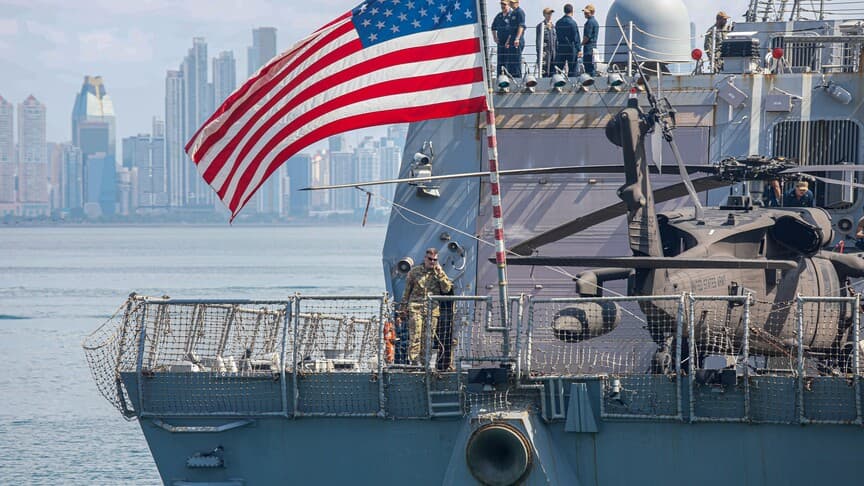
The current US naval presence in the Middle East exceeds the level recorded at the peak of the American-Israeli war with Iran in February and March, the Israeli Institute for National Security Studies (INSS) said on Tuesday, Anadolu reports. The institute compiled data from open sources on the number of American forces and ships in the Persian Gulf, the Arabian Sea, the Red Sea and the Mediterranean Sea. In its wording, the current naval presence 'exceeds the size of the forces deployed during Operation Epic Fury, providing greater offensive capabilities and a broader missile interception potential.' The institute did not provide specific figures on the number of forces and ships.
Aircraft carriers and air force redeployment
According to the institute's interactive map, the US aircraft carriers George Washington, George H.W. Bush and Theodore Roosevelt, as well as a number of other military vessels, are currently in the region. At the same time, despite the presence of more than 200 aerial refueling aircraft, US air power at ground bases remains below the March level. The institute explains this by the relocation of aircraft further west across the Middle East or to Europe, which, in its assessment, reflects the vulnerability of forward bases to Iranian strikes. At the same time, INSS notes, aircraft can be redeployed much faster than naval forces, so the balance of air power in the region could change quickly.
Conflict context
The US and Israel began the war against Iran on February 28; Tehran responded by attacking Israel and, according to its statements, American military facilities in Arab countries. On November 9, US President Donald Trump said the war in Iran was 'essentially over militarily,' adding that 'the greatest naval blockade in history' would remain in effect to apply economic pressure on Tehran. Washington and Tehran signed a memorandum of understanding in June, but its implementation stalled due to disagreements over guarantees of freedom of navigation and security in the Strait of Hormuz — a strategic route for energy and goods supplies. Since July, clashes between the US and Iran have periodically resumed despite ongoing diplomatic efforts; the conflict, according to the agency's assessment, has significant economic and political consequences in the region and beyond. Washington and Tel Aviv accuse Tehran of maintaining nuclear and missile programs that threaten Israel and US allied countries in the region; Iran claims its nuclear program is peaceful.