The key facts
- The US Navy increased its presence in the region to three carrier strike groups after the arrival of USS Theodore Roosevelt
- About 53,000 American service members, three aircraft carriers, 13 destroyers, two cruisers and a littoral combat ship are in the region
- The Pentagon denied reports of preparations to resume large-scale operations against Iran, calling them 'pure speculation'
Third carrier arrives in the region
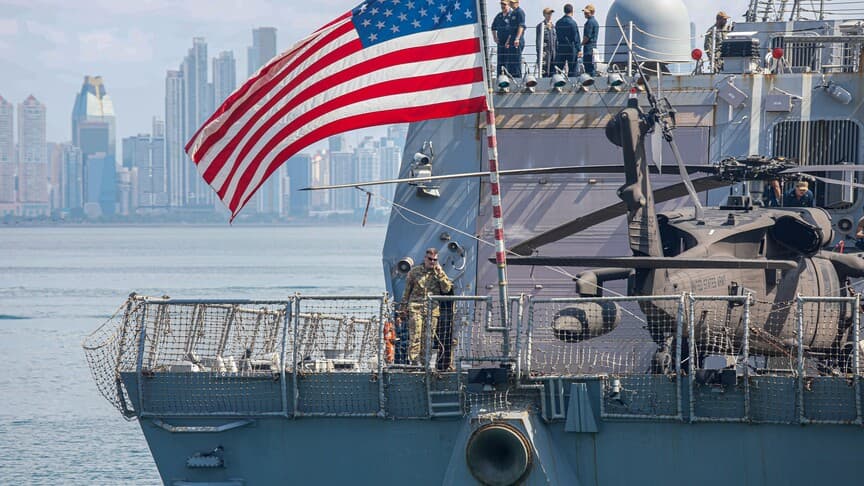
The US Navy has brought its carrier presence in the Middle East to three strike groups after the aircraft carrier USS Theodore Roosevelt arrived in the region on Sunday. According to US Central Command (CENTCOM), the ship crossed the Indian Ocean, heading from Singapore through the Strait of Malacca. This is already the second concentration of three carrier groups in the region in 2026 — the previous one came in April, at the height of the conflict. Before this year, the US had last assembled a comparable group in the region during the invasion of Iraq in 2003.
Composition of the group
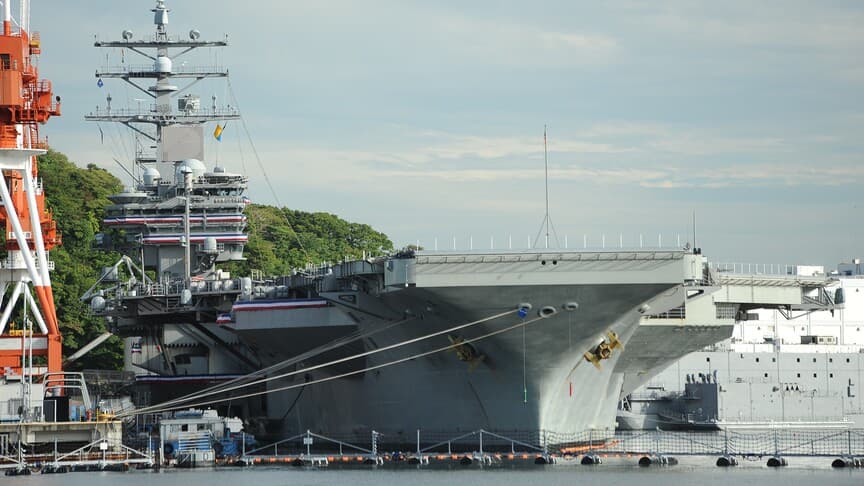
According to military data and media reports, taking the reinforcement into account, about 53,000 American service members are deployed in the region. The flotilla includes three aircraft carriers, 13 destroyers, two cruisers and a littoral combat ship, with two more destroyers in the Red Sea. All three carriers are nuclear-powered Nimitz-class supercarriers about 333 meters long, each with a crew of about 2,800, or up to 5,000 with the air wing and staff; the deck can hold up to 90 aircraft. USS Theodore Roosevelt, in service for 40 years, is the flagship of the 9th Strike Group and arrived with the 11th Air Wing (F/A-18E/F Super Hornet, F-35C, EA-18G Growler electronic warfare aircraft, E-2D early warning aircraft and helicopters), as well as the cruiser USS Chosin and the destroyers USS Paul Hamilton and USS Decatur. In the Arabian Sea, USS George H.W. Bush (10th Strike Group, 7th Air Wing) has been operating since April on an extended deployment, and since August it has been joined by USS George Washington, normally based in Yokosuka, Japan, with the 5th Air Wing. It remains unclear whether all three carriers will remain in the region for long or whether Theodore Roosevelt will replace George Washington: the exact duration of the three ships' simultaneous presence has not been disclosed. Earlier in 2026, USS Abraham Lincoln and USS Gerald R. Ford operated in the region: Lincoln completed a 321-day deployment in October, while Ford set a postwar (post-Vietnam) record of 326 days at sea.
Missions and diplomatic deadlock
The concentration of three groups supports the US military position in the war with Iran, which began with coordinated American-Israeli strikes in late February. The main missions are a naval blockade of Iranian shipments, which has reduced oil exports, maintaining strike and electronic warfare options, and protecting shipping in the Strait of Hormuz, where traffic remains severely disrupted due to attacks, the mine threat and the blockade. The naval deployment is proceeding in parallel with broader pressure on Tehran, including the creation of the CENTCOM Task Force Iron Gate initiative, aimed at Iran's movement of weapons systems and sanctioned materials overland routes and the Caspian Sea. Peace talks remain blocked: President Donald Trump recently removed Vice President JD Vance from the negotiations and stated on Truth Social that Washington no longer needs an agreement with Iran, warning that American forces are ready if necessary. Iranian Foreign Minister Abbas Araghchi, speaking on Monday at a regional meeting in Islamabad, accused the US of choosing aggression, threats, targeted killings, economic pressure and blockade in violation of international law and the UN Charter. Despite the buildup, the American military denied a report by Israeli media about preparations to resume large-scale operations against Iran, calling statements about changes in the regional group 'pure speculation'.