The key facts
- UKMTO: tanker struck twice seven nautical miles north of Hasab (Oman), fire on board, crew not responding
- Iranian IRGC Navy: two vessels hit naval mines, including a supertanker carrying more than 2 million barrels of oil
- It is unknown whether it is the same tanker and who is responsible for the strikes
Tanker hit twice and fire on board
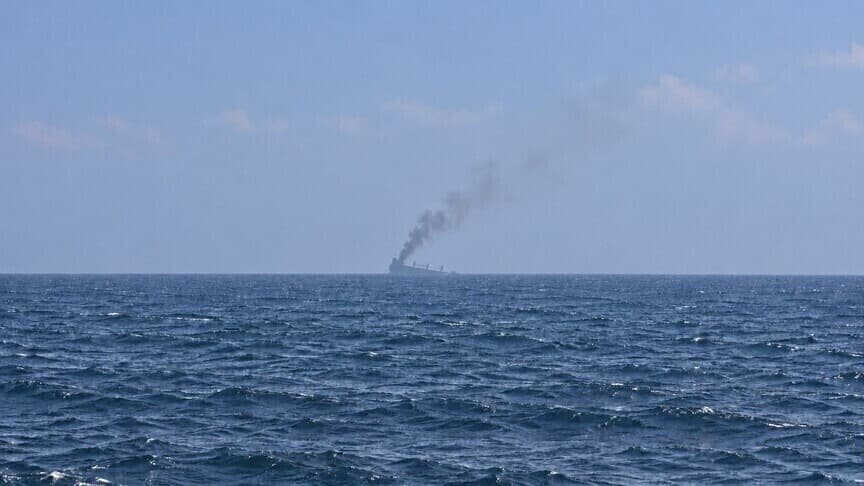
An oil tanker transiting the Strait of Hormuz was struck twice, losing propulsion and catching fire, the UK-based maritime trade agency UKMTO reported. According to the agency, an initial report from a third party described an attack roughly seven nautical miles north of Hasab (Oman): the vessel was disabled, its engine room caught fire, and the crew was initially believed to be safe. In a subsequent update, UKMTO, citing a maritime security agency, reported a second strike that caused a fire on board. “The crew is currently not responding, and the extent of the damage is not yet known”, the agency said. It urged vessels transiting the area to exercise caution and report suspicious activity while the investigation is ongoing. The agency did not name the tanker, its flag or operator, and did not say who was responsible for the strikes.
The Iranian version: mine explosions
Separately, Iran's Navy of the Islamic Revolutionary Guard Corps (IRGC) said two vessels it described as “unauthorized” struck naval mines in the strait, causing powerful explosions and fires and leaving both vessels dead in the water. According to the IRGC statement, one vessel was a supertanker carrying more than 2 million barrels of crude oil, and the other was an LNG carrier. In Iran's account, both vessels were sailing under air cover provided by numerous American fighter jets and other military aircraft; the supertanker was hit in the western part of the strait, while the gas carrier was struck on an “unauthorized southern route.” It remained unclear whether the tanker reported by UKMTO was one of the two vessels mentioned in the IRGC statement.
Context and what remains unclear
The Strait of Hormuz, which connects the Persian Gulf with the Gulf of Oman, is a key route for international oil and liquefied natural gas shipments. The incidents come against the backdrop of recurring US-Iran clashes and ongoing diplomatic efforts to end the conflict: in June, Washington and Tehran signed a memorandum of understanding, but its implementation stalled over disagreements on guarantees of freedom of navigation through the strait, and hostilities have periodically resumed since July. Key questions remain unanswered: who carried out the strikes on the tanker, what has become of its crew, and whether the two incidents described by different sides are connected.