The key facts
- At COP31 in Antalya, the funding gap for climate startups between academic research and the market was discussed.
- Experts called for risk-sharing between private investors and development institutions to support prototypes.
- Commercializing technologies requires predictable government policy and long-term carbon removal contracts.
The problem of financing climate startups at COP31
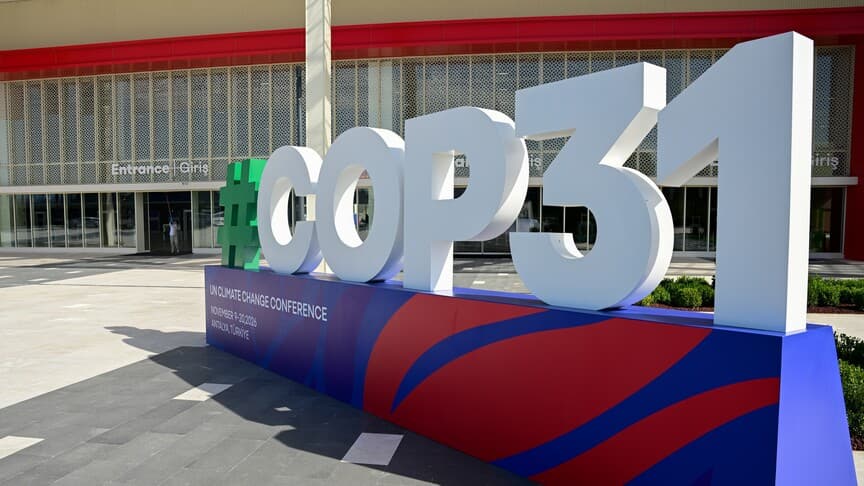
At the 31st Conference of the Parties (COP31), currently taking place in Antalya, discussion participants highlighted a critical funding gap for climate startups that arises at the stage of translating academic research into commercial products. Experts noted that, despite the availability of early-stage grants, innovative companies face difficulties in attracting first backers willing to invest in prototypes for field testing.
The role of institutional investors and banks
Abgar Chaudhuri of the University of Oxford emphasized that private investors often avoid risks related to the viability of technologies because of the unpredictability of the regulatory environment, so development institutions and the Green Climate Fund should play a key role in bridging this gap. A representative of the Turkish Development and Investment Bank, Seçil Yıldız, added that banks face difficulties financing startups at early stages, requiring them first to prove the effectiveness of the technology and build a structure ready for growth in order to deliver tangible output and attract demand.
Commercialization models and future contracts
Quincy Childs of Climeworks, a company specializing in carbon dioxide capture, pointed out that the existence of demand and purchase agreements is a decisive factor for the commercialization of technologies under development. She noted that forward contracts accounting for the future volume of carbon removed from the atmosphere require complex financial structures to mitigate physical risks, and she expects the emergence of new intermediary business models that will aggregate projects and connect them with institutional investors as the carbon removal sector matures.