The key facts
- Since Sunday, six tankers caught fire in the Strait of Hormuz according to the IRGC; UKMTO confirmed at least one incident involving an 'unidentified projectile'
- The US struck launchers in Bandar Lengeh and Sirik; USS Theodore Roosevelt joined the two carrier groups
- Estimates of Iran's missile count differ: US intelligence analysts say 1,500–2,500, the Israeli military says 1,500 ballistic missiles
A Cycle of Strikes and Counterstrikes Expands
Since Sunday, the US and Iran have been engaged in a rapidly expanding cycle of mutual strikes. Overnight into Sunday, Iranian forces attacked an American base in Bahrain and carried out missile strikes on tankers in the Strait of Hormuz; earlier, Iran conducted a drone attack on the radar of the American Al-Riffa base. In response, the American military struck Iranian missile launchers in the south of the country — in Bandar Lengeh and Sirik — hitting a broader area than in previous strike cycles, with a higher intensity of fire from both sides. Flight-tracking portals recorded a significantly larger US Air Force presence over the Persian Gulf than in previous weeks.
Six Tankers Catch Fire in the Strait
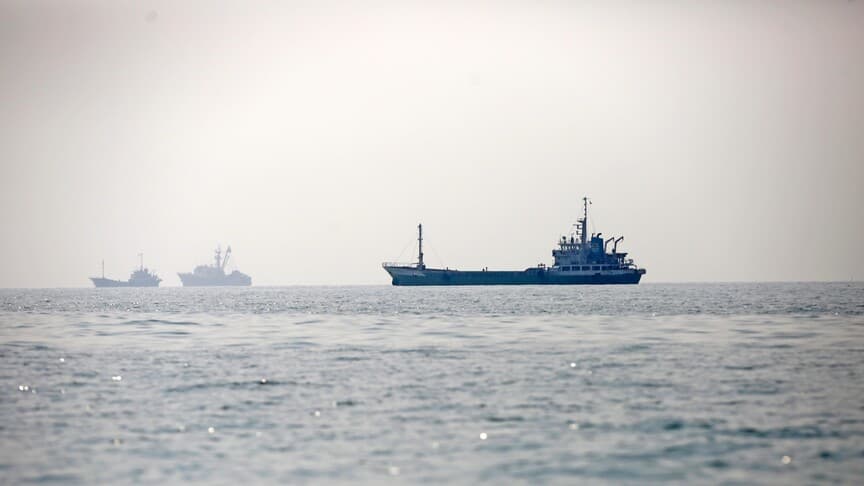
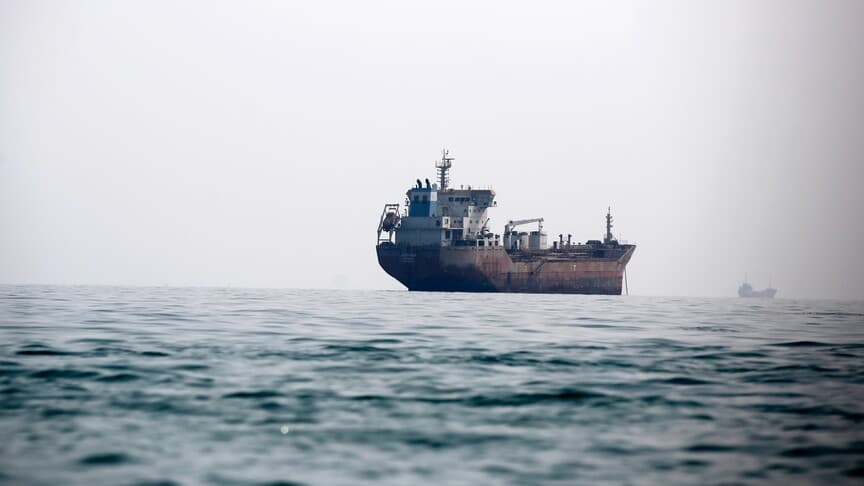
The Islamic Revolutionary Guard Corps (IRGC) stated that since Sunday, six tankers have caught fire in the Strait of Hormuz. According to the IRGC, two vessels traveling the southern route 'under direct American military escort' struck sea mines; the corps called this a response to the 'illegal American blockade' and again warned oil companies that the southern route is mined. On Monday, the Iranian Navy reported a 'violating' tanker that caught fire after hitting a mine east of the strait and lost propulsion, adding that disabling tracking systems and entering restricted zones exposes vessels to serious risk. It is unclear whether this refers to one of the IRGC's six tankers or a separate incident; the IRGC's and the army's statements about the number of damaged vessels have not been independently confirmed.
What UKMTO Confirms
The United Kingdom Maritime Trade Operations (UKMTO) confirmed receiving reports of at least one incident early Monday morning: a tanker leaving the Strait of Hormuz was hit by an 'unidentified projectile,' causing a fire in the engine room. According to UKMTO, there are no casualties and the entire crew is safe, but the assessment of damage and the scale of environmental harm remains unclear. Oil prices rose on Monday amid the series of shipping incidents in the strait.
Three Aircraft Carriers — First Time Since the Iraq War
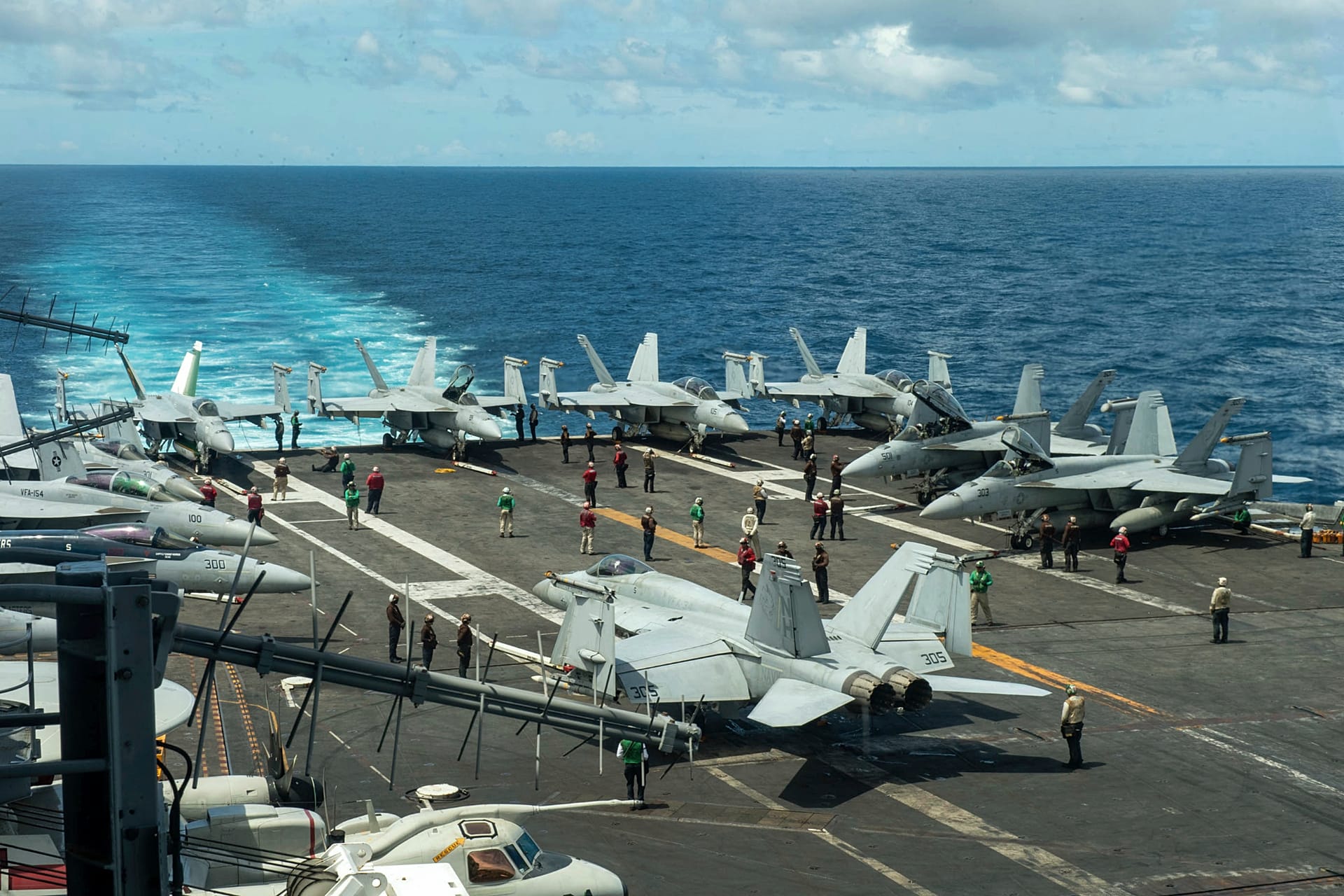
The aircraft carrier USS Theodore Roosevelt arrived in the CENTCOM area of responsibility, joining the USS George Washington and USS George H.W. Bush groups — the first time since the Iraq war that the US has kept three aircraft carriers in the Middle East. The armed forces are completing a buildup of roughly 19 warships in the region, including the Red Sea, with guided-missile destroyers and cruisers.
Force Estimates and Mutual Threats
The Wall Street Journal, citing American intelligence analysts, reports a low-confidence estimate: Iran has 1,500–2,500 missiles, as well as new drones and short-range missiles; the Israeli military puts the arsenal at 1,500 ballistic missiles. On November 10, the IRGC published a photo which, it claimed, showed the head of Iran's armed forces and the commander of missile forces inspecting an underground 'missile base' with tunnels. Iranian military officials, according to sources speaking to the Tabnak agency, said that 'the new offensive doctrine means the country will no longer limit itself to calculated retaliation and will break the cycle of escalation,' threatening American bases in Europe as well. Secretary of State Marco Rubio on Sunday blamed 'every major problem of the Middle East' — from the Houthis to 'Hezbollah' — on 'Iran's Shia clerics,' calling it 'an extraordinary historical danger.'
Expert: The Dynamics Push Both Sides Toward Escalation
Dani Citrinowicz, former head of the research division of Israeli military intelligence, believes the situation in the Strait of Hormuz is 'inherently unstable and cannot persist indefinitely': even if neither side wants a broad conflict, the current dynamics push both toward escalation. In his assessment, as long as the US maintains the naval blockade and directs tankers into the southern corridor, Tehran will consider these actions acts of war and will try to raise the cost of the blockade with new attacks on vessels, especially if US operations continue near Bandar Abbas. The key asymmetry, he says, is that Washington expects to sustain the blockade for a long time, whereas for Iran's leadership, accepting it without a response would amount to acknowledging a new strategic reality imposed by Washington.