The key facts
- The trial of Venâncio Mondlane begins on November 17; if convicted, he faces more than 20 years in prison
- According to civil society organizations, more than 400 people were killed in the protests that followed the October 2024 elections
- Lawyer Baltazar Fael believes the prosecution exaggerates some counts, and the Supreme Court's refusal to allow a live broadcast has drawn criticism
Five charges and a possible sentence of more than 20 years
From November 17, a trial is underway in Mozambique of Venâncio Mondlane, an opposition politician and former presidential candidate. He faces five counts, including public advocacy of crimes, incitement to collective disobedience and terrorism, following the October 2024 elections. If convicted, he faces more than 20 years in prison. Mondlane has rejected all the charges and said he never called for violence, and that his public statements, in his words, were aimed at preventing it. 'I have more than enough evidence that numerous statements of mine were aimed in exactly the opposite direction,' he said in September during a visit to the European Parliament in Strasbourg.
What the prosecution is based on
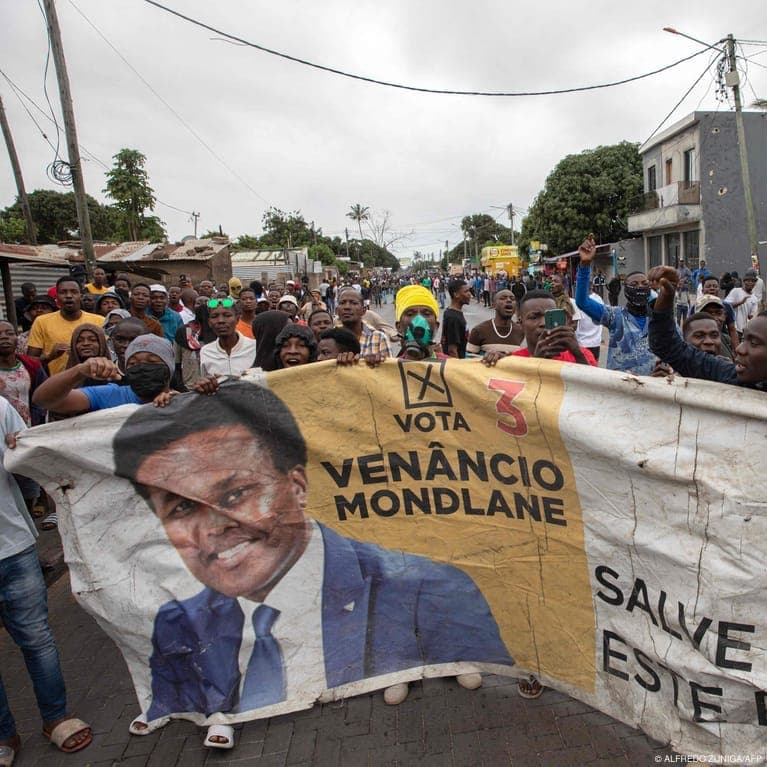
In the presidential and parliamentary elections of October 2024, Mondlane ran with the support of the left-wing opposition party Podemos and did not recognize the official results, under which Daniel Chapo of FRELIMO, the party in power since the country's independence in 1975, was declared the winner. After the results were announced, demonstrations, strikes and road blockades continued across the country for months, with clashes with security forces; shops and public facilities were looted and destroyed. According to civil society organizations, more than 400 people were killed. The prosecution links the violence to Mondlane's public calls: the indictment is based on his live broadcasts on social media, in which he called for protests, strikes and civil disobedience. The politician himself names two main goals of the protests: the demand to investigate extrajudicial killings of members of his movement and to establish the truth about the election results.
Doubts about the evidence and the motives
Well-known Mozambican lawyer Baltazar Fael, in a conversation with Deutsche Welle, warned against equating the indictment with a verdict and said that, in his assessment after reading the indictment, the prosecution exaggerates some aspects of the case. He is especially critical of the count on incitement to terrorism: in his view, it is necessary to prove a plausible connection between Mondlane's statements and specific acts, and the mere fact of acts of violence after his calls is not enough. 'What real power did Venâncio Mondlane have to incite people to commit all these crimes?' Fael asked. According to him, the timeline of the trial and the circumstances that led to it — the contesting of election results — are clearly political in nature, and the speed of preparing the case may create the impression of political pressure. Mozambique's chief justice, Adelino Muchanga, stressed that the court will decide on the basis of facts.
Refusal to broadcast and public sentiment
The Supreme Court rejected Mondlane's defense's request for a live broadcast of the proceedings, citing a possible threat to the safety of participants, pressure on witnesses, and the risk of disrupting the proceedings. Critics saw the refusal as a step backward for transparency — especially since another recent high-profile case, the so-called 'hidden debt scandal,' in which state companies secretly borrowed billions from international banks, received extensive media coverage. Albino Forquilha, the head of Podemos and a former political ally of Mondlane, is expected to testify; however, he stated that he will not act as a prosecution witness and will speak only about what he personally observed, and cannot predict whose side this will strengthen. The causes that sparked the protests have not disappeared: residents of Nampula told DW that the population protested against hunger and the lack of jobs for young people, and that this is legitimate; some city residents, however, prefer peace and a return to normal life.