The key facts
- 57 countries formed a 'coalition of the willing' after the roadmap was blocked at COP30 in Brazil
- The coalition's first conference took place in April in Santa Marta (Colombia); the second will be held in Tuvalu
- Germany, France and the Netherlands presented national fossil fuel phase-out plans, and Finland did so during the first week of COP in Antalya
A compromise instead of a roadmap
A year ago, when the negotiations at the UN climate summit in Brazil were entering their decisive stage, more than 80 countries supported the idea of a clear roadmap for phasing out oil, gas and coal. That did not happen: due to opposition from oil-producing states such as Russia and Saudi Arabia, the conference ended with a weakened final agreement that made no direct mention of fossil fuels. Deutsche Welle reports.
Plan B: a coalition outside the UN framework
As a compromise, the summit host, Brazil, proposed preparing a 'voluntary' roadmap. In parallel, 57 countries dissatisfied with the deadlock of UN consensus negotiations decided to form a 'coalition of the willing' to accelerate the phase-out of fossil fuels outside the COP framework. In April, the group held its own summit in Santa Marta (Colombia) — the first conference devoted specifically to the practical implementation of the transition. Colombia and the Netherlands served as its co-chairs; participants included Canada, Norway, Brazil, Nigeria, Mexico, Australia, Germany and climate-vulnerable states such as Vanuatu. The participants discussed developing national roadmaps, restructuring financial and trade systems, cutting subsidies for oil, coal and gas, and supporting people whose incomes depend on the industry. The second conference will take place next year in Tuvalu.
The coalition's role at the negotiations in Antalya
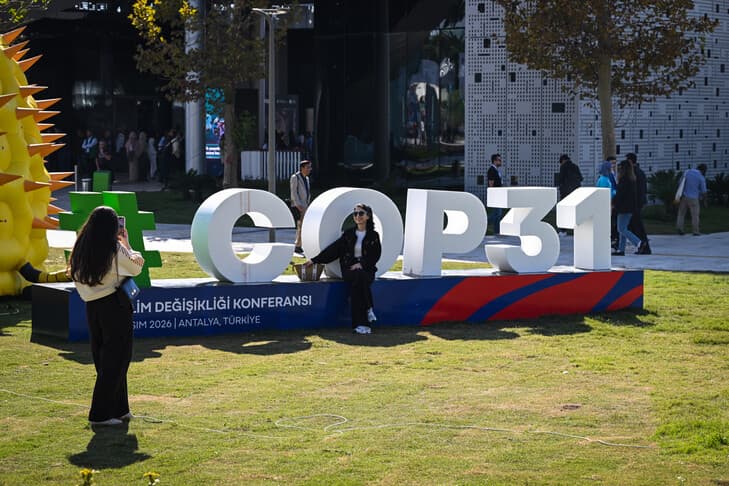
Nearly 200 countries are now negotiating at the UN climate conference in Antalya (Turkey). Countries first agreed on transitioning away from fossil fuels in 2023, but subsequent summits failed to determine how to fulfil that commitment. Whether the coalition will influence the current round remains unclear. Chetna Hareesh Kumar, an analyst at the NewClimate Institute, considers it 'more of a long game': the group could attract new countries if it demonstrates inclusiveness and the feasibility of the transition. ECCO expert Alexandra Scott notes that the coalition 'sustains political momentum' and accumulates knowledge on how to develop national plans and finance infrastructure investments.
The first national plans and Brazil's global roadmap
After Santa Marta, Germany, France and the Netherlands presented national plans for phasing out fossil fuels; they contain no new commitments, but experts view them as a positive first step. Finland published its roadmap during the first week of the conference in Antalya, though analysts do not expect other countries to join quickly. In addition, Brazil released the global roadmap it had promised at the previous summit — a document of nearly 200 pages intended to serve as a toolkit for the transition to renewable energy. It envisages countries phasing in the transition between 2028 and 2033 and proposes measures tailored to each country's dependence on fossil fuels and financial capacity: cutting subsidies, expanding renewable energy and reducing methane emissions. Kumar called the approach 'customisable', emphasising that the question now is how much momentum countries will be able to generate.
Context: the crisis deepens, no major announcements expected
The summit in Turkey is taking place after a series of deadly heatwaves in Europe and a glacier collapse in Nepal that killed more than 1,400 people; no major announcements on fossil fuels are expected from it. According to Deutsche Welle, renewable energy accounted for a third of global electricity generation for the first time in 2025, but most oil and gas companies — including QatarEnergy, Saudi Aramco and Gazprom — continue, according to the environmental organisation Urgewald's database, to explore or develop new deposits. Fossil fuel subsidies amount to about $920 billion a year, according to the OECD, although their volume is declining. At the conference, Turkey is promoting a target of raising the share of electricity in final energy consumption to 35% by 2035 — from roughly 20% today; the initiative has been criticised for not specifying whether the additional electricity must be clean.