The key facts
- The first draft of the COP31 text in Antalya proposes scaling up adaptation finance to at least $120 billion per year by 2035 and accelerating the phase-out of fossil fuels
- A source from the African delegation called the 'cover decision' a distraction from accountability and a 'parking' of unresolved issues
- In his assessment, even $120 billion would cover only about 30% of developing countries' needs; a figure of $100 billion is also being discussed
Draft text and criticism from the African delegation
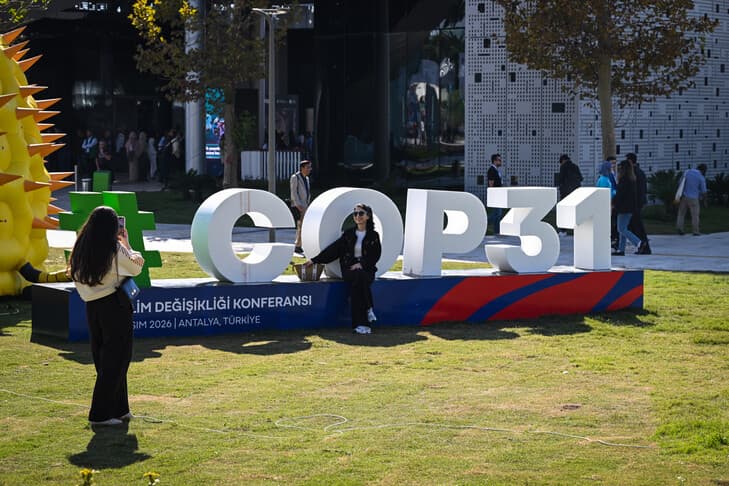
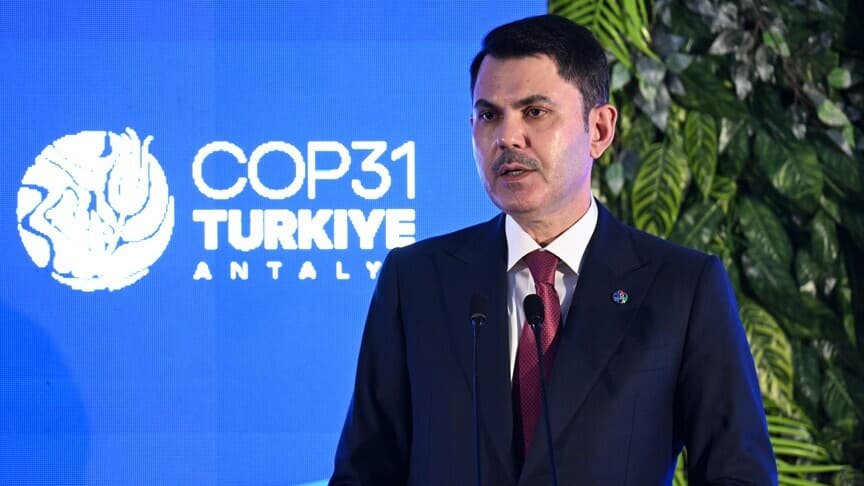
At the UN climate change conference COP31, taking place in Antalya, the first draft of the final text, prepared under the conference presidency, was presented on Monday. It envisages increasing annual adaptation finance for developing countries to at least $120 billion by 2035, accelerating the transition away from fossil fuels, and strengthening global climate action.
'Cover decision' as a way to evade accountability
A source from the African delegation, commenting to Anadolu, warned that broad political language could distract from substantive negotiations on climate finance and leave developing countries without the support needed to move away from fossil fuels. He called the 'cover decision' a 'distraction' and a 'parking' of unresolved issues: in his words, ambitious language is moved into a political declaration instead of the official negotiating tracks in order to avoid accountability. 'We are running away from accountability in every possible way, and the cover decision is one of them,' he said.
Adaptation finance: 120 or 100 billion
According to the source, developed countries have not yet agreed on the figure of $120 billion per year — a smaller sum of $100 billion is also under discussion. Citing estimates of developing countries' needs, he stated that even $120 billion annually would cover only about 30% of the required financing, and called this sum a minimum, demanding a framework approach to adaptation finance based on actual needs. He also urged including adaptation finance commitments in the Global Goal on Adaptation: 'We have indicators without means of implementation. And what will we measure if we do not provide developing countries with the means of implementation?'
Sequencing of the fossil fuel phase-out
The source stressed that developing countries cannot be expected to phase out fossil fuels at an accelerated pace without sufficient financial and technical support. 'You cannot expect Nigeria to phase out before the UK — given how the UK is still opening up due to fossil fuel exploration,' he said, likely referring to a new oil extraction project in the North Sea. In his view, countries that have historically benefited from fossil-fuel-based development should be the first to cut emissions and support developing states: 'Those who benefited from pollution should do it fast and fair.' He also noted that hundreds of millions of people in Africa lack access to electricity, which complicates the task of electrification, and called on the COP31 presidency to overcome disagreements: 'Antalya has a chance to redeem itself. The clock is ticking.'
Conference context
COP31 — the next annual UN climate conference — began last week in Antalya and is due to conclude on Friday. One of the additional agenda items the source mentioned — tripling adaptation finance — has, in his words, not advanced in the negotiations. He pointed out that in past negotiations such commitments were adopted without a clear definition of what 'tripling adaptation finance' means in practice, and that such commitments need to be translated into measurable and accountable outcomes.