The key facts
- The Ebola outbreak in DR Congo has been ongoing since May 2026; more than 5,400 people have died and around 11,000 have been infected
- MSF: most cases are 'unexpected', with no known epidemiological links, indicating a failure of contact tracing
- Of the $962 million transferred to organisations according to Africa CDC, about $700 million remains unaccounted for
The outbreak continues despite six months of efforts
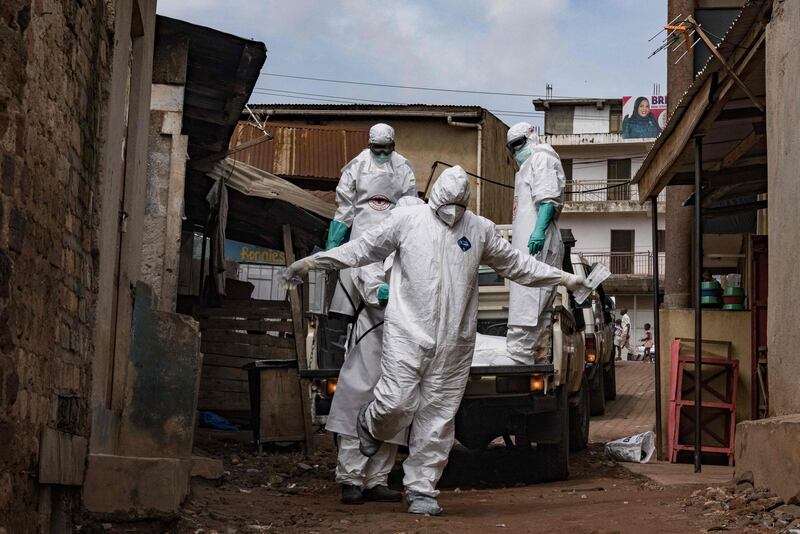
The Ebola outbreak in the Democratic Republic of the Congo remains out of control six months after its official declaration, said Anna Halford, emergency programmes coordinator at Médecins Sans Frontières (MSF), who took part in the organisation's work in the country. The WHO formally declared the outbreak on 15 May, although the disease is believed to have been spreading since the beginning of the year, and in May the situation was declared a public health emergency.
Signs that the response is not working
Halford named two main indicators of failure. First, most patients in treatment centres are 'unexpected cases' with no known epidemiological link to other infected people: 'You should not have the majority of cases emerging out of nowhere.' Second, most deaths occur in communities rather than in treatment centres, and each such case creates opportunities for further spread. According to her, the epidemic is 'not mathematically out of control' in terms of case numbers, but it is slowly expanding rather than slowing down.
Funding failures and shortage of basic resources
MSF international president Javid Abdelmoneim said that staff are 'often left speechless in the face of failures' in the response, and stressed the need for urgent improvements in surveillance, staffing and operational support. According to previously published data from the Africa Centres for Disease Control and Prevention, of the $962 million transferred to organisations fighting Ebola, about $700 million remained unaccounted for. Meanwhile, according to MSF, health workers on the outbreak's frontlines are working without 'the most basic equipment' — 'in flip-flops', mobile surveillance teams have motorcycles but no fuel, and many staff, including community engagement workers, have not been paid. Halford stressed: 'It is not a matter of a lack of money. What is needed are sustained and consistent resources, directed where needed.'
Scale and complicating factors
The outbreak, caused by the Bundibugyo virus, initially affected the provinces of North Kivu and Ituri, but has now spread to eight provinces, five of which remain active, requiring different approaches — from rural to urban areas. Conflict in the region hampers the fight, although, in Halford's assessment, this is only one of many difficulties. With around 11,000 infected, the current outbreak is second in scale only to the 2014–2016 West Africa epidemic, in which 28,600 cases were recorded. By the end of October, MSF had deployed almost 1,500 of its own staff in DR Congo, more than eight out of ten of them Congolese, and is also funding more than 1,400 staff of the country's health ministry.
Risks to the world and noted progress
Despite the severity of the situation in the affected areas, Ebola is considered a low threat to the world as a whole: the disease is not highly contagious and is not airborne. Ali Alessandro Ayach, a healthcare expert from the UAE, considers the concerns moderate, 'as long as countries continue early detection to prevent any spread across borders', relying on the WHO's assessment of low risk. At the same time, MSF also notes progress — improved information sharing, the deployment of diagnostic capacity and work with communities — but stresses that improving surveillance is above all necessary. 'We still need serious improvements in some basic elements before we can confidently say this is under control,' Halford said. Separately, a recent report by the Independent Panel for Pandemic Preparedness warned that the world risks facing a new global health emergency, including because of the unlearned lessons of Covid-19.