The key facts
- About 3,000 people have recovered from Ebola in the DR Congo and returned home, WHO said
- Since the start of the outbreak (the emergency was declared six months ago) — more than 11,000 confirmed cases and 5,400 deaths across 67 health zones in eight provinces
- According to Africa CDC, two-thirds of the $2.9 billion mobilised to fight Ebola on the continent has not yet been disbursed
Three thousand survivors amid the largest outbreak
About 3,000 people in the Democratic Republic of the Congo have recovered from the disease caused by the Ebola virus and returned home — the World Health Organization announced on Sunday, crediting the work of health workers (Anadolu reports). The outbreak in question is the largest ever recorded in the country.
Scale of the outbreak and progress in hotspots
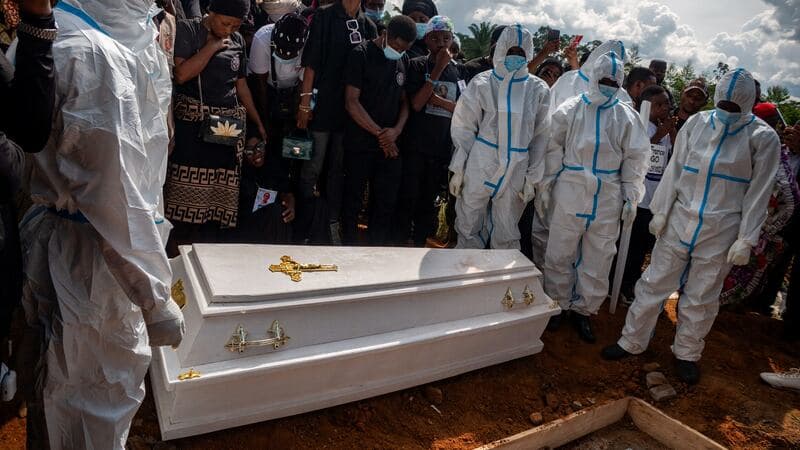
WHO Director-General Tedros Adhanom Ghebreyesus thanked nurses, doctors, community health workers, contact tracers and burial teams who, he said, are working under enormous pressure. 'Amid immense challenges, local responders and global partners, working under the government's leadership, are achieving hard-won gains. Transmission is slowing in several early epicentres, and clinical trials, including the Tumaini trial and new vaccine candidates, are advancing rapidly,' he wrote on the X platform.
Six months of the emergency
WHO declared the outbreak, caused by the Bundibugyo virus, a public health emergency of international concern six months ago. Since then, more than 11,000 confirmed cases, including 5,400 deaths, have been recorded across 67 health zones in eight provinces. Tedros called for safe humanitarian access and an end to hostilities so that health workers could reach every affected area without fear, and stressed that the fight against Ebola 'begins and ends with communities,' urging responders to build trust so that people seek treatment earlier. He also asked donors to close critical funding gaps.
Funding remains the bottleneck
Earlier this month, the head of the Africa Centres for Disease Control and Prevention (Africa CDC), Jean Kaseya, said that two-thirds of the $2.9 billion mobilised to fight Ebola on the continent had not yet been disbursed. This means that, despite the funds being raised, a significant share of the financing has in fact not reached the response effort — a factor which, according to Tedros, requires donors to make additional efforts to sustain the response.