The key facts
- Turkey's industrial decarbonization platform aims to attract more than €5 billion by 2030
- The Clean Technology Fund approved $250 million in concessional financing
- Heavy industry accounts for about 37% of Turkey's emissions and about 28% of its exports
Expanding the platform at COP31
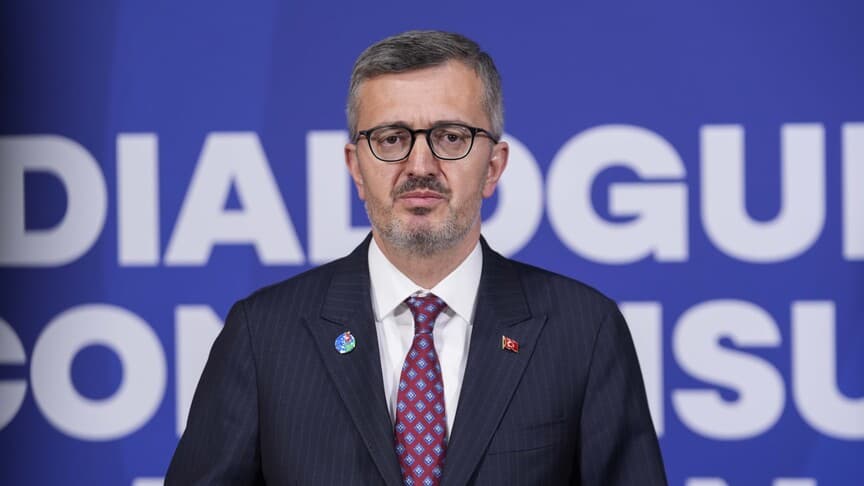
Turkey's Minister of Industry and Technology Mehmet Fatih Kacır presented at the UN climate summit COP31 in Antalya an expanded scheme of the Industrial Decarbonization Investment Platform, Anadolu reports. The platform's task is to close the gap between identifying 'green' projects and financing them, with the overall goal of mobilizing more than €5 billion (about $5.5 billion) by 2030. According to the minister's calculations, reaching this mark will make it possible to cut emissions by more than 20 million tonnes of CO2-equivalent annually.
Financing and partners
As Kacır reported, the Clean Technology Fund, part of the Climate Investment Funds under the auspices of the World Bank, approved $250 million in concessional financing under the platform. The funds will go toward low-carbon investments in the steel, cement, aluminum, chemical and ceramics industries, which account for roughly 37% of Turkey's greenhouse gas emissions and about 28% of its exports. The European Commission, the European Investment Bank and the Islamic Development Bank have become new partners of the platform, joining the EBRD, the World Bank and the International Finance Corporation. The EU allocated €5.7 million in targeted technical assistance for conducting feasibility studies and structuring financing.
Context and obstacles
According to the minister's estimate, achieving the net-zero emissions goal by 2053 will require about $70 billion in investment for Turkish heavy industry, while high upfront costs, financial risks and unproven technologies remain obstacles. Negotiations are underway with the Glasgow Financial Alliance for Net Zero on attracting private capital. The platform's expansion builds on an already operating green transformation program, under which more than $1 billion has been provided jointly with the World Bank to manufacturers, small and medium-sized businesses and green technology startups; in addition, a $250 million agreement has been signed with the Islamic Development Bank for sustainable organized industrial zones.