The key facts
- Projections for 25 river basins of Turkey allow for an average temperature rise of up to 6 °C by 2100
- Turkey has launched the National Water Plan for 2026–2035
- Projects worth $819 million with the World Bank and $600 million for flood and drought management are underway
Warning at COP31
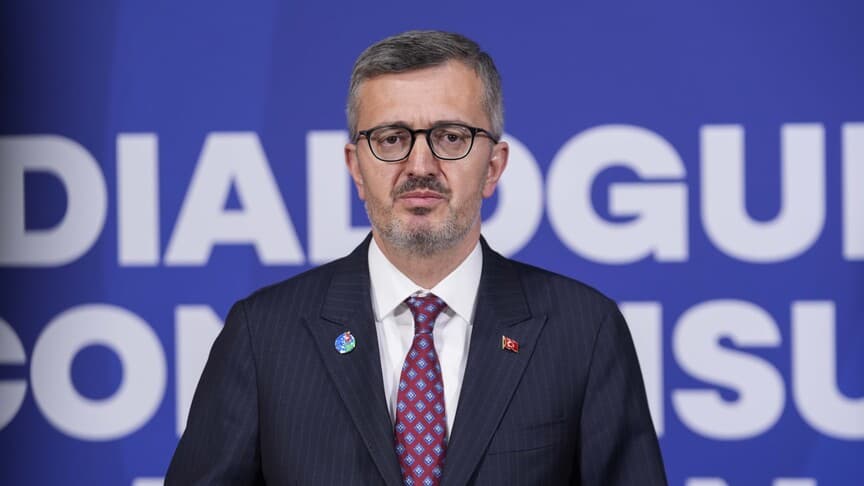
Turkey could lose about a quarter of its available water resources by the end of the century due to climate change. The country's Minister of Agriculture and Forestry, İbrahim Yumaklı, issued this warning at the COP31 climate summit in Antalya, Anadolu reports. According to him, rising temperatures and increased evaporation could seriously affect water supply, agricultural production, and food security.
Projections for 25 basins
Yumaklı noted that Turkey's location in the Mediterranean basin makes it particularly vulnerable to climate change. According to him, scientific studies conducted in 25 river basins of the country assessed the impact of climate change on water resources up to 2100: the average temperature could rise by up to 6 °C. Combined with increased evaporation, this could reduce annually available water resources by roughly 25% by the end of the century. The minister called access to clean water a matter of survival and said that Turkey has begun implementing the National Water Plan for 2026–2035 to improve water-use efficiency and climate readiness.
Financing and projects
The minister emphasized that protecting mountain ecosystems requires sustainable financing, and named glacier monitoring, water availability assessment, hydrological modeling, and early warning systems as priority areas. Turkey uses state funding, grants, loans, public-private partnerships, and international financial institutions. Among current initiatives are an $819 million irrigation modernization and water efficiency project with the World Bank and a $600 million flood and drought management project. Yumaklı also noted the role of the private sector: the state-owned Ziraat Bank provides loans and subsidies at preferential interest rates for investments in drip (pressurized) irrigation systems.
Context of the meeting
Yumaklı spoke at a high-level meeting on glacier protection, climate resilience, and sustainable financing held within the framework of the 31st UN Climate Change Conference, organized by Tajikistan, Kyrgyzstan, Nepal, Pakistan, and Bhutan. Officials from a number of countries participated, including Azerbaijan, Armenia, and Lesotho, as well as the President of the Asian Development Bank, Masato Kanda. The minister stressed that the future of glaciers concerns not only mountain regions but also the livelihoods of millions of people, and that the melting of snow and ice in the mountains affects the regulation of river flows, seasonal water availability, agriculture, and ecosystems.