The key facts
- Turkey's pavilion in the 'blue zone' of COP31 in Antalya is built from recycled materials: excavated soil, coffee grounds, scrap metal, copper, and wood
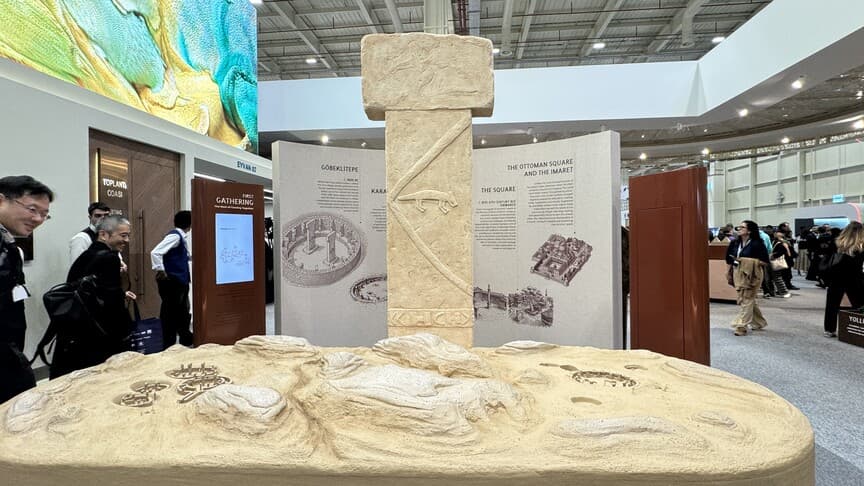
- The exhibition's theme is 'Roots of Adaptation and Resilience': from the 12,000-year-old Göbekli Tepe to the present day, with works by digital artist Refik Anadol
- Deputy head of Turkey's Directorate of Climate Change Orhan Solak stated that 'many of the answers in the fight against climate change lie in the millennia-old history of Anatolia'
A pavilion made of recycled materials in the 'blue zone'
Turkey presented a national pavilion at the UN climate summit COP31 in Antalya dedicated to the country's cultural heritage and its connection to sustainable development. The pavilion is located in the 'blue zone' — the part of the venue reserved for official negotiations and accredited participants. The building itself was constructed with a minimal carbon footprint: recycled materials were used, including excavated soil, coffee grounds, scrap metal, copper, and wood. According to the organizers, the pavilion receives thousands of visitors daily.
'Roots of Adaptation and Resilience'
The exhibition takes visitors through the cultural and artistic heritage of Anatolia — from the 12,000-year-old archaeological site of Göbekli Tepe to the present day. The exhibition's theme, 'Roots of Adaptation and Resilience,' is intended by the organizers to reflect the idea that ancient civilizations offer valuable lessons for solving modern environmental problems. Orhan Solak, deputy head of Turkey's Directorate of Climate Change, stated: 'Many of the answers we are looking for in the fight against climate change lie in the millennia-old history of Anatolia.' He added that Turkey intends to draw on this knowledge in its future climate activities. The exhibition explores themes of balance, harvest, healing, gathering, and shelter, showing how communities historically adapted to their environment. Visitors can also attend themed climate discussions, try traditional crafts — filigree metalwork and glassblowing — and taste Turkish coffee, tea, and Turkish delight.
The architects' vision and contemporary art
Architect Bünyamin Atan, who worked on the pavilion together with creative director Cengiz Ayıldız and curator Hasan Mert Kaya, said the team sought to minimize the exhibition's environmental impact through the use of recycled materials. According to him, the design combines examples of how the inhabitants of Anatolia developed architectural and cultural practices in response to local climate conditions. 'The central question of the exhibition is: how did we respond to climate throughout history? We did not want this to be simply a story about Anatolian culture or history,' Atan noted. The exhibition also includes works by contemporary artists, including the renowned digital artist Refik Anadol, as well as Serkan Şerefhanoglu and Taha Baydar.
Visitors' reactions
Among the foreign guests of the pavilion was Godwin Ehigie Okoduwa, who came to the summit from Nigeria. According to him, he was particularly impressed by the ancient city of Dara in southeastern Turkey and a water monument of the Hittite civilization, which flourished in Anatolia more than 3,000 years ago: 'Hundreds and even thousands of years ago, people were developing technologies and finding ways to make life sustainable.' Okoduwa also emphasized the need to turn countries' climate commitments into concrete actions, noting that international financial support is especially important for states facing economic difficulties.