The key facts
- The Abu Dhabi talks on November 10–11 did not lead to a truce; an agreement on a prisoner exchange was reached
- Kushner and Witkoff traveled to Moscow for a meeting with Putin; Russia allows for an exchange within two to three weeks
- Experts disagree: some see the talks as stalling for time, others consider continuing the dialogue justified
The Abu Dhabi outcome: a humanitarian result instead of a truce
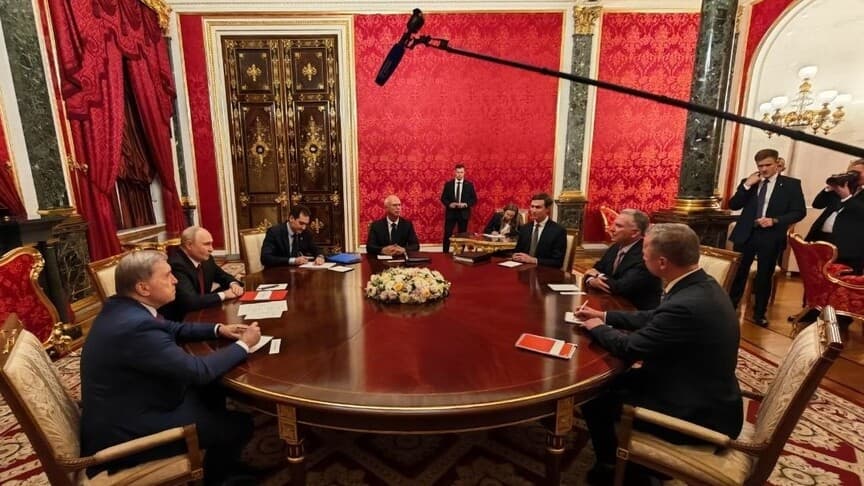
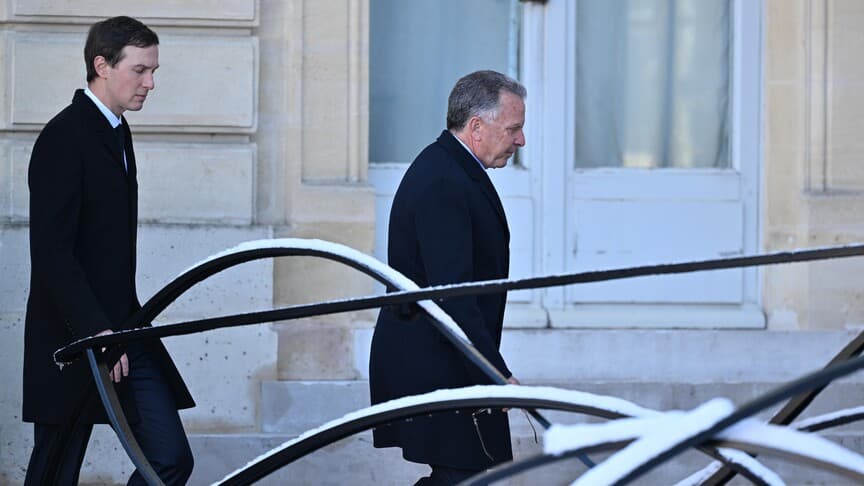
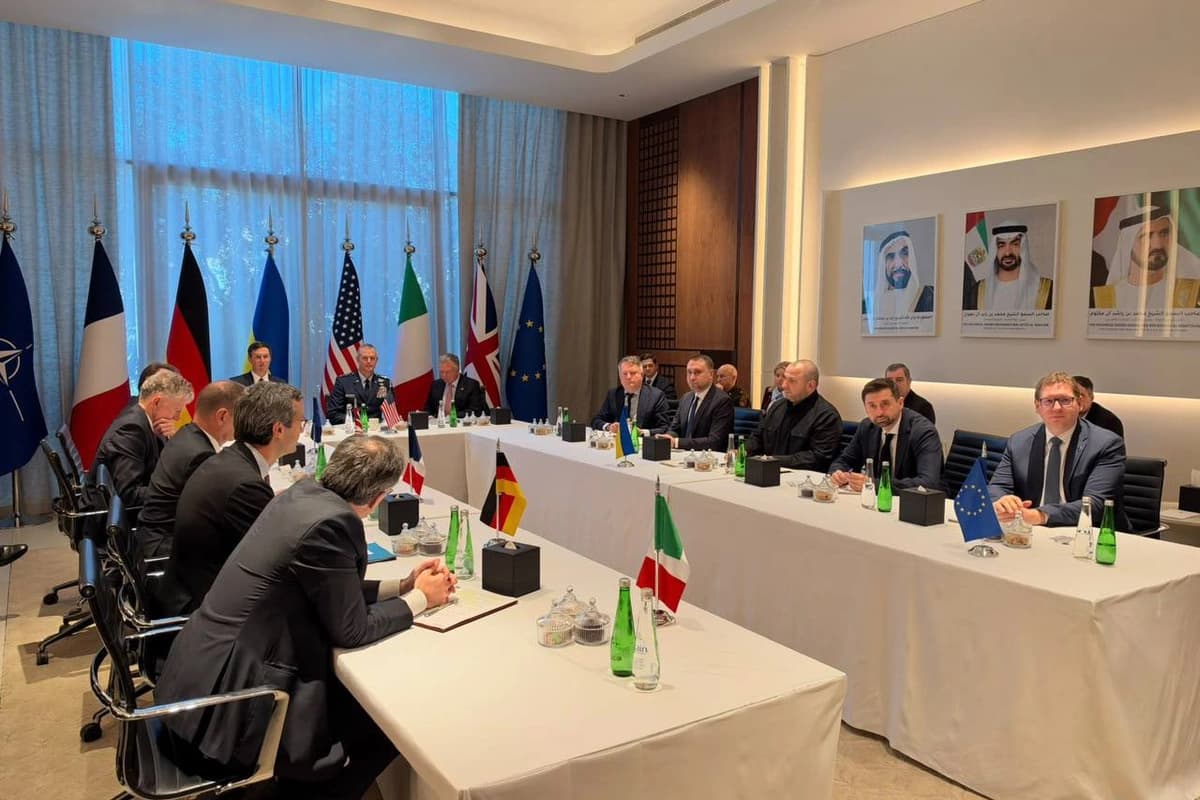
Two days of talks between the Ukrainian, US and Russian delegations in Abu Dhabi on November 10 and 11 ended without a ceasefire agreement. The main outcome was an agreement on a prisoner exchange. Donald Trump's advisor Jared Kushner said after the talks: 'We agreed on the largest humanitarian release of prisoners; tomorrow we will clarify the numbers.' He and special envoy Steve Witkoff then traveled to Moscow for a meeting with Vladimir Putin.
The scale of the exchange and the parties' positions
Earlier, Volodymyr Zelensky had proposed an exchange under the formula '1,000 for 1,000' or '1,500 for 1,500.' Russia stated that a large-scale exchange with Ukraine could take place within two to three weeks. After the meetings, Zelensky wrote on Telegram that the parties discussed security guarantees and that 'the first step must be ending this war and ensuring Ukraine's security'; he also emphasized that Europe must participate 'at every stage of genuine diplomacy.'
Experts' assessments differ
Experts interviewed by DW agree that the main result of the talks is humanitarian. Artem Bronzhukov of the Ukrainian analytical center Polityka called the exchange agreement 'a major step forward,' and Pavlo Lakiychuk of the Strategy XXI center called it 'a very tangible result': 'bringing our people back is already a great success, so it is worth continuing.' He considers the real breakthrough to be the release of civilians held from territories occupied since 2014, above all Crimeans who have spent years in Russian prisons.
Skepticism: a 'farce' and stalling for time
David Arakhamia, head of the Servant of the People faction, who represented Ukraine at the talks, assessed them positively and expressed hope for an agreement by the end of the year: according to him, the Russian delegation's rigid instructions complicated the discussion, but the format built by the Americans with an eye on the postwar situation opened a dialogue. Yulia Osmolovskaya of GLOBSEC's Kyiv office warns against overestimating such assessments: diplomats 'will never say that everything went badly,' and positive formulations are standard phrases. She cites a joint assessment by 71 Ukrainian security experts published by GLOBSEC in the summer: she puts the chances of a peace agreement or at least a truce this year or next at 19%. In her view, neither side is ready for genuine talks, and what is happening is 'more of a farce,' an attempt to create the impression of forward movement. Bronzhukov sees the talks as Moscow's way of buying time: the visits of the delegation led by Vladimir Medinsky are an attempt to 'sell empty promises' to the US administration in exchange for 'gestures of goodwill,' such as lifting sanctions on Russian diesel fuel.
The territorial question: proposals and refusal to comment
Before the talks, a number of Western media outlets, including The Economist, reported on new American proposals regarding the disputed territories — in particular, redrawing the administrative borders of the Donetsk and Luhansk regions. A member of the Ukrainian delegation stressed that 'there was never any talk of concessions on territories occupied by Russia'; Washington gave no official comment. Kyrylo Budanov, head of the Office of the President of Ukraine and a member of the delegation, refused to say whether Russia had demanded the withdrawal of Ukrainian troops from Donbas, stating that the content of the talks would remain confidential until an agreement is reached. The head of the Russian delegation, Medinsky, on the contrary, declared that 'every inch of our land will one way or another be returned to Russia.' Putin claims, in addition to Crimea annexed in 2014, the Donetsk, Luhansk, Zaporizhzhia and Kherson regions in their entirety, although he does not fully control them.
What comes after Abu Dhabi
After the meeting between Kushner and Witkoff with Putin in Moscow, Zelensky announced his intention to 'once again align positions with the Americans'; no new trilateral meetings have been announced so far. Osmolovskaya believes that sooner or later the parties will have to admit the talks are deadlocked and each will return to military action. Lakiychuk, on the contrary, believes the talks should continue if only for the sake of bringing prisoners back, and is convinced that the Europeans 'will always be nearby,' since what is at stake is the security of the entire continent, not just the Russo-Ukrainian war.