The key facts
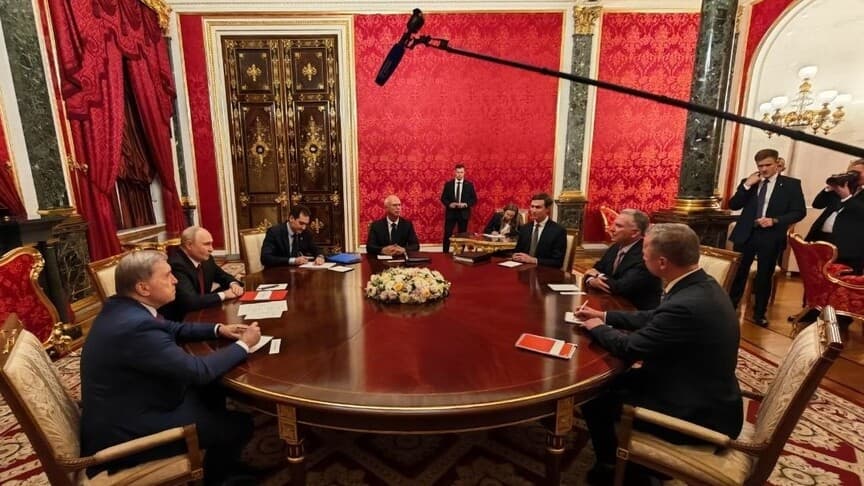
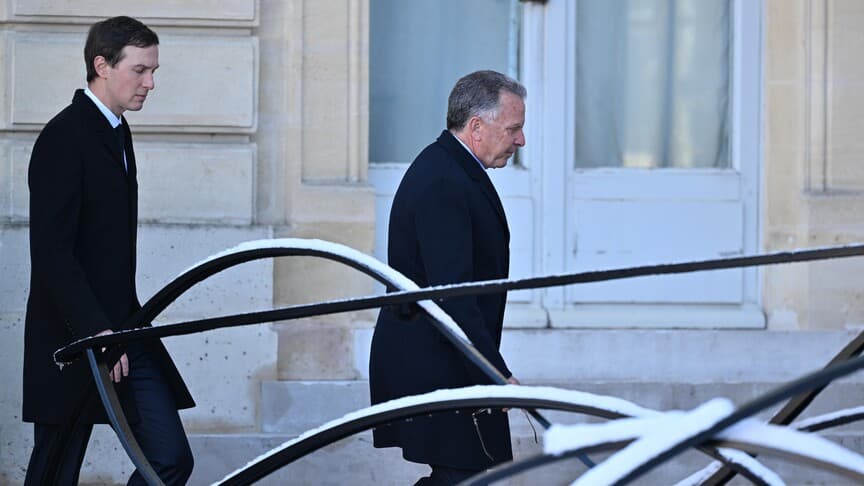
- Witkoff and Kushner arrived in Moscow on November 12; the meeting with Putin was scheduled for 12:00 local time
- The goal of the visit is to obtain Putin's consent to Europe's participation in the talks; Moscow is skeptical: Medinsky ruled out the immediate involvement of Europeans
- The purpose of the visit is to obtain Putin's consent to Europe's participation in the talks; Moscow is skeptical: Medinsky ruled out the immediate involvement of the Europeans
- After Moscow, the envoys will travel to Dublin for a meeting with Zelensky
- After Moscow, the envoys will head to Dublin for a meeting with Zelensky
Visit to Moscow after Abu Dhabi
Steve Witkoff and Jared Kushner arrived in Moscow on Thursday morning for talks with Russian President Vladimir Putin. At Vnukovo airport they were met by the Russian president's special envoy Kirill Dmitriev, as confirmed by the Russian agencies Interfax and TASS, and Dmitriev himself posted a video of the arrival on X. According to the BBC, the meeting with Putin was scheduled for 12:00 local time. The visit follows two days of talks in Abu Dhabi on November 10–11 — the first trilateral negotiations mediated by the United States in nine months, which ended without a breakthrough on ending the war. For Witkoff, this is his tenth visit to Russia since Donald Trump's return to the White House in January 2025.
The main goal — a 'blessing' for Europe's participation
Kushner said the meeting with Putin would focus on the outcomes of Abu Dhabi and that he and Witkoff expect to receive Moscow's 'blessing' for bringing European representatives into the talks, especially on questions of the continent's future security architecture. 'We have conveyed several times, directly to President Putin and his team, that the only way to bring this to completion is to have them at their side. And I think they are receptive to this,' he told journalists. Kushner also called on Europe to 'designate one person who will speak on its behalf.' After Moscow, the envoys will travel to Dublin to brief Ukrainian President Volodymyr Zelensky and continue discussing the ideas raised in the talks.
Moscow's position
Russian Foreign Minister Sergei Lavrov said Putin would first hear the report of the Russian delegation on Abu Dhabi, then the assessments of the American envoys, after which he would determine the next steps; Moscow's position, he said, would remain focused on achieving the goals of the full-scale invasion. The head of the Russian delegation in Abu Dhabi, Vladimir Medinsky, put it more bluntly: Moscow will be satisfied only with victory and an agreement on its own terms, which, in his formulation, would largely amount to Ukraine's capitulation. He ruled out European participation at this stage: 'When they (the Europeans) develop a conscience, they will be able to take part in peace talks,' and accused European countries of 'collectively deceiving the Ukrainian people.' These statements, as euronews notes, indicate that Moscow is not ready to retreat from its maximalist demands despite the renewed US efforts.
What was decided in Abu Dhabi, and what remains unresolved
The talks in the UAE produced an agreement in principle on a major prisoner-of-war exchange — Kushner called it 'the largest humanitarian release of prisoners' and said the numbers would be agreed the next day. At the same time, the key disagreements — over territory, post-war security guarantees, and Europe's role — remained unresolved. The head of the Ukrainian delegation, Rustem Umerov, wrote on X that steps toward a broader peace agreement and post-war reconstruction had been discussed: 'The first step is to end the war and provide security guarantees for Ukraine.' Zelensky, who is in Dublin for meetings with European leaders, said he hoped the Americans would return 'with specifics,' adding that he remains a skeptic but 'there is hope.' According to the BBC, the meeting of the presidents of Russia and Ukraine was announced only on Wednesday, after two days of talks described as devoted to Europe's post-war security architecture.
In parallel: questions about Starshield
While the envoys were in Moscow, Zelensky said that Ukraine's military communications are once again facing 'systematic' restrictions of Starshield satellite internet, operated by Elon Musk's SpaceX, which plays a key role at the front. According to him, the restrictions hamper the interception of Russian jet-powered drones: 'This helps the Russians kill more Ukrainians and strike Ukraine more precisely.' According to the BBC, the communication problems in October lasted about a week; Musk denied intentionally restricting access. Zelensky added that Ukraine 'is trying to clarify all the circumstances with the American side'.