The key facts
- US CPI rose 0.4% month-on-month in October versus expectations of 0.3%; core CPI rose 0.3% versus expectations of 0.2%
- The market had priced an 87% probability of a 25 b.p. rate hike in December, but Fed officials' statements strengthened expectations of a 50 b.p. move
- Dow Jones fell 0.3%, S&P 500 fell 0.38%, Nasdaq fell 0.7%; DAX rose 0.31%, Nikkei rose 1.3%
Inflation accelerated expectations of policy tightening
Consumer prices in the US rose 0.4% month-on-month in October — more than the expected 0.3%, though slower than September's 0.6% increase. Core CPI excluding food and energy added 0.3% against a forecast of 0.2%, keeping September's pace. Annual figures were not published. Hotter inflation strengthened expectations that the Federal Reserve will raise rates in December and that rates will stay higher for longer — this reduced risk appetite across global markets.
The Fed's stance and asset reaction
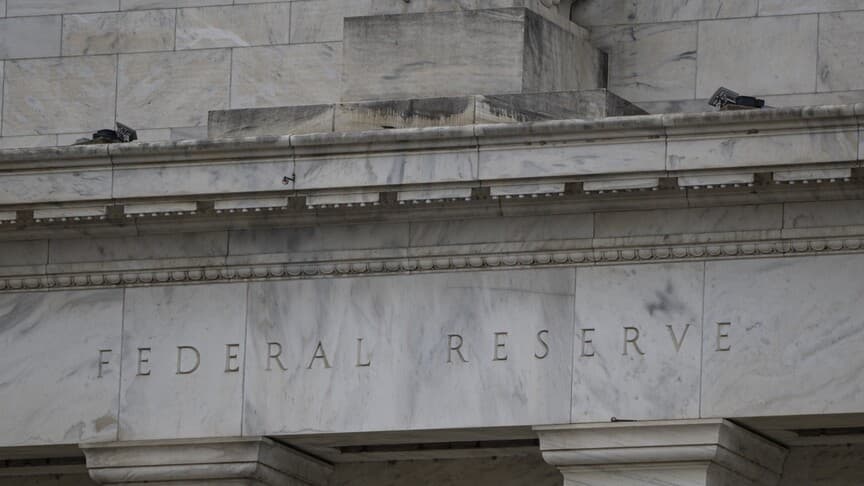
Fed governor Christopher Waller, before the data release, backed a rate hike. According to the regulator's representatives, at least two more 25 basis point hikes may be needed, and the pace will depend on the short-term economic and financial situation. Until recently, the market had priced in an 87% probability of a 25 b.p. hike in December, but statements by Fed officials strengthened expectations of a 50 b.p. move.
Markets: US down, Europe and Asia mixed
Yields on US government bonds at 2, 5 and 10 years rose; the Treasury market was closed on Wednesday due to Veterans Day. The dollar index gained 0.2% to 102.2. Gold fell 2.7% on Tuesday to $4,031 per ounce, and on Wednesday recovered 0.6% to $4,054. The Dow Jones fell 0.3%, the S&P 500 fell 0.38%, and the Nasdaq fell 0.7%. In Europe, indices closed higher except for the UK: DAX 40 +0.31%, CAC 40 +0.55%, FTSE MIB 30 +0.69%, FTSE 100 −0.29%. In Asia, the Nikkei 225 rose 1.3% and the Kospi rose 2.5% on the back of strong CoreWeave earnings, while the Shanghai Composite and Hang Seng declined.
Oil and corporate news
Brent for January delivery fell more than 3.5% on Tuesday, dropping below $90 per barrel on expectations of a diplomatic settlement in the Middle East, then stabilized at $91.5, and on Wednesday traded at $92.4 (+1%) amid ongoing attacks in the Strait of Hormuz and expectations of a larger drawdown in US oil inventories. The average gasoline price in the US fell to $3.98 per gallon — below $4 for the first time since July, according to the American Automobile Association. Qatar announced progress in settling the crisis between the US and Iran.
Companies and other events
Anthropic, the developer of Claude, plans to raise up to $64.4 billion in an IPO — one of the largest in Wall Street history. Nvidia shares fell 5.5% after reports that CEO Jensen Huang was allegedly targeted by a foreign intelligence service: shareholders filed a lawsuit claiming that the company and Huang misled investors by not disclosing his connection with Alice Huang, a former top executive of Singapore's Megaspeed, who, according to the plaintiffs, gathered intelligence on behalf of the Chinese government. CoreWeave shares soared 14.8% in premarket trading after a better-than-expected report. US Treasury Secretary Scott Bessent said Washington and Beijing will cooperate on managing artificial intelligence risks. US household debt rose 1.8% in the third quarter to $19.1 trillion, according to the New York Fed. TSMC shares rose 4.2% after approval of investments of up to $1 billion from Anthropic and OpenAI.
European details
Bank of England Deputy Governor Clare Lombardelli said she forecasts a higher bank rate than other committee members and that the current rate level is less restrictive than expected; she did not rule out consecutive hikes and noted that by mid-December the regulator will have more information. The ifo institute reported that Berlin failed to fulfill its promise to channel more than half of the new debt funds through special funds into investments such as bridges, roads and climate projects, instead spending them on current expenditures. Vodafone cut 3,000 employees in its European operations in April–September, saving $222.9 million; the company expects to save $2.2 billion by the 2030 financial year and lay off another 2,300 people in Germany.