The key facts
- Tanzania's President Samia Suluhu Hassan spoke at COP31 in Antalya; the summit runs until 20 November
- She called for a transparent carbon market mechanism under Article 6 of the Paris Agreement and affordable climate finance
- Tanzania aims to raise electricity access to 75% by 2030 and provide 80% of households with clean cooking methods by 2034
Tanzania's three priorities at the climate summit
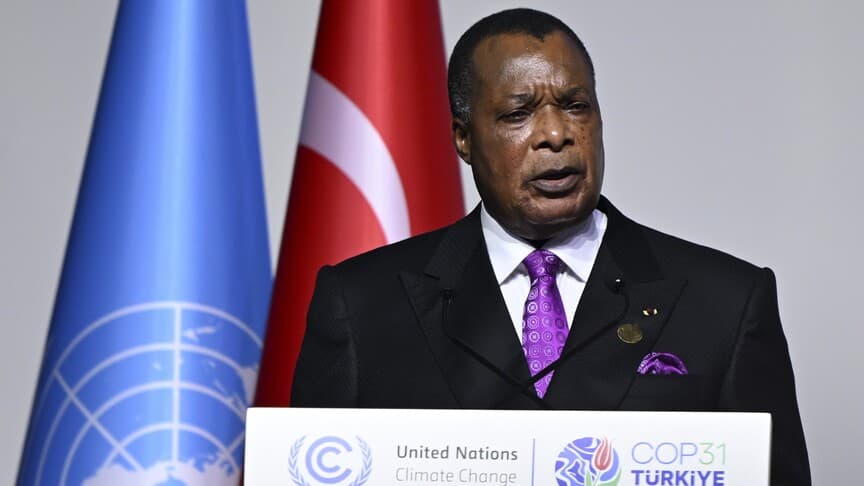
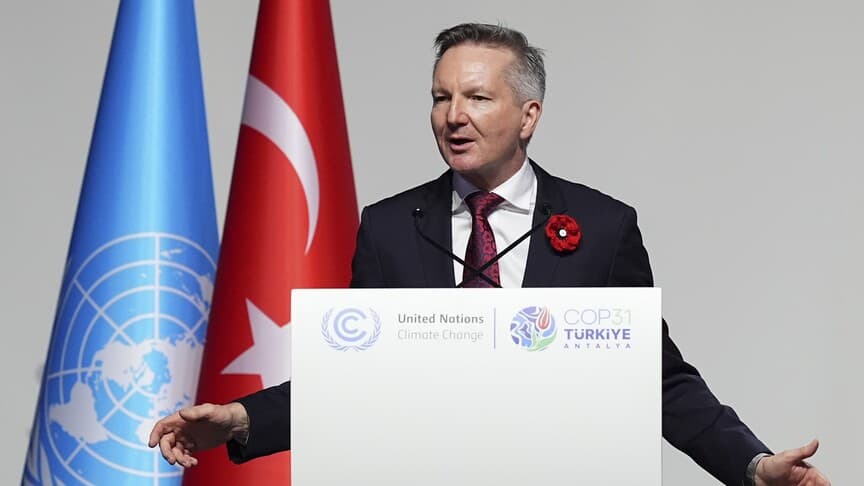
Tanzania's President Samia Suluhu Hassan spoke at the COP31 summit in Antalya, Turkey, which runs until 20 November. She called for more affordable climate finance and a fair global carbon market, stressing that the energy transition in Africa must above all ensure access to inexpensive electricity. 'We need a transparent carbon market mechanism under Article 6 of the Paris Agreement,' Hassan said, adding that the mechanism must ensure fair pricing, equitable distribution of benefits, and environmental integrity.
The cost of climate shocks for Tanzania
According to Hassan's assessment, climate upheavals — prolonged droughts, unpredictable rainfall, and rising sea levels — cost Tanzania roughly 2–3% of GDP annually. The country's economy depends heavily on natural resources and rain-fed agriculture. Citing UNESCO figures, the president noted that the glaciers of Kilimanjaro have lost 91% of their area since 1912, and droughts are already disrupting the power supply. Hassan emphasised that despite the shared nature of climate threats, differences in national circumstances must be taken into account, and climate action should rest on the principle of 'common but differentiated responsibilities'.
Finance, energy, and sustainable development
Hassan named as the first priority 'adequate, predictable, and accessible' climate finance: developing countries need grants and concessional loans, especially for adaptation, as well as technology transfer. The second priority is investment in the energy transition: 'For Africa, energy justice means equitable access to affordable, reliable, and sustainable energy,' she said. Tanzania is implementing the National Energy Compact, which aims to raise electricity access to 75% by 2030, while a separate strategy provides for 80% access to clean cooking methods by 2034. In August, Hassan commissioned the Julius Nyerere hydropower plant with a capacity of 2,115 MW; according to government data, the country's total installed generation capacity has reached 4,646 MW. The president also pointed to Tanzania's potential in issuing carbon credits — in transport, waste management, renewable energy, and the forestry sector: forests cover about 48.1 million hectares. The third priority is inclusive and climate-resilient development with an emphasis on innovation, industrialisation, and 'green' skills for young people. 'May COP31 become a turning point — from promises to results, from ambition to action, from commitments to measurable outcomes,' she concluded. According to the UONGOZI Institute, about 82% of Tanzanian households cook with firewood or charcoal, while UNIDO estimates annual forest loss at 372,000 hectares — these figures explain why clean cooking has become one of Hassan's main political priorities.