The key facts
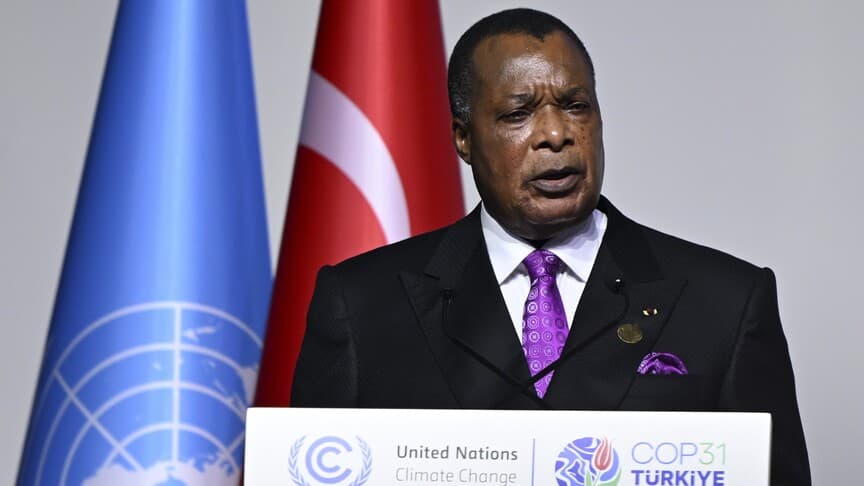
- President of the Republic of Congo Denis Sassou Nguesso spoke at the COP31 leaders' summit in Antalya
- He called on all UN countries to support the Decade on reforestation 2027–2036
- Congo marked the launch of the initiative on 6 November by planting nearly 200,000 trees
A call to move from ambition to action
President of the Republic of Congo Denis Sassou Nguesso spoke at the COP31 leaders' summit — the UN climate change conference taking place in Antalya until 20 November. He said that this conference should be the one at which the world 'moves from ambition to action,' and called on all UN member states to fully engage in the UN Decade on Afforestation and Reforestation for 2027–2036 within the framework of sustainable forest management. 'Every tree planted and every ecosystem restored is an investment in our future,' he said.
What has already been done and what stands behind the initiative
The UN General Assembly adopted the Decade on Afforestation and Reforestation on 16 April 2025 with 155 countries voting in favour and one against. Congo began it early: on 6 November, the national Tree Day, nearly 200,000 trees were planted in the country. Sassou Nguesso noted that the country has marked this day for more than 40 years in a row, because 'protecting the forest means protecting our common future.'
Context: forests, peatlands and the oil economy
Sassou Nguesso chairs the Climate Commission of the Congo Basin; its financial instrument — the Blue Fund for the Congo Basin — is intended, in his words, to reflect 'the ambitions of a sustainable economy' based on forests, water resources and renewable energy. The Republic of Congo, together with neighbouring DR Congo, shares the Cuvette Centrale peatlands in the Congo Basin — one of the planet's most important carbon sinks: according to scientists' estimates, about 29 billion tonnes of carbon are stored there, roughly 28% of all carbon in tropical peatlands. At the same time, the country's economy is heavily dependent on oil — about half of GDP and 90% of exports — and is vulnerable to climate shocks: according to IMF data, the severe floods of 2019 and 2020 in the north of the country affected between 100,000 and 160,000 people. The government, the president said, will continue the national climate plan, balancing emissions reduction, adaptation and food security. He also thanked the President of Turkey, Recep Tayyip Erdogan, and the Turkish people for their hospitality.