The key facts
- CO2 emissions hit a record 42 billion tonnes in 2025; the last 12 years have been the warmest on record
- The current trajectory leads to 2.8°C of warming against the Paris Agreement's 1.5°C target
- Developing countries need $305 billion a year for adaptation but receive only $26 billion
A call for a 'COP of implementation'
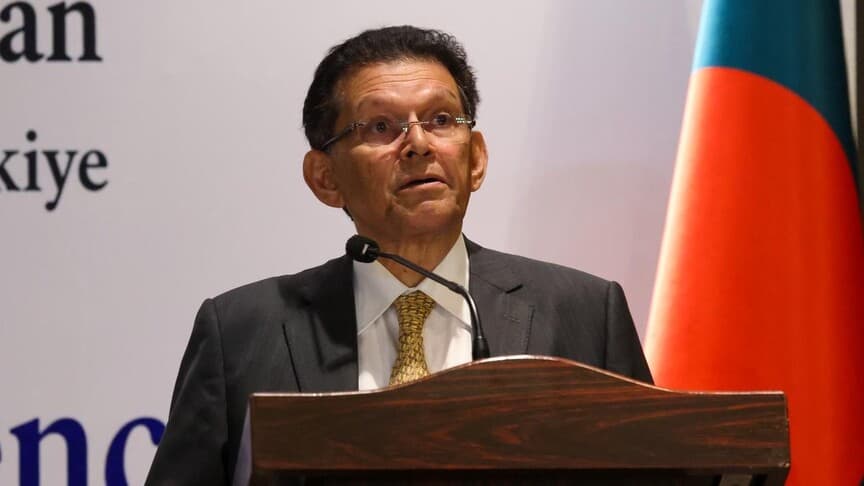
UN General Assembly President Philémon Yang... no — Khalilur Rahman spoke at the COP31 climate conference in Antalya, Turkey, urging that global climate commitments be turned into real implementation, warning that the world is sharply deviating from established emissions limits. Anadolu reported this.
Figures that show the gap
Rahman cited data showing that global carbon emissions reached a record 42 billion tonnes in 2025, and that the last 12 years have been the warmest on record. Although the 2015 Paris Agreement aimed to keep warming within 1.5°C, current trajectories, he said, lead to 2.8°C. 'This is not a gap — it is a chasm, and people are falling into it every day,' he said.
Concrete benchmarks
According to Rahman, climate science requires cutting greenhouse gas emissions by 45% by 2035. To achieve this, countries need to triple renewable energy generation, adding about 1,200 gigawatts of capacity annually; he called decarbonization the only 'viable path' to curbing temperature rise. He urged governments to use the COP31 presidency's sectoral benchmarks for 2035 — on electrification, sustainable buildings, 'green' industry and zero waste — to turn national commitments into investable projects.
The adaptation finance shortfall
Separately, Rahman addressed the imbalance in climate finance: developing countries need up to $305 billion annually for adaptation, but receive only $26 billion. 'This gap is not a rounding error; it is an indictment of our solidarity,' he said, calling on donors to provide finance on a non-debt basis, capitalize the loss and damage response fund, and allocate resources based on ecological vulnerability rather than national income alone. He also proposed using artificial intelligence and modern technologies to expand early warning systems in remote areas and glacier zones, and to secure financial compensation for forest communities in the Amazon, the Congo Basin and Bangladesh.
Conference outcome and next steps
Concluding his address, Rahman recalled the continuity of climate agreements: 'Paris gave us a compass, the UAE consensus gave us direction, the Takutaro... the Taku Pukapuka Declaration gave the islands and the Pacific a voice. Antalya must now give us implementation.' He pledged to carry the conference's outcomes to the 2027 Sustainable Development Goals Summit.