The key facts
- The number of cybercrimes in Uzbekistan has grown over five years from about 4.9 thousand to 63 thousand, with damage in 2025 amounting to almost 4 trillion soums
- Adolescents aged 11–15 find 75–81% of the content they consume on their own and can bypass parental controls
- Participants proposed school protocols for responding to cyber threats, digital literacy, and high-quality national children's content
What was discussed at the forum
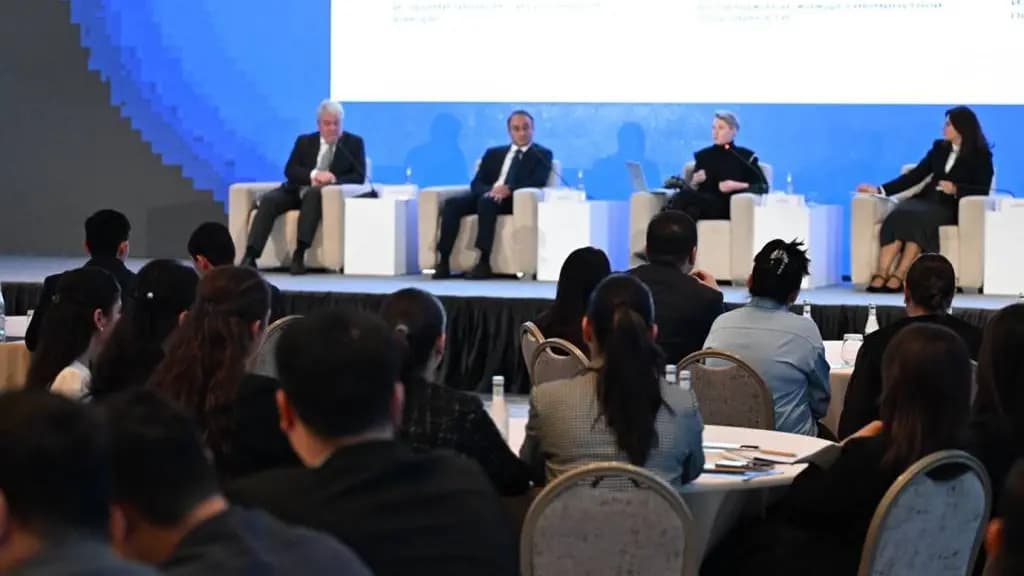
Child protection in the digital environment became the central topic of the III Uzbek-Russian Media Forum held in Tashkent on November 9–10. As Daryo.uz reports, participants spoke about the impact of digital content on children and adolescents, cyberbullying, online fraud, and attempts to involve minors in destructive activities. They also discussed digital literacy, the responsibility of parents and schools, and the creation of high-quality national content for young audiences.
How children choose content and bypass controls
Experts at the forum described how media consumption changes with age: up to age six, parents mostly choose content for the child; at ages 7–10, friends and bloggers have an increasing influence; and adolescents aged 11–15, according to the data presented, find 75% to 81% of the content they consume online on their own — only about a quarter of materials are recommended by parents. It was also noted that teenagers today know how to bypass parental controls, including with the help of VPNs and proxy services, so one of the key protective measures is not so much restricting access as watching content together and discussing what is seen.
The scale of cyber threats in Uzbekistan
Oybek Yuldashev, First Deputy Minister of Preschool and School Education, cited data on the growth of cybercrime: over the past five years, the number of such crimes in the country increased from about 4.9 thousand to 63 thousand, and the damage they caused in 2025 amounted to almost 4 trillion soums. According to the statistics he presented, one in six children or adolescents in Europe and Central Asia faces cyberbullying. Among the measures he named are improving the digital literacy of children and teachers, protecting personal data, school protocols for responding to cyber threats, and increasing the accountability of online platforms, as well as joint research, open educational materials for teachers, and youth cybersecurity competitions.
Recruitment schemes and a focus on quality content
Ksenia Tulaeva, executive director of the Russian company Kribrum, which monitors information on the internet and social media, described a typical scheme for recruiting minors into destructive communities: strangers first make contact and win the child's trust, then offer simple tasks for a small reward or virtual bonuses, and over time the tasks become more complex. In her view, countering this requires joint efforts by parents, schools, law enforcement, and platforms, while adults need digital literacy to notice the risks and discuss them with children.
Content instead of a complete ban
Zafar Yuldashev, executive director of the Center for the Development of Children's Content, said that completely shielding children from the internet is 'impossible, and not necessary either,' since it opens up opportunities for learning and creativity; the task is to protect them from harmful information, help parents, and create worthy works for young audiences. He spoke about the center's projects, including animated and film projects about historical figures — the film 'Temurbek' about the childhood years of Amir Timur and 'Husayn' about the childhood of Ibn Sina — as well as cooperation with Russian specialists in training personnel, translating and distributing children's content, and co-producing animation. Session participants agreed that children's safety online requires a comprehensive approach: protection from threats combined with the development of critical thinking, digital literacy, and quality content.