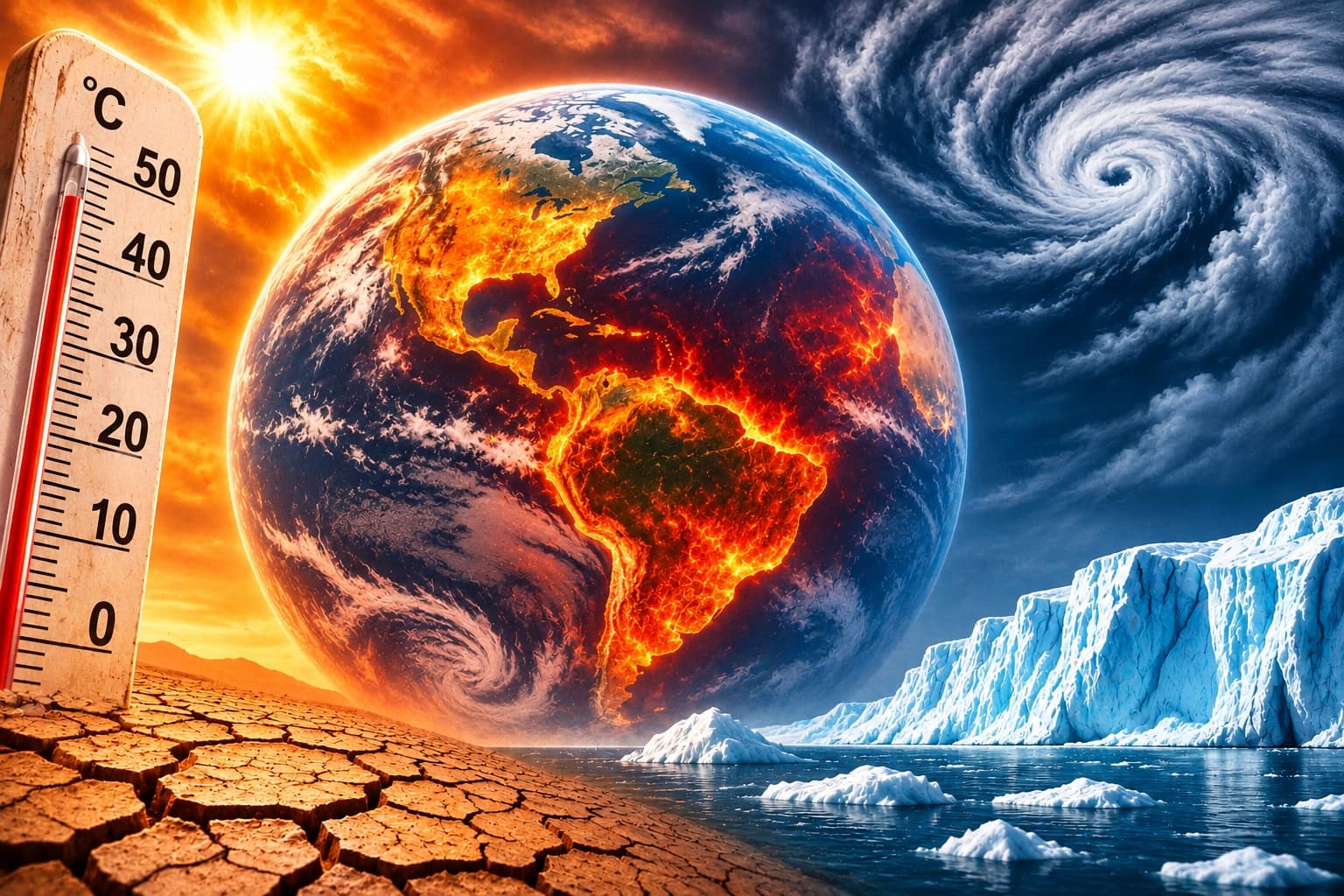
The key facts
- 2026 will rank among the four hottest years on record; the top four spots are held by 2023–2026
- From January to September, the temperature was 1.47 °C above the pre-industrial era
- El Niño may reach record intensity by December; its influence will persist into 2027
WMO report: 2026 among the four hottest years
The World Meteorological Organization (WMO) published a report on November 9 at the UN climate conference in Turkey, according to which 2026 will rank among the four hottest years in the entire history of meteorological observations. According to experts' estimates, from January to September the average global temperature was 1.47 degrees higher than in the pre-industrial era. The last 12 years have been the warmest on record, and the period from 2023 to 2026 occupies the top four spots in the temperature ranking. This is reported by Life.ru citing the organization's report.
El Niño has not yet shown its full strength
Scientists warn that the current year has not yet shown its full warming potential: El Niño, which has been gaining strength since August, could reach record intensity by December, and its influence on global temperatures will persist into 2027. “El Niño does not bring additional heat to the planet. It releases heat from the ocean, which is now warmer than ever,” explained WMO Secretary-General Celeste Saulo. The WMO admits that the final figure for 2026 may turn out higher than the preliminary estimate, since the phenomenon usually affects global temperature most strongly in the year following its development. For now, 2024 remains the record-holder for average annual temperature.
The ocean and weather risks
Against the backdrop of climate change, WMO experts predict more intense heat waves, droughts, tropical cyclones and downpours: the combination of global warming with a powerful El Niño increases the likelihood of destructive weather events in various regions of the world. Particular concern is raised by the state of the World Ocean, which absorbs about 90% of the excess heat from greenhouse gases: according to preliminary data, its heat content has been setting records for the tenth year in a row, while sea levels are rising and glacier melting is accelerating.
Context of previous forecasts
Life.ru previously reportedthat 2026 could become the hottest year in history due to the strengthening El Niño. The head of the European climate service Copernicus warned that the warming could lead to new temperature records not only in 2026 but also in 2027. In September, the water temperature in a key area of the Pacific Ocean reached a record 29.7 degrees, exceeding the figures of previous powerful climate cycles. The new WMO report confirms this scenario with an official assessment: even without taking into account the full effect of El Niño, 2026 already ranks among the four hottest years, and the peak of the phenomenon's influence, according to the organization, is still ahead.