
The key facts
- On 8 November 2016, India withdrew 500 and 1,000 rupee banknotes — 86.9% of all cash in circulation
- By 2018, 99.3% of the withdrawn money had returned to the banking system
- Cash in circulation grew from 17.97 to 43.15 trillion rupees despite the boom in digital payments
The sudden reform of 2016
On 8 November 2016, India's Prime Minister Narendra Modi announced in a televised address that, from midnight, 500 and 1,000 rupee banknotes would be withdrawn from circulation. The measure instantly invalidated 86.9% of the value of all cash in circulation. Modi called on citizens to make a 'great sacrifice for the cleansing of the country' and promised that the temporary hardships would help eradicate 'black money', corruption, counterfeit currency and the financing of terrorism. This is reported by Deutsche Welle in a retrospective piece marking the tenth anniversary of the reform.
The cost to the population and the informal economy
The consequences were tangible: millions of Indians stood in hours-long queues outside banks and ATMs, workers lost their wages, and small businesses could not pay their employees. According to Jaipur businessman Prakash Patra, his domestic helper's father died right in a queue while trying to exchange the family's savings. Expert Joe Athialy of the Centre for Financial Accountability believes the main blow fell on the poor and the informal sector: 'Demonetisation destroyed livelihoods, disrupted small businesses and plunged millions into even greater economic insecurity.' Arun Kumar, a former professor of economics at Jawaharlal Nehru University, adds that the authorities mistakenly believed that illegal wealth was held primarily in cash.
The 'black money' did not disappear
The main failure became clear as early as 2018: the Reserve Bank of India reported that 99.3% of the withdrawn currency had returned to the banking system, meaning that a significant share of undeclared cash was not 'burned', as had been expected. A decade later, DW notes, there is little evidence that demonetisation significantly dented 'black money' or corruption: a large part of India's illegal wealth is held in real estate, gold and other assets rather than in cash. Leekha Chakraborty, a professor at the National Institute of Public Finance and Policy, citing research, speaks of 'modest results' in achieving the stated goals, against real, albeit temporary, economic costs. Athialy also points out that no one has been held accountable for the economic upheaval and the undermining of institutions, including the Reserve Bank of India.
The only obvious shift — digital payments
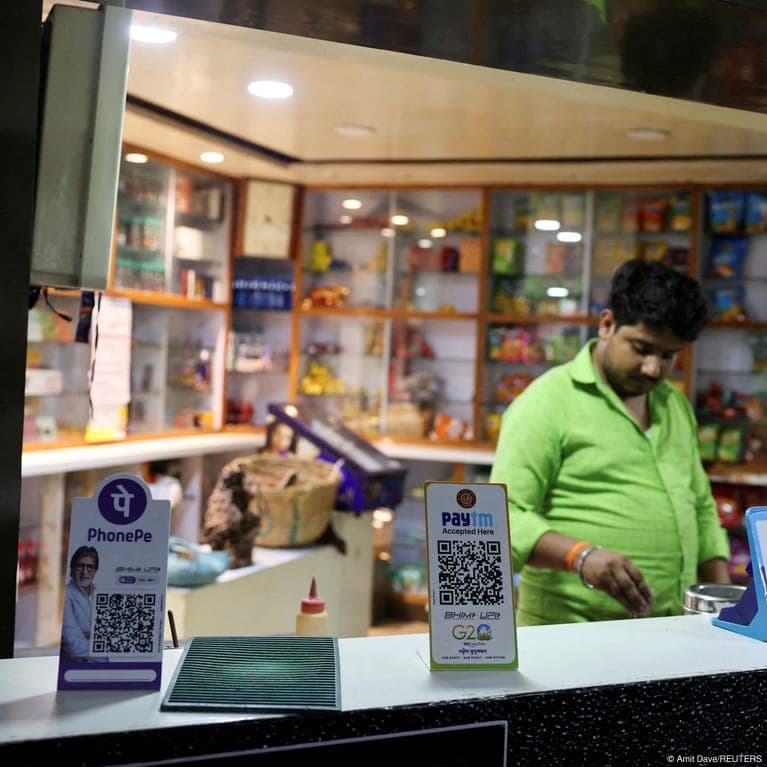
Since 2016, digital payments in India have indeed grown: UPI, launched in August of that year, processed 241.6 billion transactions worth 314.2 trillion rupees (about 2.95 trillion euros) in the 2025–26 financial year, according to the Reserve Bank. However, the growth of cashless payments did not reduce the volume of cash: as of 23 October 2026, banknotes in circulation amounted to 43.15 trillion rupees, compared with 17.97 trillion in November 2016. Chakraborty cautions against crediting demonetisation for the digital boom: in her words, payments 'continued a trend that was already under way before the cash ban'. Thus, ten years on, the gap between the reform's promises and its actual results remains a central element of its legacy.