The key facts
- The first full-scale prototype, X-BAT 001, has been assembled — a vertical takeoff and landing vehicle
- Expected flight range is more than 3,700 km
- Testing will begin with ground checks of the engine and VTOL system, followed by crane-assisted flights
Prototype ready for testing
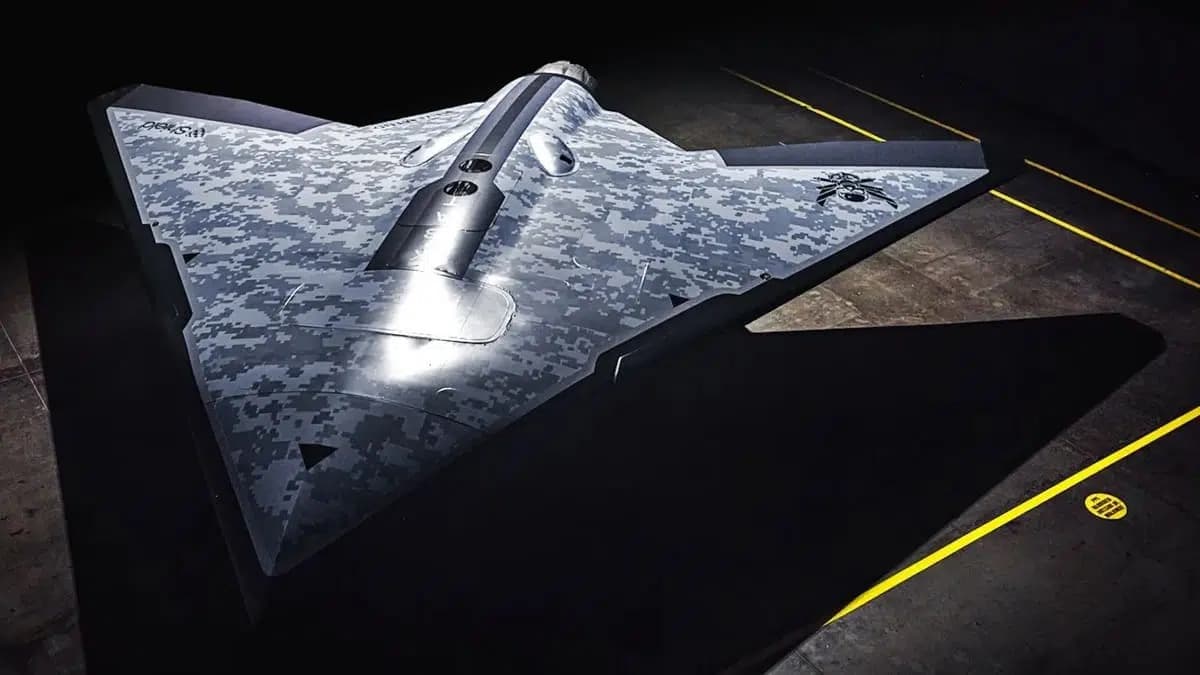
The American company Shield AI has completed assembly of the first full-scale prototype of the X-BAT autonomous combat aircraft, Kun.uz reports. The vehicle, designated X-BAT 001, was recently moved out of the company's production facility in Frisco, Texas; it is now being delivered to the X-Forge 2 test airfield in Newton, Kansas. The new version features a modified wing profile and an elongated engine exhaust nozzle.
Takeoff without an airfield and long range
The main feature of the X-BAT is its ability to take off and land vertically (VTOL), that is, without using a runway. According to the publication, the vehicle's expected flight range exceeds 3,700 km. It is assumed that this design will allow the US military to employ combat drones without traditional airfields: the vehicle is designed to be based on ships, remote islands, and other sites with damaged or absent infrastructure.
How the tests will proceed
Before the first independent attempt to take to the air, engineers plan staged checks. First, the vehicle's engine will be run in a horizontal position on a special platform, then the powerplant will be tested in vertical thrust mode. At the next stage, during the first flights, the prototype will be held by a crane — this method reduces the risk of losing the vehicle in the event of an engine shutdown or other technical failure. Success in these tests will pave the way for demonstration flights without the restraining device.
Engine and swiveling nozzle
The core of the powerplant is the GE Aerospace F110-GE-129E turbofan engine. It is equipped with an axisymmetric swiveling exhaust nozzle that allows the direction of thrust to be changed and the aircraft's position to be controlled during vertical takeoff, landing, and hovering. In July, Shield AI and GE Aerospace completed tests of engine startup, nozzle operation, and powerplant integration — these took place at the GE facility in Peebles, Ohio. The results made it possible to verify one of the key elements of the vehicle's unusual aerodynamic and propulsion design.