The key facts
- The NatureLM-audio model distinguishes frog sounds with 99% accuracy and identifies individual species with 82% accuracy
- Google DeepMind developed DolphinGemma based on years of recordings of wild Atlantic dolphins
- A 2024 study in Nature Communications showed that sperm whale communication is more complex than previously thought
AI goes into the field: from sound recognition to studying communication
Researchers are increasingly applying machine learning to analyze animal sounds — from birds and elephants to whales and dolphins. An overview of this field was published by Euronews. At the center of attention is the US-based nonprofit Earth Species Project, which develops AI models to analyze vocalizations and identify patterns in the communication of different species. Its long-term goal is to understand what animals are saying to each other.
NatureLM-audio: minutes instead of months of analysis
Earth Species Project has created the NatureLM-audio model, designed to recognize and classify animal sounds, identify types of vocalizations, and analyze large volumes of audio recordings. The model works with natural-language prompts, which potentially makes it possible to analyze recordings in minutes instead of months. In a test on recordings from the Australian conservation project FrogID, it showed 99% accuracy in distinguishing frog sounds from other recordings and 82% accuracy in identifying individual frog species.
Experiments with animals' reactions to AI-generated sounds
The organization collaborates with researchers studying orcas, crows, and zebra finches. Together with scientists from McGill University in Canada, the ZF-AIM model was created to study vocal interactions in zebra finches: it generates bird-like sounds in real time, allowing researchers to observe how the birds respond to AI vocalizations. This goes beyond simply analyzing recordings, but, as Euronews points out, the technology is not yet able to 'translate' what the birds are saying, and there is still no conversation between animals and machines.
Dolphins and sperm whales: DolphinGemma and Project CETI
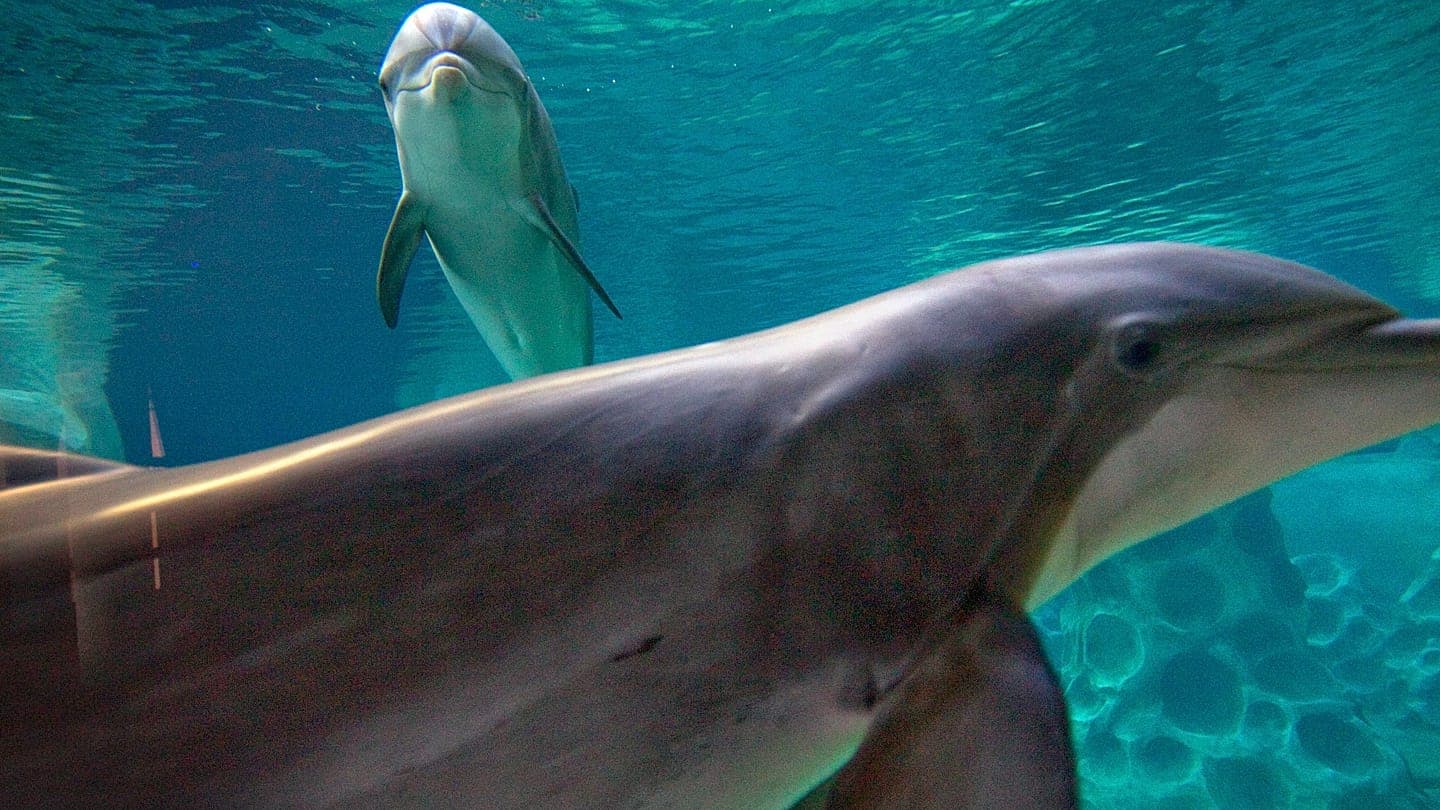
Google DeepMind has developed the DolphinGemma model, trained on years of recordings of wild Atlantic spotted dolphins collected by the Wild Dolphin Project. The model analyzes sequences of vocalizations, identifies recurring patterns, and predicts which sounds will come next; scientists hope to eventually build a shared 'vocabulary' between humans and dolphins, but for now the model is learning how the animals communicate rather than translating their sounds. A description of the model is available on the DolphinGemma project page. Another initiative, Project CETI, uses AI, robotics, linguistics, and underwater recording to study 'codas' — sequences of clicks that sperm whales use to communicate. A 2024 study in Nature Communications, covering more than 8,700 codas, revealed features of rhythm, tempo, and click ordering, indicating that sperm whale communication is more complex than previously thought.
Why there is still no 'translator' and what risks researchers see
Identifying patterns in sounds does not yet mean understanding their meaning: researchers still have to determine whether individual vocalizations carry specific meanings and how they change depending on context. Animal sounds need to be considered alongside behavior, social bonds, and environmental conditions, with interpretations verified in controlled experiments. There are also risks: if it becomes possible to recognize and reproduce signals associated with mating behavior, stress, or social interaction, the same technology could be used to lure animals, disrupt their behavior, or facilitate their capture. Researchers also worry about the consequences of broadcasting AI-generated vocalizations into wild populations and note the risk of attributing to animals intentions or emotions they did not express. In the authors' view, the challenge lies not only in creating technologies for understanding animals but also in using them in ways that protect the animals being studied.