The key facts
- The Northern Taurids peak falls on the night of November 11–12 and is visible in the Northern Hemisphere
- Large particles of asteroid 2004 TG10 produce fireballs as bright as Venus or brighter
- Up to 5 meteors per hour are expected
A meteor shower with rare flashes
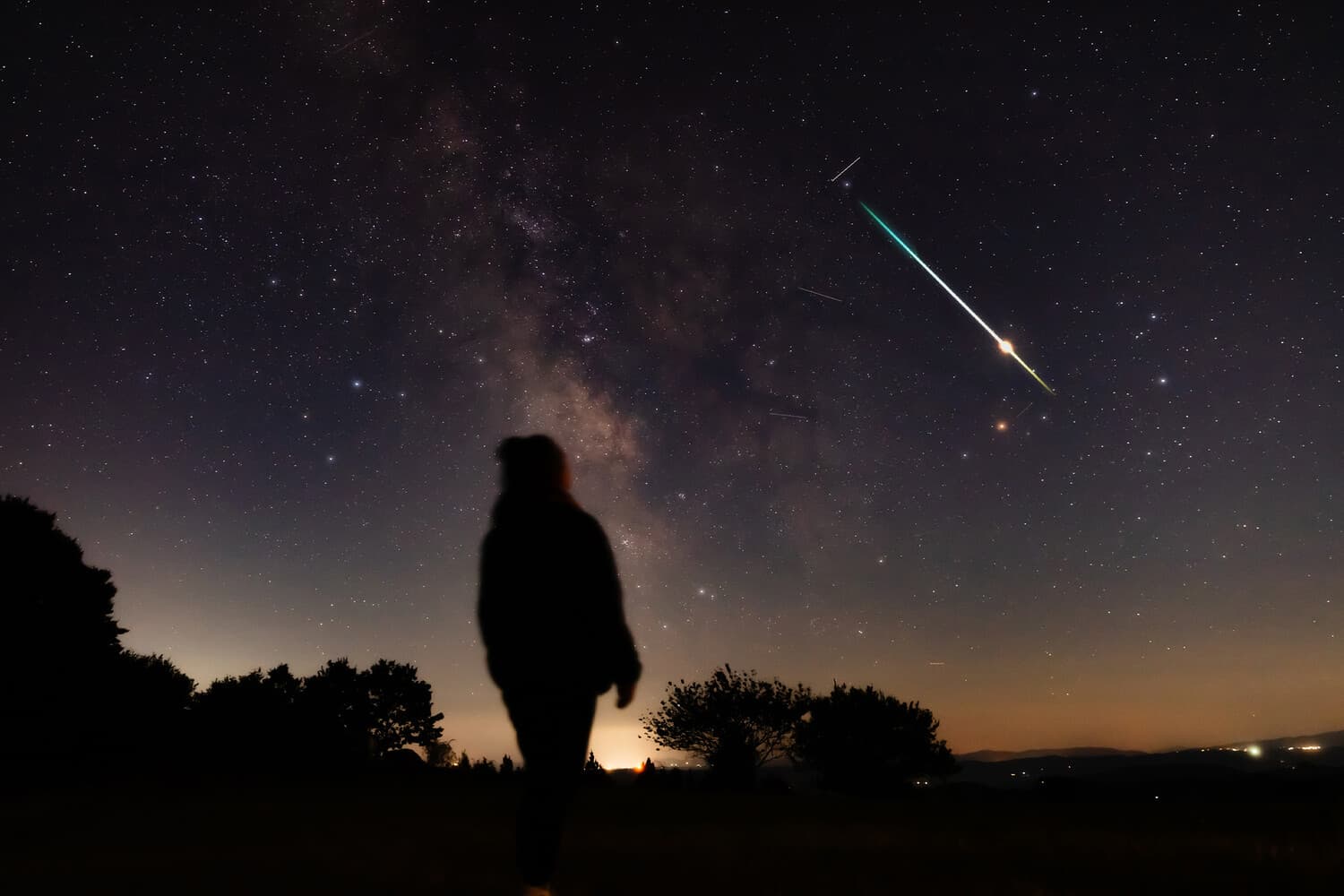
On the night of November 11–12, residents of the Northern Hemisphere will be able to observe the peak activity of the Northern Taurids meteor shower. Gazeta.Ru reports this citing TASS: the main feature of the shower will be flashes of rare brightness, capable of outshining the brightest planet in the night sky.
Why the Taurids produce fireballs
Evgeny Burmistrov, an astronomy expert from Perm Polytechnic (PNIPU), explained to the agency that the shower's particles move in the same direction as the Earth and enter the atmosphere relatively smoothly — at a speed of about 29 kilometers per second. The main highlight of the shower is large fragments of the parent asteroid 2004 TG10, measuring a centimeter or more: because of their size, they manage to form powerful fireballs whose brightness rivals Venus or even surpasses it. The intensity of the shower is nevertheless modest — up to 5 meteors per hour. The shower owes its name to the constellation Taurus, from which the cosmic debris visually appears to fly out.
Observation context
The Northern Taurids differ from typical 'dense' meteor showers precisely in their emphasis on quality rather than quantity of flashes: with only a few meteors per hour, the chance of seeing a bright fireball remains the main reason for observations. For comparison: quite recently, on the night of October 23–24, the Northern Hemisphere observed another shower — the Leonis Minorids, named after the constellation Leo Minor, where its radiant is located — the point from which the meteors appear to an observer to fly out.