The key facts
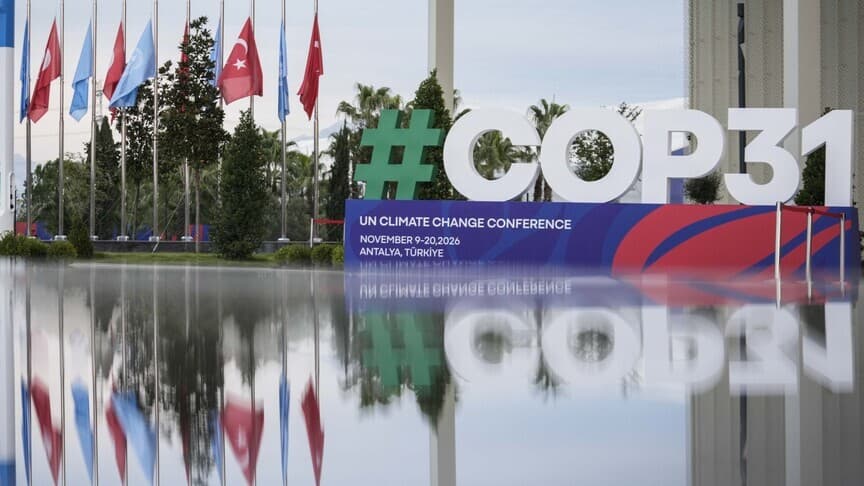
- COP31 is taking place in Antalya from November 9 to 20; Turkey is the official host, Australia leads the negotiations
- COP31 is being held in Antalya from November 9 to 20; Turkey is the official host, Australia leads the negotiations
- The hosts propose raising electricity's share of global energy consumption to 35% by 2035
- The UN has declared the 1.5°C goal unattainable; financing for the Global South is being cut
- The UN has recognized the 1.5°C target as unattainable; funding for the Global South is shrinking
The summit in Antalya: who and why
From November 9 to 20, delegates from almost every country in the world will gather in the Mediterranean city of Antalya for the 31st UN climate conference. Turkey is the official host, while Australia will lead the negotiations — a division of roles that emerged after Australia withdrew its bid to host the summit. In a publication ahead of the summit, Deutsche Welle notes that the agenda of the coming 12 days is more serious than the hosts' advertising campaign might suggest, featuring President Recep Tayyip Erdogan and his wife Emine, who called climate change 'one of the most visible manifestations of the burden that human activity has placed on our planet.'
Context: goals are not being met, but there is progress
The backdrop for the negotiations is grim. According to DW, Europe's summer was marked by drought, extreme heat, wildfires and record-low water levels in major rivers, and at the end of August mudslides triggered by a rock-ice avalanche in Nepal and Tibet wiped out entire villages and claimed the lives of more than 1,400 people — climatologists linked the disaster to melting ice and warming. Global carbon emissions continue to rise, and the UN concludedthat keeping warming within 1.5°C compared with pre-industrial levels — a goal agreed at COP21 in 2015— is no longer achievable. At the same time, climate expert David Victor of the University of California, San Diego, recalled that before the Paris Agreement the world was heading for 3–3.5°C of warming, while with full implementation of current commitments the UN forecast is up to 2.6°C. 'There is no doubt we could be doing more,' he said, warning against excessive expectations for this summit: all COP decisions require unanimity, while wars, trade conflicts and economic problems surround the negotiations.
Electrification as the hosts' main bet
The central theme will once again be the transition away from fossil fuels — coal, oil and gas: there is still no consensus on how quickly this should happen. Turkey and Australia have included green industrialization and the energy transition in their action plan, setting a goal of raising electricity's share of global energy consumption to 35% by 2035, up from roughly 20% today. The bet on electrification is backed by fresh analysis from the International Energy Agency: accelerated electrification could cut fuel-importing countries' bills by more than $400 billion by 2035 compared with 2025 levels. Germany's Environment Minister Carsten Schneider said ahead of the summit that Germany and the EU want to give new impetus to a 'global phase-out of fossil fuels,' calling it not only a contribution to the climate but also a chance for economies and for reducing dependence on energy imports.
Opponents of the deal and the path of 'clubs'
Oil-producing states such as Saudi Arabia oppose the phase-out plans; at recent climate conferences they have blocked final agreements containing plans to move away from fossil fuels. China's position is also unclear: despite a massive expansion of wind and solar power over the past 20 years, the country traditionally rejects external demands regarding its energy policy. David Victor sees better prospects for 'clubs' — small alliances of governments and companies in aviation, shipping or electric vehicles. An example was the April forum in Colombia's Santa Marta, where Colombia and the Netherlands brought together representatives of 57 countries to discuss moving away from coal, oil and gas after a similar agreement failed at the 2025 summit. Cosima Cassel of the Berlin-based think tank E3G believes that Turkey's bet on electrification amid the oil crisis could work — but success will require a serious approach to expanding power grids and energy storage.
Money: promises of $300 billion and cuts to aid
A separate knot of contradictions is climate finance. At COP29 in Baku in 2024, industrialized countries agreed to provide at least $300 billion per year by 2035, but the source of these funds remains a matter of dispute. Meanwhile, major developed countries, above all the United States, are cutting development aid: Germany paid out only 4.7 billion euros for international climate finance in its 2025 budget, down from 6.1 billion euros in 2024. “The level of financial support for developing countries today is far from what is needed,” assessed the situation Jan Kowalzig, an expert at Oxfam Germany. In his view, breaking financial promises undermines the trust of developing countries and, as a result, the diplomatic influence of industrialized nations. The most vulnerable are the countries of the Global South and island states, which are threatened by rising sea levels.