The key facts
- Sheikh Saud bin Saqr Al Qasimi is representing the UAE President at the Cop31 leaders' summit in Antalya on 11–12 November
- The delegation also includes the UAE ministers of culture, climate and foreign affairs
- Australia and Turkey proposed the '35 by 35' goal: 35% of energy consumption from electricity by 2035
UAE delegation to Cop31
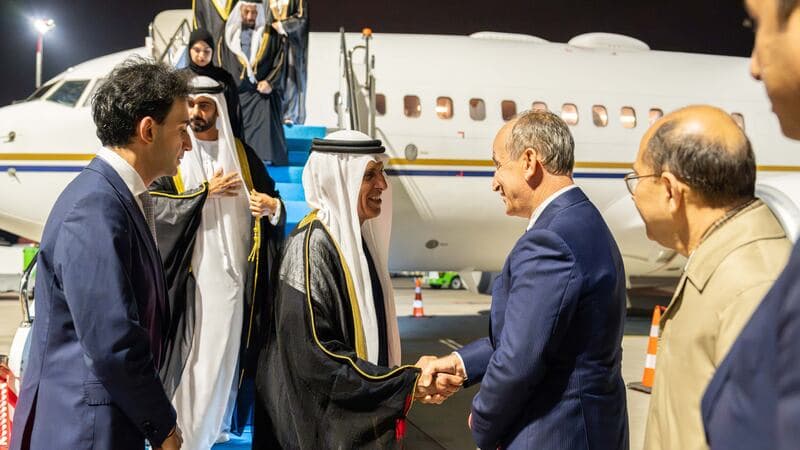
The Ruler of Ras Al Khaimah and member of the UAE Federal Supreme Council, Sheikh Saud bin Saqr Al Qasimi, arrived in Antalya leading the country's high-level delegation to the Cop31 climate summit. He is representing UAE President Sheikh Mohamed at the two-day leaders' summit, taking place on 11 and 12 November within the broader conference, which runs until 20 November. At Antalya airport, the delegation was met by the UAE Ambassador to Turkey, Saeed Thani Al Dhaheri, and a number of Turkish officials.
Composition of the delegation and summit goals
In addition to Sheikh Saud, the delegation includes Minister of Culture Sheikh Salem bin Khalid Al Qasimi, Minister of State Khalifa Al Marar, and Minister of Climate Change and Environment Dr Amna Al Dahak, as well as a number of senior officials. The summit is held under the motto 'Towards a sustainable, resilient and equitable future' and brings together heads of state and government to strengthen international climate cooperation, accelerate the implementation of climate commitments and advance the goals of the Paris Agreement.
Agenda and context of UAE participation
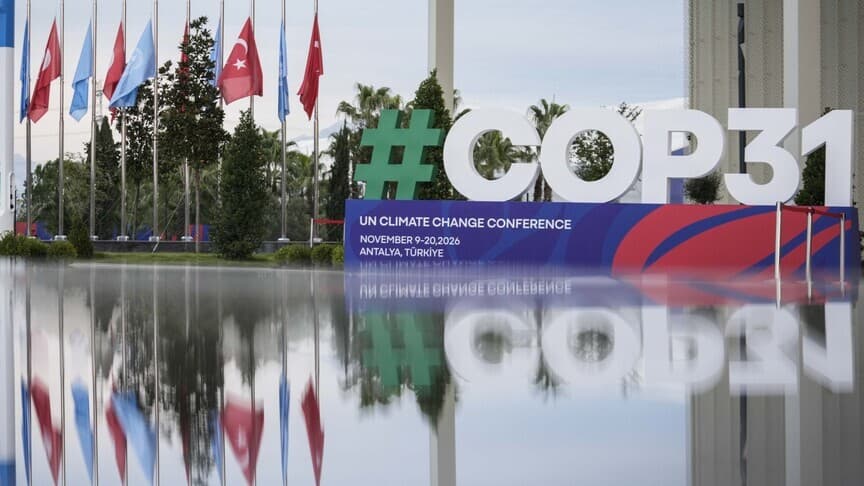
The conference, hosted by Turkey from 9 to 20 November, is dedicated by its organisers to translating climate promises into practical and measurable action: clean energy transition, energy security, emissions reduction, climate finance and adaptation. The negotiations are chaired by Australia, which, together with Turkey, proposed the global '35 by 35' goal — 35% of total energy consumption from electricity by 2035. The UAE's participation builds on the experience of hosting Cop28 in Dubai in 2023, where the 'UAE Consensus' was reached on a just and orderly transition away from fossil fuels, tripling renewable energy capacity and doubling the rate of energy efficiency improvements by 2030; the Loss and Damage Fund was also launched then, and the UAE Framework for Global Climate Resilience was adopted.
Climate backdrop
The World Meteorological Organization recently reported that in 2025 the average concentration of carbon dioxide in the near-surface atmosphere reached 426.8 ppm — 53% higher than before the onset of large-scale fossil fuel burning. In 2011–2020, the concentration grew by an average of 2.4 ppm per year, three times the annual increase of the 1960s.