The key facts
- In 2026, more than 5 million tonnes of cotton were harvested, 75–80% by machine; in Syrdarya and Jizzakh regions mechanization is complete
- 3,000 cotton harvesters took part in the harvest, half of them purchased this year
- Plots inaccessible to machinery (~53,000 ha) are planned to be converted to vegetables and food crops
Minister's statement and current figures
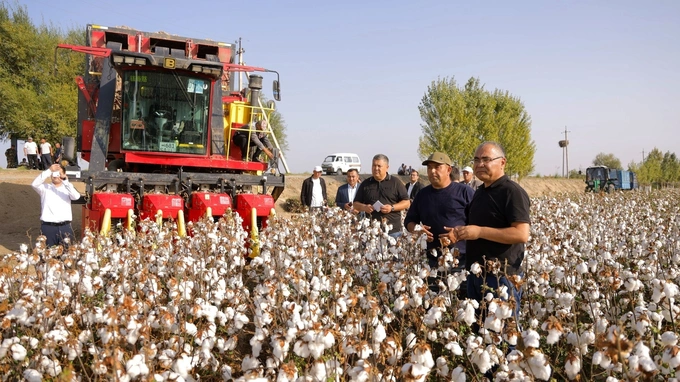
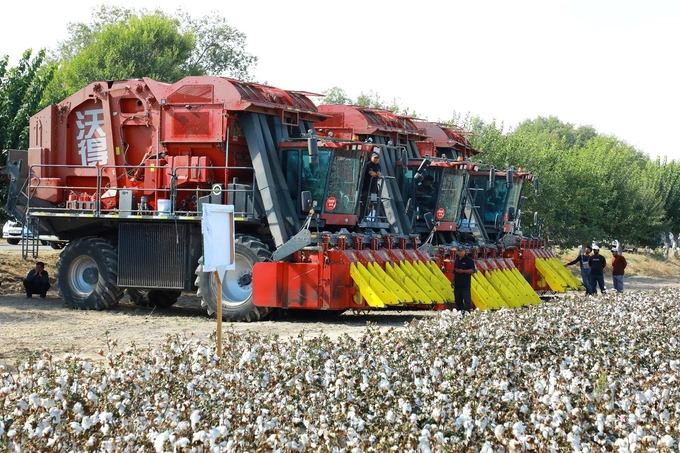
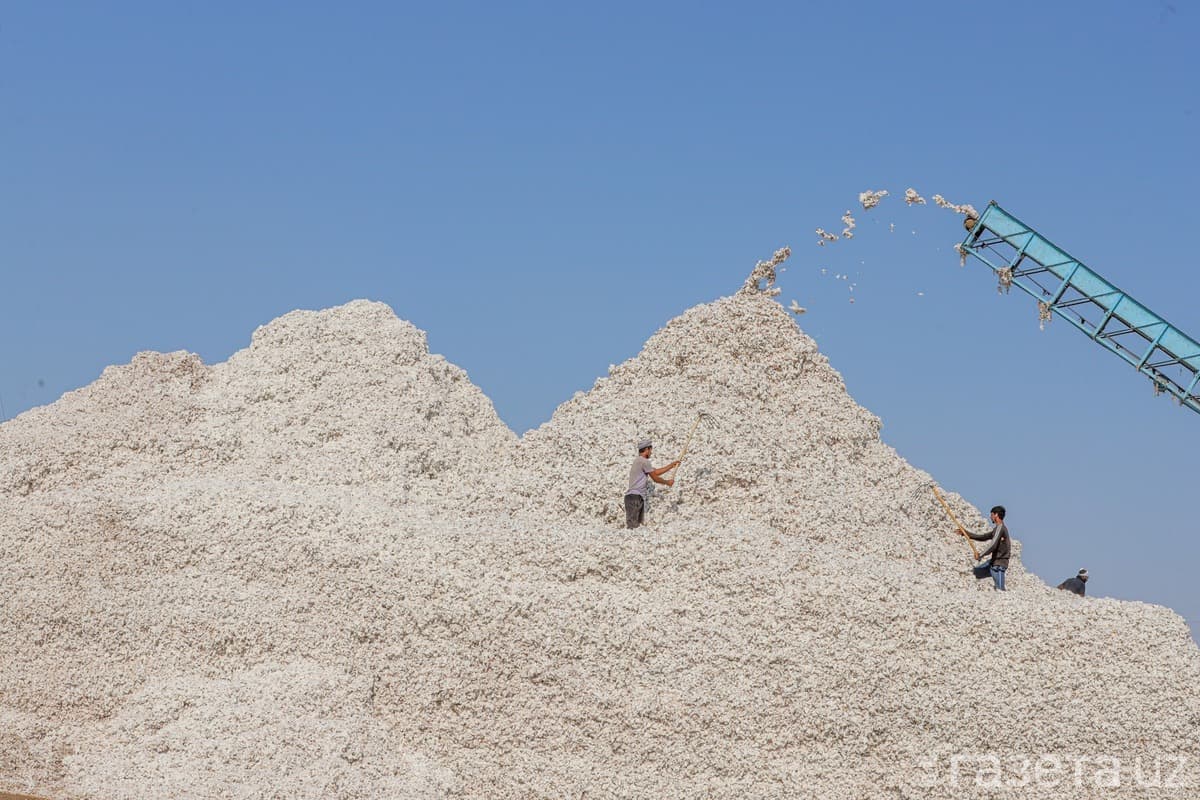
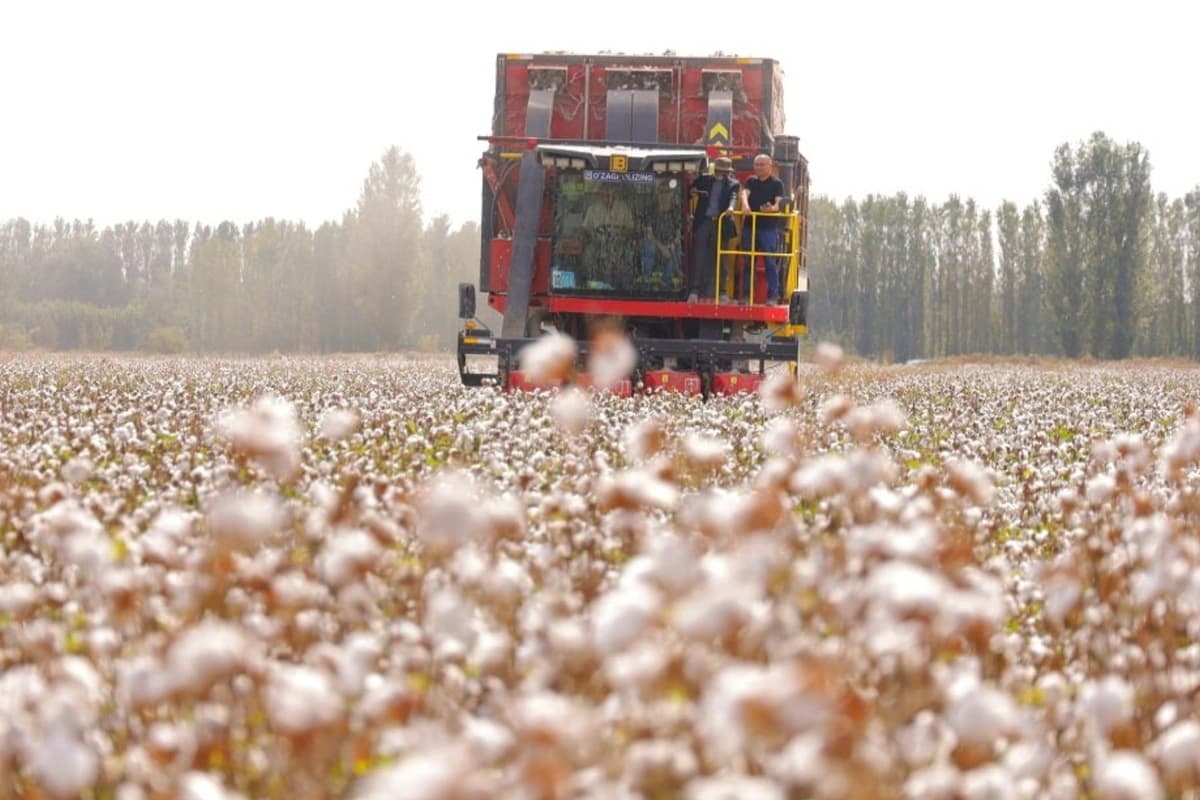
From 2027, cotton in Uzbekistan's fields will be harvested exclusively by machines. Agriculture Minister Ibrokhim Abdurakhmonov announced this at a press conference on 6 November, reports Gazeta. According to him, more than 5 million tonnes of cotton were harvested in 2026, of which 75–80% was collected by machine. In Syrdarya and Jizzakh regions, harvesting is fully mechanized. This season, 3,000 cotton harvesters were in operation, half of which were purchased this year.
What will remain outside mechanization
Manual labor, according to the minister, has remained mainly on small plots and cotton fields between orchards, where a harvester cannot enter; the share of manual harvesting this year was about 20–23%. Such areas cover nearly 53,000 hectares, and they are planned to be removed from the cotton wedge and allocated to vegetables and other food crops: according to Abdurakhmonov, sowing cotton on half-hectare plots is not economically viable. He also emphasized that the transition to machines should not deprive harvesters of their source of income and should be accompanied by the creation of new jobs in the textile industry through increased fiber processing volumes.
Forced labor and machinery production
The press conference also raised the topic of forced labor. Ministry spokesman Dilshod Nazirov stated that child labor is under strict control, and excuses such as 'came from school to deliver a message or bring food' are not accepted. According to him, manual harvesting is allowed only for the 11-meter protective strips left for harvesters to pass through; reports about involving children, students, women, and people in poor health in harvesting were also sent to special groups of the Ministry of Internal Affairs. Abdurakhmonov added that cotton harvesters are also produced in Uzbekistan: joint ventures have been established with FM World in Kashkadarya and Swan in the Fergana Valley, and production has also been set up at the tractor plant in partnership with China.
A long road to full mechanization
The announced timelines are not the first such target. As Gazeta recalls, in October 2013, then-Prime Minister Shavkat Mirziyoyev spoke of plans to bring harvesting mechanization to 80–90% by 2016. In 2017, former Deputy Prime Minister and former head of Uzagrotechsanoatkholding Nodir Otajonov set a goal of 80% within five years, and in December 2019 — 50% machine harvesting from 2020 in Tashkent, Syrdarya, Jizzakh, and Kashkadarya regions. The government decision of January 2020 provided for two stages: 2020–2022 for these four regions and 2023–2026 for the remaining regions.
Context: from state orders to a market model
The change in the industry's model began with the abolition of state orders: this practice, under which farmers were required to deliver cotton to the state at fixed prices under annual quotas, began to be phased out from 2020. Back in 2016, the World Bank in a report assessing the social impact of mechanization noted that Uzbekistan was one of the few cotton-growing countries that continued to rely on manual harvesting, and linked the 2014 mechanization decision partly to pressure from the international community. The Bank also warned at the time that mechanization could reduce the demand for organized labor during harvesting and negatively affect segments of the population for whom it was an important source of income. According to the minister's estimate, ten years ago mechanization did not even reach 25%, which he explained by the priority of manual harvesting in order to sell fiber at high prices.