The key facts
- In 2026, more than 5 million tons of cotton worth 34 trillion soums were harvested, compared with almost 4 million tons in 2025
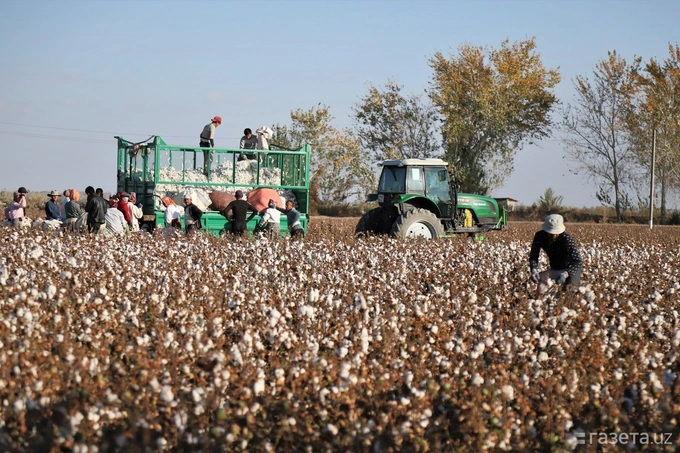
- 75–80% of the harvest was collected by machines; mechanization is complete in Syrdarya and Jizzakh regions
- The key innovation was the start of preparing cotton for ripening from August 1 using ethephon
- A key innovation cited was the start of preparing cotton for ripening from August 1 using ethephon
A record harvest and its value
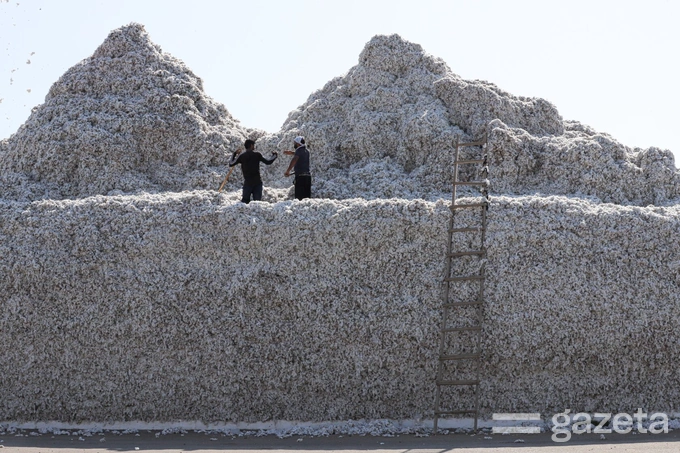
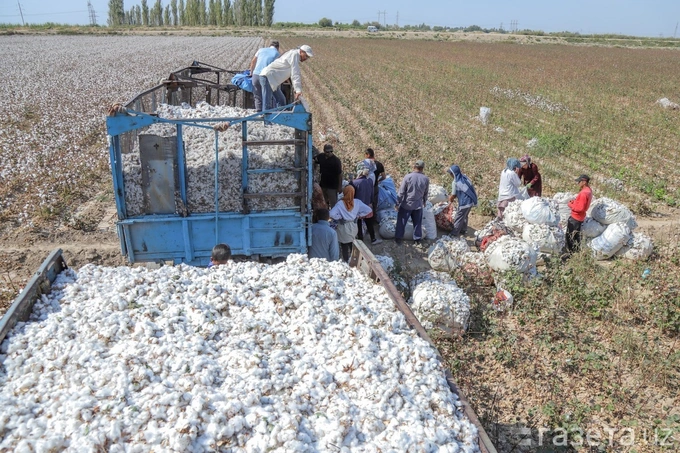
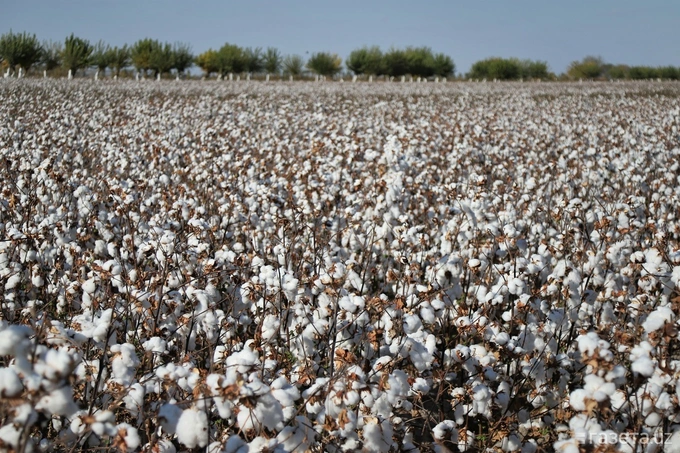
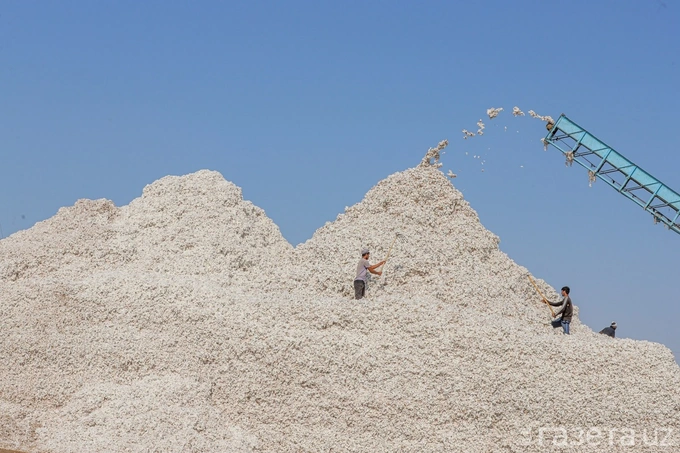
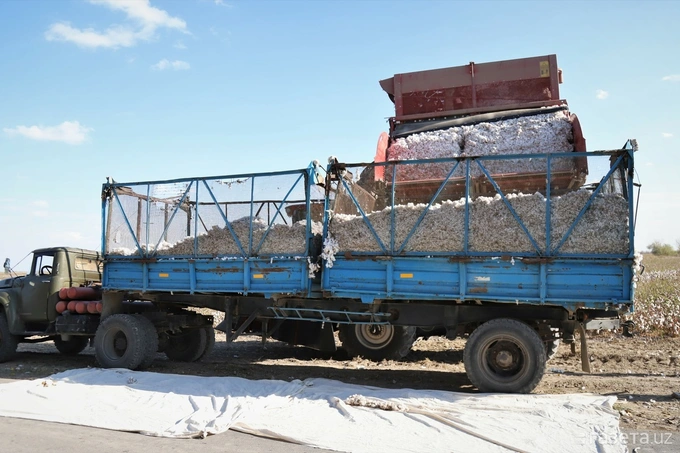
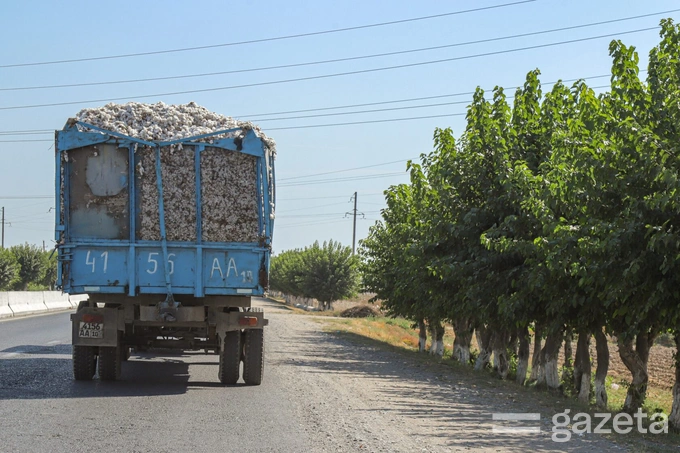
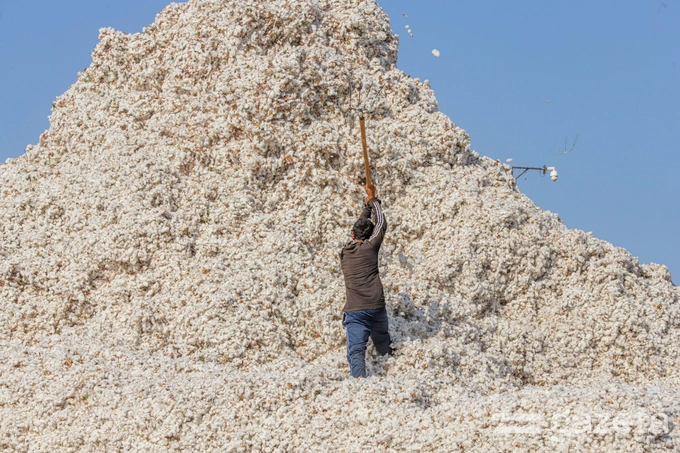
More than 5 million tons of cotton were harvested in Uzbekistan in 2026. Minister of Agriculture Ibrohim Abdurahmonov announced this at a press conference on November 6, reports Gazeta. According to him, the harvest was obtained on approximately 400,000 hectares with an average yield of 70 centners per hectare, and on another roughly 70,000 hectares — 100–110 centners. The total value of the harvest, according to the minister, amounted to 34 trillion soums. A year earlier, in 2025, the country produced almost 4 million tons of cotton.
What drove the growth
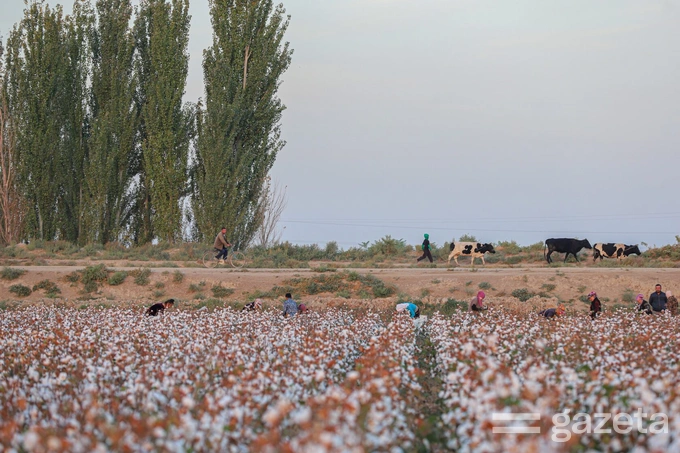
The minister attributed the increase to several factors. The first is the sowing of biotechnological varieties resistant to the cotton bollworm: previously, according to him, this pest was one of the industry's main problems, and traditional varieties had no resistance to it. The second is dense sowing: in 2024, more than 200,000 seedlings per hectare were sown on 142,000 hectares, yielding 50–60 centners; row spacing was reduced from 90 to 76 cm, which increases land-use efficiency by 14% and allows up to 240,000 seedlings per hectare. The third is a change in the fertilization system: the rate of nitrogen fertilizers was cut from one ton to 200 kg per hectare, with emphasis placed on phosphorus and micronutrients — manganese, iron, boric acid and calcium. The weather also played a role: the dry autumn of 2025 made it possible to extend harvesting until the end of November.
The 'August 1' technology
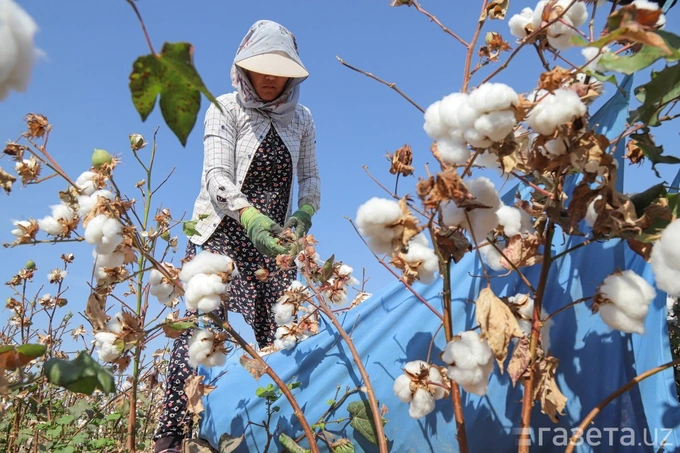
Abdurahmonov called the main innovation of the season the decision, starting from August 1, to stop cotton flowering using the drug ethephon — a ripening hormone. According to him, after spraying, an aging process takes place for about 12 days, the plant stops forming new bolls and directs nutrients from the leaves into the existing ones. Previously, defoliation was carried out in the second half of September, when many bolls did not have time to ripen, and nutrients were lost along with the leaves. According to the minister's estimate, this approach added 20 centners of yield per hectare in August. This year, defoliation was completed by August 25, and desiccation — the drying of the stem and root — by September 15: in 2024 experiments, fields with desiccation yielded up to 100 centners per hectare compared with 45–50 without it. The minister emphasized that the novelty lies precisely in the 'August 1' timing, while the other technologies are based on already existing knowledge and do not require large expenditures.
Not all farmers applied the new methods
The growth was uneven: on approximately 250,000 hectares, yields remained at the previous level. According to the minister, some farmers did not switch to bollworm-resistant varieties and did not pay attention to sowing density; due to abundant rains, the fields became overgrown with weeds, and weeding damaged the cotton plants — on some fields the number of plants fell to 48,000–50,000 per hectare. Such fields have been placed on a separate register, and farmers have been divided into 'green', 'yellow' and 'red' groups based on their results.
Experience of other countries and plans
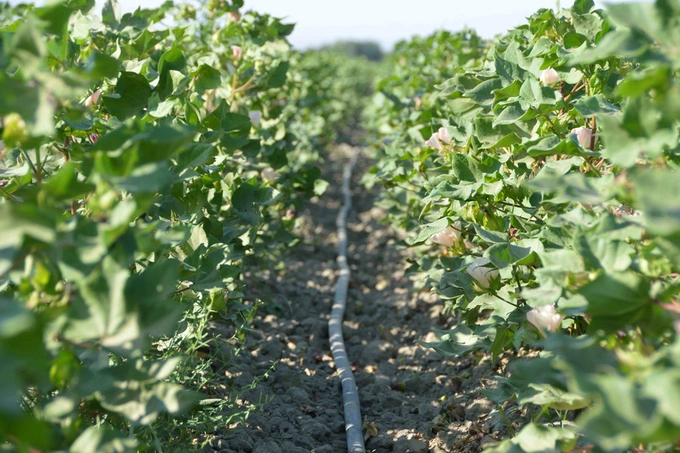
The minister said that the industry studied the experience of Turkey (yields of no less than 50 centners per hectare), Xinjiang in China (about 90 centners, 250,000 plants per hectare), as well as Brazil and Argentina, where dense sowing was introduced earlier than in China. The Cotton Council under the President, established in 2022, was tasked at that time with studying global experience. For the next year, the goal is set to raise the average yield to 70 centners and exceed 6 million tons of harvest; at yields of 90–100 centners on 400,000–500,000 hectares, part of the land is planned to be freed up for orchards and vegetables for food security. Cotton is expected to be grown mainly in desert zones with drip irrigation — according to the minister, 70–80 centners per hectare have already been obtained on the saline lands of Olot and Qorako'l in Bukhara region.
Processing, water and harvest accounting
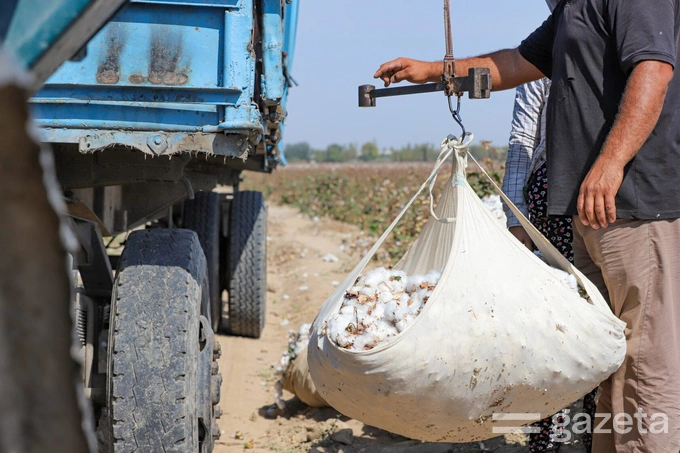
Abdurakhmonov stated that all produced cotton fiber remains in the country: whereas fiber exports previously brought in about $1 billion, exports of processed products have reached $4.1 billion against a target of $9 billion; more than 142 textile clusters and more than 183 enterprises operate in the country. On irrigation: an average of 7,000 cubic meters of water is used per hectare of cotton, of which about 3,500 goes to leaching salts; in Bukhara and Navoiy regions, Khorezm and Karakalpakstan they are moving to sowing without leaching, and by next year drip irrigation should cover about 600,000 hectares. According to the minister, since 2024 the harvest has been monitored with digital scales, video surveillance and artificial intelligence, and this year the fields that are the source of the cotton have also been entered into the digital system, which, he claims, rules out falsified figures. Separately, he noted farmers' problems with loans: debtors from previous years face difficulties obtaining loans, although the state has allowed them spring financing; the repayment rate on state-allocated funds rose from roughly 24% in earlier years to 91% last year.