The key facts
- On November 6, OFAC sanctioned eight Canadian money services businesses as part of the Economic Outcast operation
- According to the US Treasury, the firms exchanged rials for digital assets and worked with Iranian exchanges and addresses linked to the IRGC
- Some companies, per the department, laundered billions of dollars of Ryan Wedding's drug proceeds
Sanctions against eight Canadian currency exchangers
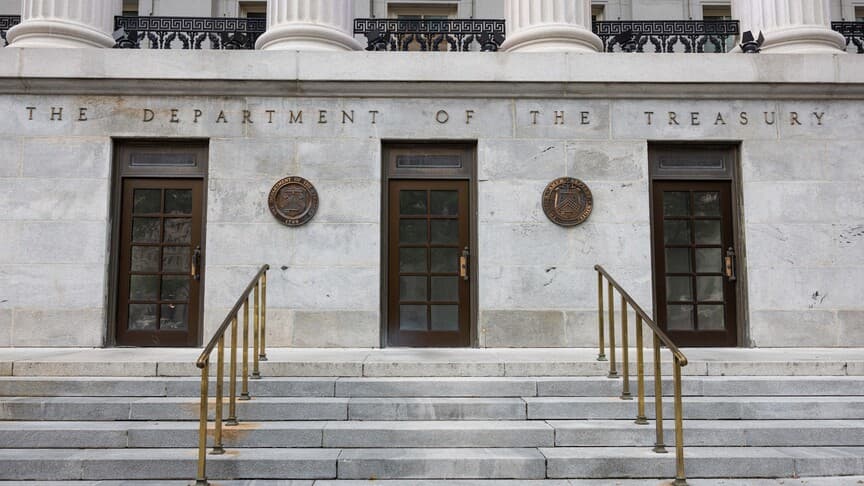
The US Department of the Treasury on November 6 added eight Canada-registered money exchange companies to its sanctions list, accusing them of facilitating the Iranian government and moving assets into and out of Iran. The Office of Foreign Assets Control (OFAC) said the measures were taken as part of the Economic Outcast operation under Executive Order 13902, which targets Iran's digital assets sector. Anadolu reported this.
What the companies are accused of
According to OFAC, the firms exchanged Iranian rials and other currencies for digital assets, and many of them dealt with sanctioned Iranian exchanges and addresses linked to the Islamic Revolutionary Guard Corps (IRGC). Sanctioned were Diverse Trade Inc (Million Exchange), 1380079 BC Limited (Amin Exchange), Top PC Technician Inc, NIA Nations Currency Ltd, 2397639 Ontario Ltd (Farah Exchange), CCC Inc, B Galaxy Inc (Cryptoyal) and Darvish Exchange.
Links to drug trafficking and the IRGC
The Treasury said addresses associated with Million Exchange allegedly sent the equivalent of hundreds of thousands of dollars to addresses linked to the IRGC or terrorism, while Farah Exchange addresses sent digital assets worth millions of dollars to addresses associated with Ryan Wedding. According to the department, Wedding — a sanctioned Canadian drug trafficker arrested in January — used exchangers in Vancouver and Toronto neighborhoods to launder billions of dollars in drug proceeds; Amin Exchange, it is claimed, laundered his funds in Vancouver, converting cash into digital assets. In a separate statement, the Secretary of State said some companies changed their names and addresses to avoid detection, and that 'anyone, anywhere in the world who helps Tehran evade sanctions risks facing consequences.' The sanctions were coordinated with FinCEN, Canada's financial intelligence unit FINTRAC, and the Drug Enforcement Administration.
Context and reaction
US Treasury Secretary Scott Bessent stated: 'Canada cannot be a safe haven for illegal financial facilitators providing sanctions evasion services to the Iranian regime and its proxies,' adding that the Treasury will pursue the Iranian regime's financial channels 'anywhere in the world.' The new measure follows OFAC sanctions against the Iranian exchanges Nobitex, Wallex, Bitpin and Ramzinex on June 2, as well as Aban Tether Exchange and SHPS Shelbit on August 7. The department also noted that the companies continued operating despite media reports about sanctions evasion and terrorism financing risks.