The key facts
- Philippe Jaenada received the Prix Goncourt on November 3 and told the next day that he had used ChatGPT three times while working on the novel
- He deliberately hid a phrase invented by the neural network in the text and separately showed it to the jury
- Earlier, Télison Aurélien was removed from the list of contenders after being suspected of creating his novel with AI
The laureate's confession
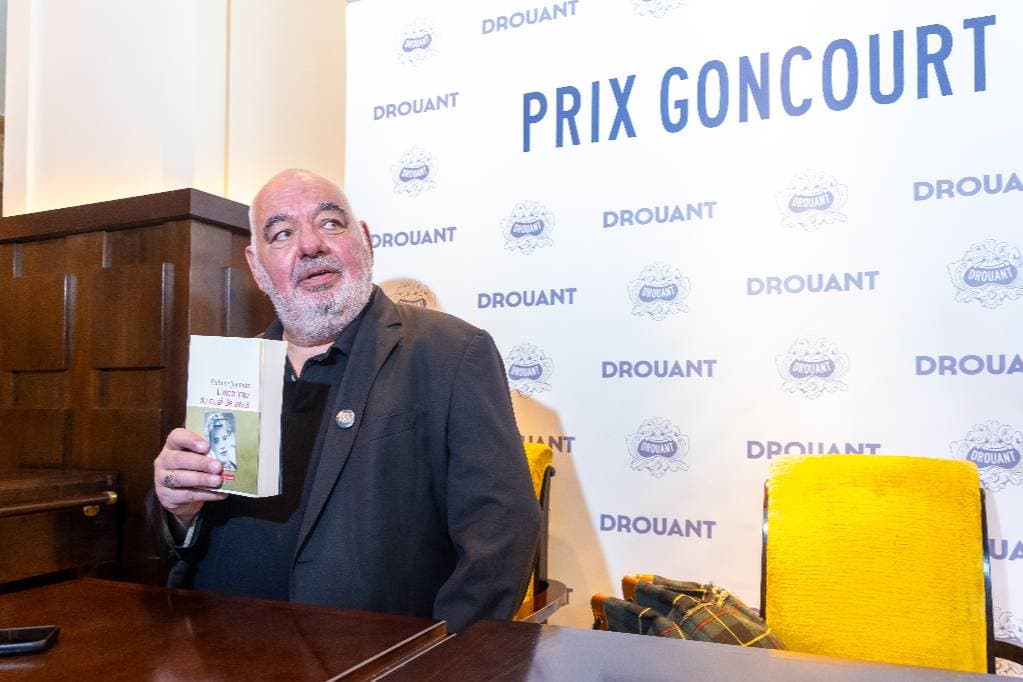
French writer Philippe Jaenada received the Prix Goncourt — the country's main literary award — on November 3, and already the next day he told the radio station France Inter that he had turned to ChatGPT three times while working on the novel 'The Stranger from the Javel Quay'. This was reported by The Guardian citing a publication by Life.ru.
How exactly the neural network was used
One of the three appeals to AI was playful in nature: Jaenada deliberately hid a phrase invented by ChatGPT in the work, inviting readers to find the sentence that was not created by a human. On the other two occasions, the neural network helped with technical details: in one case, the answers turned out to be so absurd that the author included them in the narrative to mock the technology's capabilities, and in the other he used AI to search for information. The corresponding episodes are described in the novel itself, and the writer separately showed the ChatGPT sentence to members of the jury.
The author's position and the Aurelien scandal
Jaenada himself does not consider such a practice cheating: in his view, artificial intelligence has already become part of everyday life, and pretending it does not exist is pointless — the main thing is to use the technology as a tool rather than let it fully replace the author. The confession came against the backdrop of another scandal: a few weeks earlier, Canadian-Haitian writer Télison Aurélien was removed from the list of contenders for the Prix Goncourt after he was suspected of having created a significant part of his novel 'This or Death' with AI. The author denied having entrusted the writing of the book to a neural network, but his publishing house later ended its cooperation with him. The jury's decision in Jaenada's case sparked discussion on social media about where the line lies between permissible help from a neural network and full-fledged machine authorship.
About the novel and the context
Jaenada was awarded the prize for a work based on a real unsolved murder of a young woman in Paris in 1949; the writer is known for his interest in old criminal cases and had previously been shortlisted for the award several times. In the broader context of the debate about AI in literature, Life.ru cited a prediction by writer Alexander Tsypkin, according to which in the coming years almost half of all books may contain fragments created by artificial intelligence; the writer himself prefers to write on his own, although he sometimes discusses his works with a neural network. In addition, in an interview with Life.ru, Chinese science fiction writer Chen Qiufan suggested that people will increasingly delegate to AI not only creative tasks but also decision-making.