The key facts
- Germany's storage fill level at the end of the gas day on November 5 was 59.97% (GIE data)
- Latvia (51.09%) and Slovakia (52.48%) are also below 60%
- Gazprom estimated the starting level of European storage at 74.9% — a historic minimum for the start of the season
Germany's gas storage falls below 60%
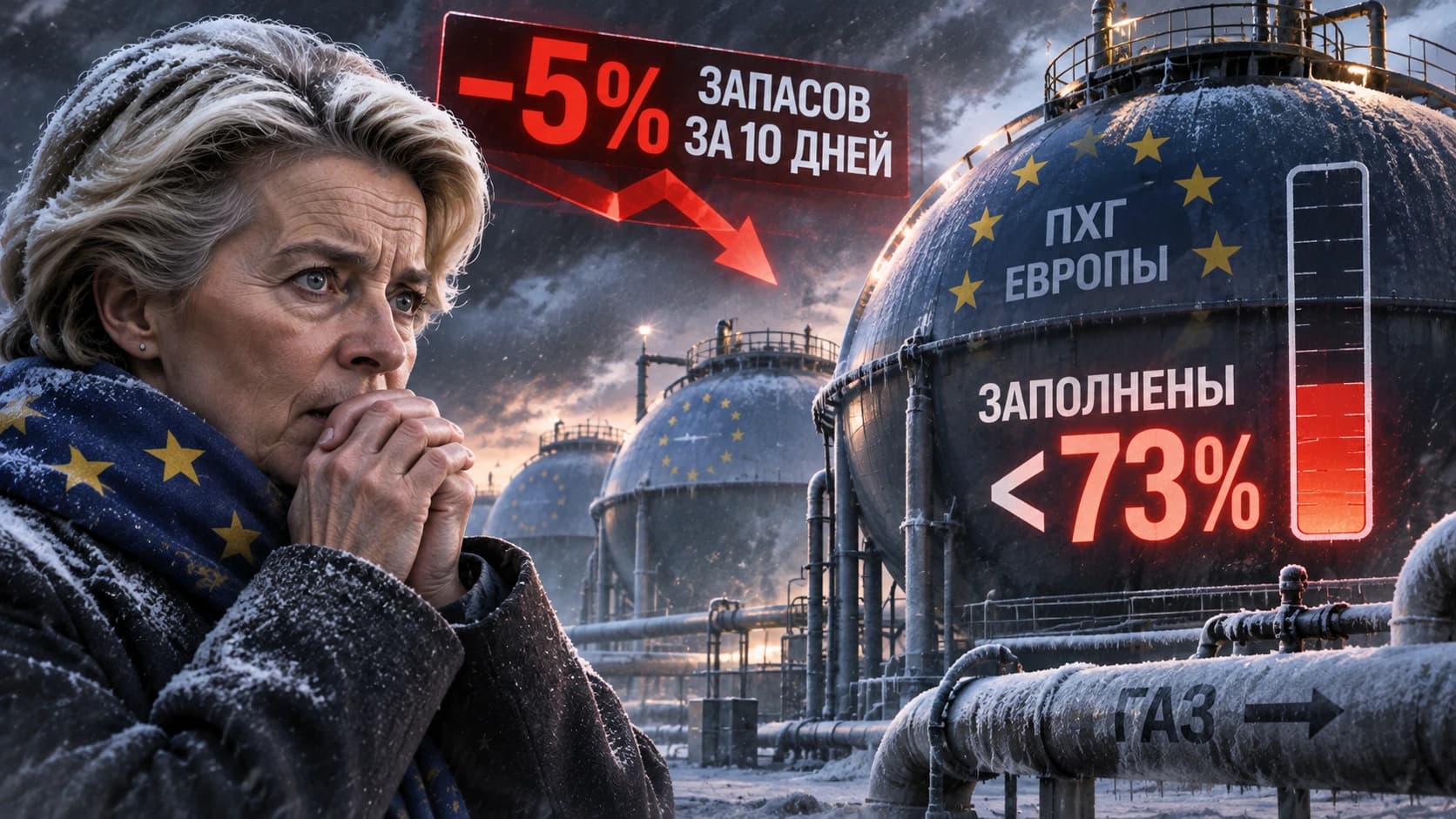
Natural gas reserves in Germany's underground storage facilities have dropped below 60% as the heating season begins: as of the end of the gas day on November 5, the fill level stood at 59.97%. The figures from the association of European gas infrastructure operators, Gas Infrastructure Europe (GIE), were cited by RIA Novosti — and are also referenced by Life.ruand Gazeta.Ru.
Dynamics of the withdrawal season
Germany, the EU's largest economy, entered the withdrawal season with noticeably smaller reserves than in previous years: as recently as October 28 its storage facilities were 61.6% full, and by early November reserves had fallen below the psychologically significant 60% mark. According to Gazprom, at the start of the withdrawal season on October 28, European underground gas storage facilities were 74.9% full overall — the company described this as a historic low for the start of a heating season. The company also recorded accelerated gas withdrawals on October 28–29, November 1–2, and November 4 and 5; in total, during the first week of the season European countries used up about 2.5% of the injected volume. Gazprom warned that persistently high consumption rates could create additional risks for stable gas supply in winter.
The situation in other EU countries and assessments within Germany
Two more EU countries are also below 60%: Latvia's reserves stand at 51.09% and Slovakia's at 52.48%. Within Germany, the situation had already caused concern before the threshold was crossed: on November 1, Bundestag deputy from the Greens Michael Kellner said the country has practically no insurance reserve of gas for the winter, and in his words, every cold front or minor disruption in the supply chain will immediately lead to price increases. At the same time, as Life.ru noted, the Federal Network Agency of Germany believed there was no immediate threat to gas supply and that the risk of a shortage remains low — as of November 1, storage facilities were about 61.4% full. Thus, assessments within the country diverge: the parliamentarian points to vulnerability to frosts and supply disruptions, while the regulator points to the absence of an immediate threat.